
A Complete Guide to Proximity Sensor
What is a proximity sensor?
Proximity sensors are devices that are used to detect the presence or absence of objects within a certain range without the need for physical contact. They are commonly used in various applications for object detection, distance measurement, and obstacle avoidance.
Proximity sensors work based on different principles, including electromagnetic, capacitive, inductive, ultrasonic, and optical.
- Electromagnetic Proximity Sensors
- Capacitive Proximity Sensors
- Inductive Proximity Sensors
- Ultrasonic Proximity Sensors
- Optical Proximity Sensors
Proximity Sensor Features
Proximity sensors come with a range of features that enhance their functionality and adaptability to different applications.
Non-Contact Sensing
One of the standout features of proximity sensors is their ability to detect objects without any physical contact. This non-contact sensing capability not only ensures that the sensor and the object remain undamaged but also eliminates the need for frequent maintenance or cleaning.
High Accuracy and Reliability
Proximity sensors are known for their exceptional accuracy and reliability. They can detect objects with precision, even in challenging environmental conditions such as dust, moisture, or temperature variations. This reliability makes them ideal for critical applications where accuracy is of utmost importance.
Fast Response Time
Time is of the essence in many applications, and proximity sensors excel in this area. They have an incredibly fast response time, detecting objects in milliseconds. This quick response enables real-time monitoring and control, making them suitable for high-speed production lines, robotics, and other time-sensitive applications.
Versatile Object Detection
Proximity sensors are incredibly versatile when it comes to object detection. Depending on the technology used, they can detect a wide range of materials, including metal, plastic, glass, liquids, and more. This flexibility allows them to be used in various industries and applications, from position sensing to level detection and presence sensing.
Adjustable Sensing Range
Another fantastic feature of proximity sensors is their adjustable sensing range. This means that you can customize the distance at which the sensor detects objects, making it adaptable to different requirements and environments. Whether you need short-range or long-range detection, proximity sensors have got you covered.
Output Options
Proximity sensors offer different output options, such as analog and digital outputs. Analog outputs provide continuous feedback, allowing for precise measurement and control, while digital outputs offer simple on/off signals for object detection. The choice of output type depends on your specific application needs.
Easy Integration
Proximity sensors are designed for easy integration into existing systems. They typically come with standardized mounting options and communication protocols, making the installation process hassle-free. This ease of integration ensures a smooth transition and minimizes downtime during implementation.
Environmental Robustness
Proximity sensors are built to withstand harsh environmental conditions. They are often designed with rugged enclosures that protect them from dust, moisture, vibrations, and even extreme temperatures. This robustness ensures reliable performance in demanding industrial environments, making them suitable for a wide range of applications.
How Do Proximity Sensors Work?
Each type of proximity sensor has its own working principle and characteristics, allowing it to detect objects within its specified sensing range. The output signal generated by the sensor can be used for various purposes, such as object detection, distance measurement, or triggering control actions in automated systems.
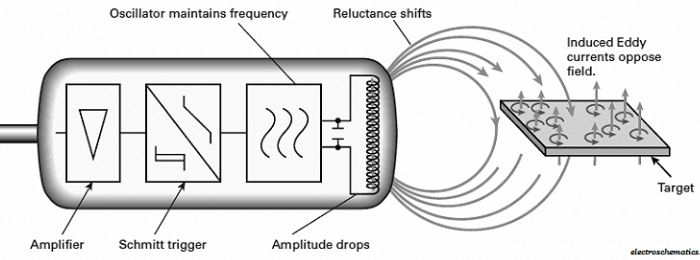
Inductive Proximity Sensors
Inductive proximity sensors generate an electromagnetic field from a coil. When a metallic object enters the sensing range, it disturbs the electromagnetic field, causing a change in the sensor’s impedance. This changein impedance is detected by the sensor, which then triggers an output signal indicating the presence of the object. Inductive proximity sensors are primarily used for detecting metal objects.
Capacitive Proximity Sensors
Capacitive proximity sensors work based on changes in capacitance. These sensors consist of two conductive plates with an insulating material between them. When an object enters the sensing range, it changes the capacitance between the plates, leading to a change in the sensor’s oscillation frequency or amplitude. This change is detected by the sensor, which generates an output signal to indicate the presence of the object. Capacitive proximity sensors can detect both conductive and non-conductive objects.


Ultrasonic Proximity Sensors
Ultrasonic proximity sensors use sound waves to detect objects. They emit ultrasonic waves at a frequency beyond human hearing range. These waves travel through the air and bounce back when they encounter an object. The sensor measures the time it takes for the sound waves to return to the sensor. Based on this time of flight, the sensor can calculate the distance to the object. If the calculated distance is within the sensing range, the sensor triggers an output signal indicating the presence of the object.
Optical Proximity Sensors
Optical proximity sensors use light to detect objects. They consist of an emitter that emits light, typically infrared, and a receiver that detects the reflected light. When an object enters the sensing range and interrupts the light beam, the receiver detects the change in the received light intensity and triggers an output signal indicating the presence of the object. Optical proximity sensors can operate in various modes, such as through-beam (separate emitter and receiver), retro-reflective (emitter and receiver in the same unit, with a reflector), or diffuse (combined emitter and receiver in one unit).

Proximity Sensor Applications

Industrial Automation
Proximity sensors are widely used in industrial automation for object detection, positioning, and monitoring. They help control robotic arms, conveyor systems, and assembly lines by detecting the presence or absence of objects, ensuring precise positioning and efficient operation.

Automotive Industry
Proximity sensors are essential in the automotive industry for a range of applications. They are used in parking assist systems to detect obstacles and provide proximity feedback to drivers. Proximity sensors are also integral to adaptive cruise control, collision avoidance systems, and automatic door opening systems.

Consumer Electronics
From smartphones to home appliances, proximity sensors are found in a variety of consumer electronic devices. They enable features like automatic screen dimming when the device is held close to the face during a call, touch-free gesture recognition, and proximity-based wake-up functionality.
Security Systems
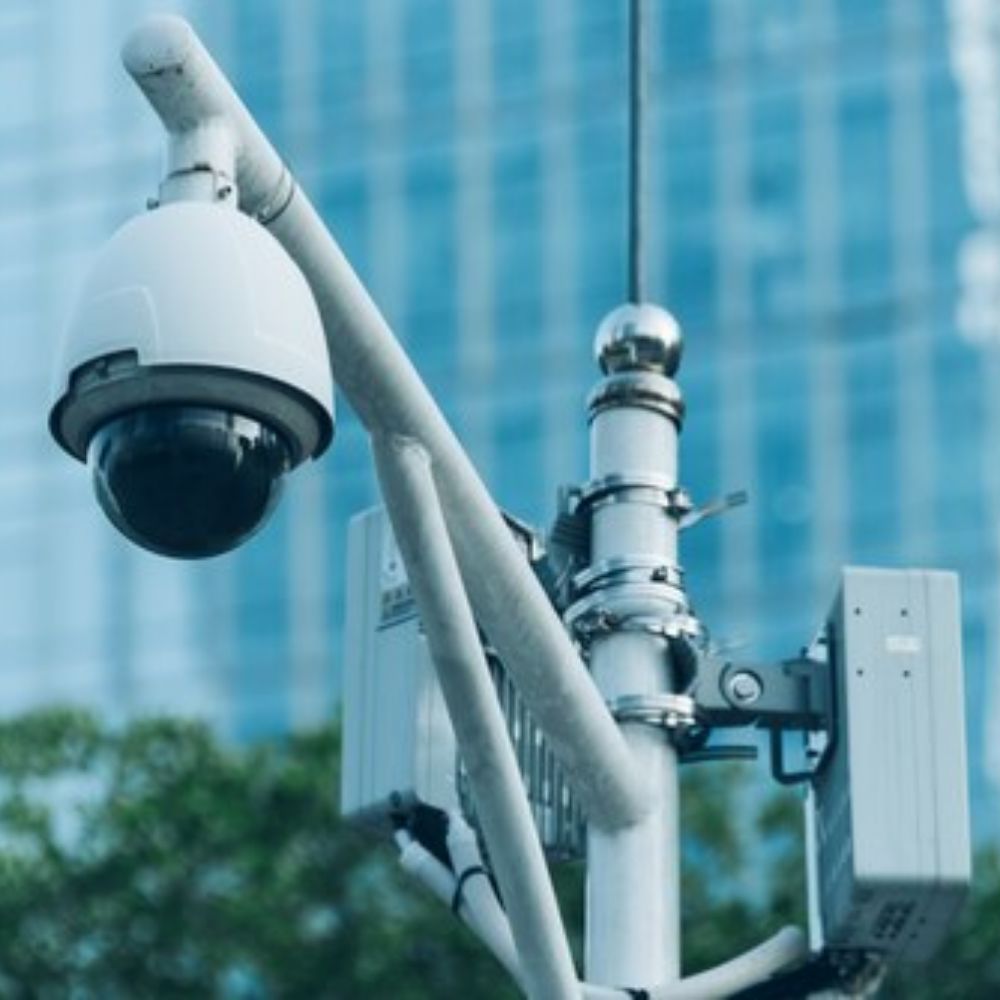
Proximity sensors play a crucial role in security systems, such as burglar alarms and access control. They detect unauthorized entry by sensing the proximity of an individual or object to a restricted area, triggering alarms or activating security measures.

Material Handling
In warehouses and logistics centers, proximity sensors are used in conveyor systems to detect the presence of packages or pallets. They ensure proper spacing between items, prevent collisions, and optimize material flow.

Vending Machines
Ever wondered how vending machines know when to dispense your favorite snack or drink? That’s right, proximity sensors! They detect when a customer’s hand approaches the dispensing area, triggering the release of the desired item.

Elevators and Escalators
Proximity sensors are employed in elevators and escalators to ensure safe operation. They detect the presence of passengers, preventing doors from closing prematurely or objects from getting caught, enhancing passenger safety.

Proximity Switches
Proximity switches, which utilize proximity sensor technology, are commonly used for limit sensing, valve control, and positioning in various industries. They detect the presence of metallic objects and provide on/off signals for precise control and automation.
Selection by Detection Method
| Items requiring confirmation | Inductive Proximity Sensors | Capacitive Proximity Sensors | Magnetic Proximity Sensors |
| Sensing object | Metallic objects (iron, aluminum, brass, copper, etc.) | Metallic objects, resins, liquids, powders, etc. | Magnets |
| Electrical noise | Affected by positional relationship of power lines and signal lines, grounding of cabinet, etc. CE Marking (EC Directive compliance). Sensor covering material (metal, resin). Easily affected by noise when the cable is long. | Almost no effect | Almost no effect |
| Power supply | DC, AC, AC/DC, DC with no polarity, etc. Connection method, power supply voltage | DC, AC, AC/DC, DC with no polarity, etc. Connection method, power supply voltage | DC, AC, AC/DC, DC with no polarity, etc. Connection method, power supply voltage |
| Current consumption | Depends on the power supply, i.e., DC 2-wire models, DC 3-wire models, AC, etc. DC 2-wire models are effective for suppressing current consumption | Depends on the power supply, i.e., DC 2-wire models, DC 3-wire models, AC, etc. DC 2-wire models are effective for suppressing current consumption | Depends on the power supply, i.e., DC 2-wire models, DC 3-wire models, AC, etc. DC 2-wire models are effective for suppressing current consumption |
| Sensing distance | The sensing distance must be selected by considering the effects of factors such as the temperature, the sensing object, surrounding objects, and the mounting distance between Sensors. Refer to the set distance in the catalog specifications to determine the proper distance. When high precision sensing is required, use a Separate Amplifier model | ||
| Ambient environment | Temperature or humidity, or existence of water, oils, chemicals, etc. Confirm that the degree of protection (refer to the Degree of Protection) matches the ambient environment | ||
| Physical vibration, shock | An extra margin must be provided in the sensing distance when selecting Sensors for use in environments subject to vibration and shock. To prevent Sensors from vibrating loose, refer to the catalog values for tightening torque during assembly | ||
| Assembly | Effects of tightening torque, Sensor size, number of wiring steps, cable length, distance between Sensors, surrounding objects. Check the effects of surrounding metallic and other objects, and the specifications for the mutual interference between Sensors | ||
Why Global Clients Choose Us?
By choosing us, global clients gain access to an unparalleled combination of global reach, top-notch quality, competitive pricing, customization options, exceptional customer service, and on-time delivery. We strive to exceed expectations and establish long-term partnerships built on trust and satisfaction.
Wide Supplier Network
Our strong partnerships with top suppliers in China provide you with a wide range of choices and high-quality products.
Quality Assurance
We rigorously select and test each product to ensure they meet stringent quality and performance standards, giving you peace of mind.
Expert Product Recommendations
Our team of industry experts with deep knowledge and experience will carefully curate and recommend the most suitable products for your needs, saving you time and effort.
Competitive Pricing
Through direct collaboration with suppliers, we offer competitive prices, helping you save costs and provide greater value for your investment.
Flexible Customization Services
Whether you require special specifications, custom designs, or private labeling, we work closely with you to provide flexible customization solutions that meet your unique requirements.
Excellent Customer Support
Our dedicated customer support team is always ready to assist and address any inquiries, ensuring you have an exceptional service experience throughout your purchasing journey.
Customers Good Feedback
GOOD WORDS FROM GOOD PEOPLE
Unparalleled Quality and Exceptional Customer Service
We have been purchasing from this company for years, and their products never disappoint. The quality is exceptional, and their customer service is top-notch.

Mary R
Reliable Partner with Excellent Sourcing Services!
I highly recommend this company for their excellent sourcing services. They were able to find exactly what we needed and delivered it on time. Truly a reliable partner!

John L
Impressive Customization Options and Exceeded Expectations!
The level of customization they offer is impressive. They were able to meet our specific requirements and deliver a product that exceeded our expectations. We will definitely be returning for future orders.

Sarah M
Leave you Enquiry
Still not sure which sensor is right? Get a free initial consultation right now. Our team will analyze your needs and recommend the most suitable sensor for you
Error: Contact form not found.