
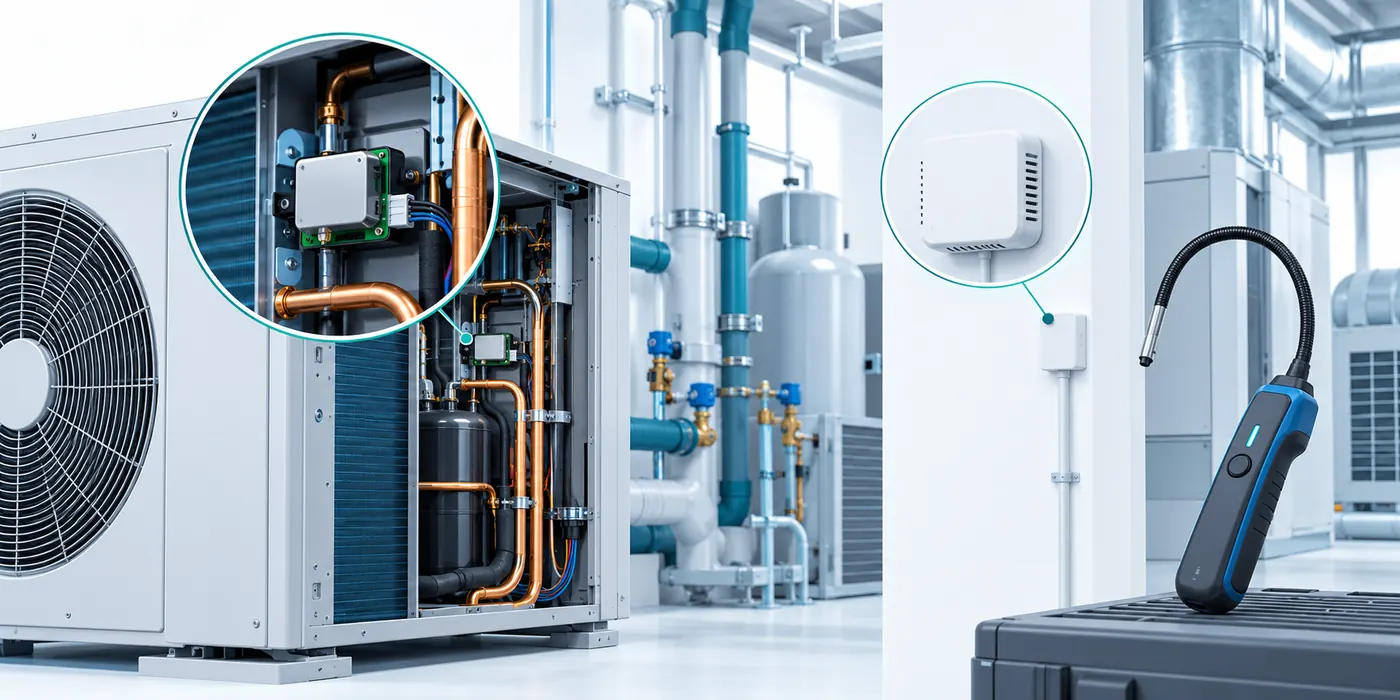
A refrigerant sensor does not have one universal job. An installed room monitor watches for refrigerant in the surrounding air; an embedded refrigerant detection system (RDS) can trigger an equipment-specific mitigation sequence; a service instrument helps locate a leaking joint; and an identifier tests what is inside a system or cylinder before service. The sample, output, response requirement, and evidence needed to accept each instrument are different. Select the measurement task first, then the sensing technology and model.
This distinction matters when an apparently suitable detector fails at the real task. A handheld probe that responds strongly beside a leaking fitting may not continuously supervise a room. A fixed detector's low ambient concentration reading does not prove a sealed circuit has the correct charge. A sensor advertised for “refrigerants” may have a calibration for one refrigerant and a substantially different response to another. This guide starts with the decision the measurement must support, rather than a list of sensor types.
Start with the question the reading must answer
| Job | Sample and location | Useful output | Decision the reading supports | Những gì nó không thiết lập |
|---|---|---|---|---|
| Early leak indication | Air at one or more monitored points | Target-gas concentration, trend, alarm state | Investigate an abnormal release | Exact leaking joint or refrigerant charge |
| Room or occupied-space protection | Air where a release could accumulate under the actual ventilation pattern | Concentration and validated alarm/control state | Warn people or start a designed response | Compliance merely because a sensor is present |
| Embedded equipment mitigation | Air in an appliance location selected by its design | Validated detection and fault signals into equipment controls | Execute an equipment-specific mitigation sequence | General-purpose room protection by itself |
| Service leak location | Air immediately around a suspected component, sampled by a moving probe | Presence or relative response, sometimes a specified leak-rate sensitivity | Narrow down the source for repair | Ambient room exposure or absolute leak rate in every field condition |
| Refrigerant identification | A controlled sample from a cylinder or sealed system | Identity, pass/fail or composition within the instrument's scope | Avoid mixing or charging the wrong refrigerant | Whether a component is leaking into room air |
The last row is deliberately included because an identifier is often called a refrigerant detector in casual conversation. Its sample is the contained refrigerant, not the air around equipment. We examine it in detail in refrigerant identification versus concentration measurement.
Các U.S. EPA's description of automatic leak detection also separates direct systems, which measure refrigerant in air, from indirect systems, which infer a problem from equipment parameters. Indirect evidence such as temperature, pressure, level, or flow is useful, but it is not an ambient gas measurement. The choice depends on the particular application and applicable rules; the terms should not be collapsed into a single “sensor accuracy” specification.
Job 1: Detect refrigerant in ambient air
A direct detector samples a location where leaked refrigerant could reach it. Its sensing element converts a physical or chemical response into a signal, then electronics apply compensation, filtering, calibration, fault detection, and alarm logic. The displayed number, if there is one, is a result of that entire measurement chain. It is not the raw property of the sensing element.
An ambient reading is usually expressed as concentration, such as parts per million by volume (ppmv). An application may instead use a fraction of a defined flammability limit, but that display depends on the refrigerant, reference limit, calibration and instrument configuration. A percent-of-limit display is not interchangeable with a ppm display without those inputs. Neither output alone tells you the mass of refrigerant that has escaped: a room concentration also depends on release rate, room volume, mixing, ventilation, sensor position and time.
Consider two identical leaks. A detector near a poorly ventilated recess may see a sharp increase while another in a swept airflow path sees little change. Moving the sensor can change the observed concentration more than changing the sensing element. The placement exercise therefore begins with the possible release points, the equipment enclosure, barriers, doors, fans and realistic airflow states. Gas density can inform that exercise, but the simple rule “put every detector near the floor” fails when discharge momentum, temperature gradients and ventilation dominate transport. A designer should use the actual equipment and applicable installation instructions, then verify the commissioned location.
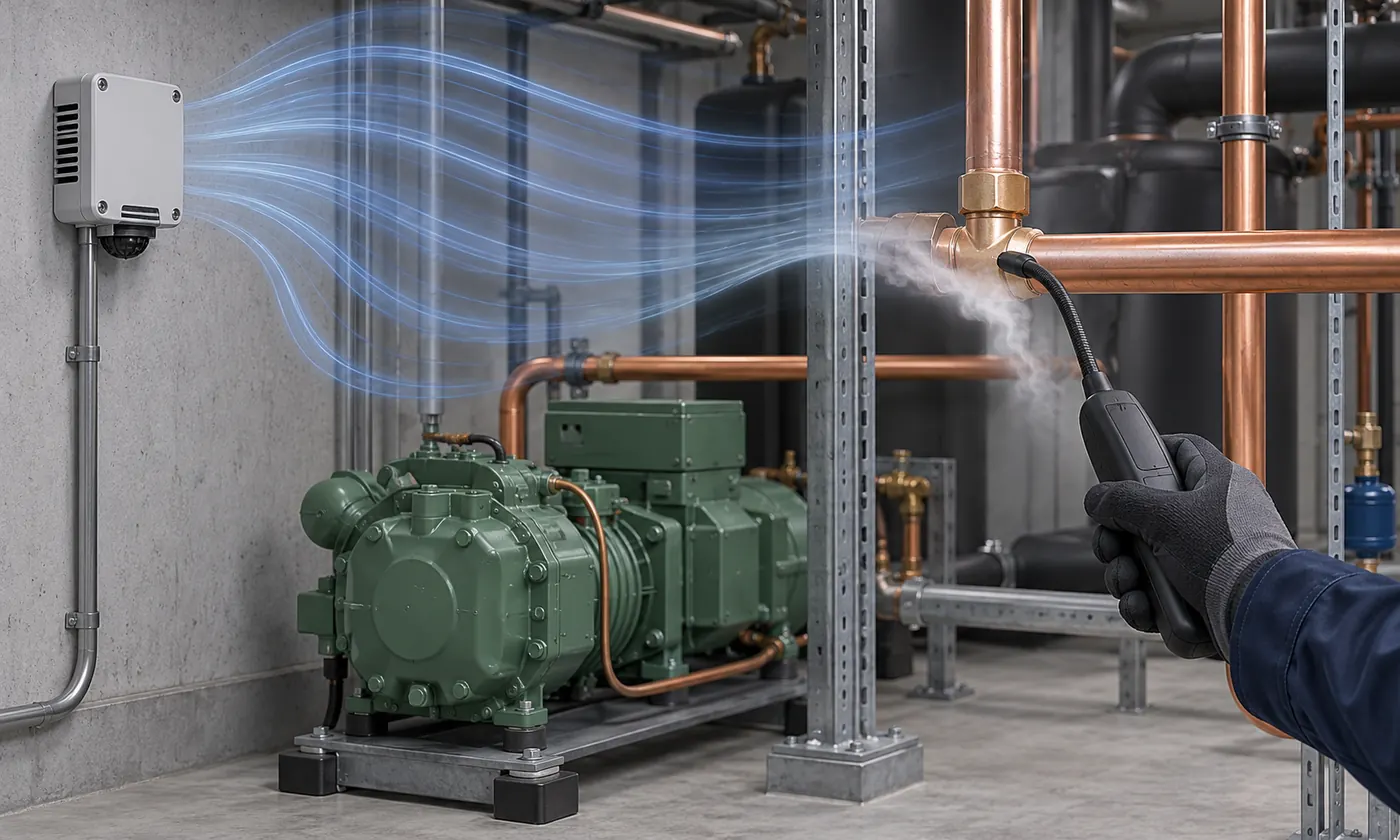
For a permanent installation, ask what happens during power loss, a disconnected sensor, a blocked sample line or an out-of-range reading. A number that remains reassuring because a device failed silently is not an acceptable alarm strategy. The control system should distinguish normal measurement, a refrigerant alarm, and instrument fault according to the product and system design. Alarm response, annunciation, ventilation or other mitigation must be specified at the system level, not inferred from a sensor brochure.
Các UK Energy Technology List's permanent leak-detection guidance describes fixed-point and aspirating arrangements and stresses calibration for the refrigerant being monitored. Its eligibility criteria belong to that particular program; use them to understand the architectures, not as universal alarm settings.
Job 2: Support an equipment mitigation function
Some air-conditioning equipment incorporates a refrigerant detection system to sense a release and initiate a designed response. The module's value is determined by the whole sequence: where its inlet sits, which refrigerant it detects, when it declares a valid event, what the controller commands, whether that command reaches the fan or other actuator, and how failures are handled. A sensing element with an attractive range is only one part of the RDS.
The relevant refrigerant designation and equipment listing or installation standard must be checked for the particular market and product. ASHRAE's refrigerant designation resources are a starting point for identifying the fluid; a designation alone does not specify a detector or authorize an alarm threshold. A2L, A3 and other classifications describe refrigerant properties under defined criteria, not a single universal sensor setting.
An OEM therefore needs evidence for the exact refrigerant and its expected concentration range, response under the equipment's temperature and humidity envelope, expected lifetime, contamination exposure, electrical interface, diagnostic state and integration test. If the equipment can use several refrigerants, the module must either be configured and validated for each one or the product scope must be limited. Do not assume that performance measured for R-32 transfers unchanged to R-454B merely because both appear in air-conditioning discussions.
For a concrete model-specific example, Winsen's ZRT512E module is described by its manufacturer as an NDIR refrigerant detection module for R-32 and R-454B. Its published interface, range and application claims are specifications to check against the exact model documentation and OEM system validation. They are not proof that every NDIR module detects all refrigerants, or that a module alone completes a compliant mitigation system.
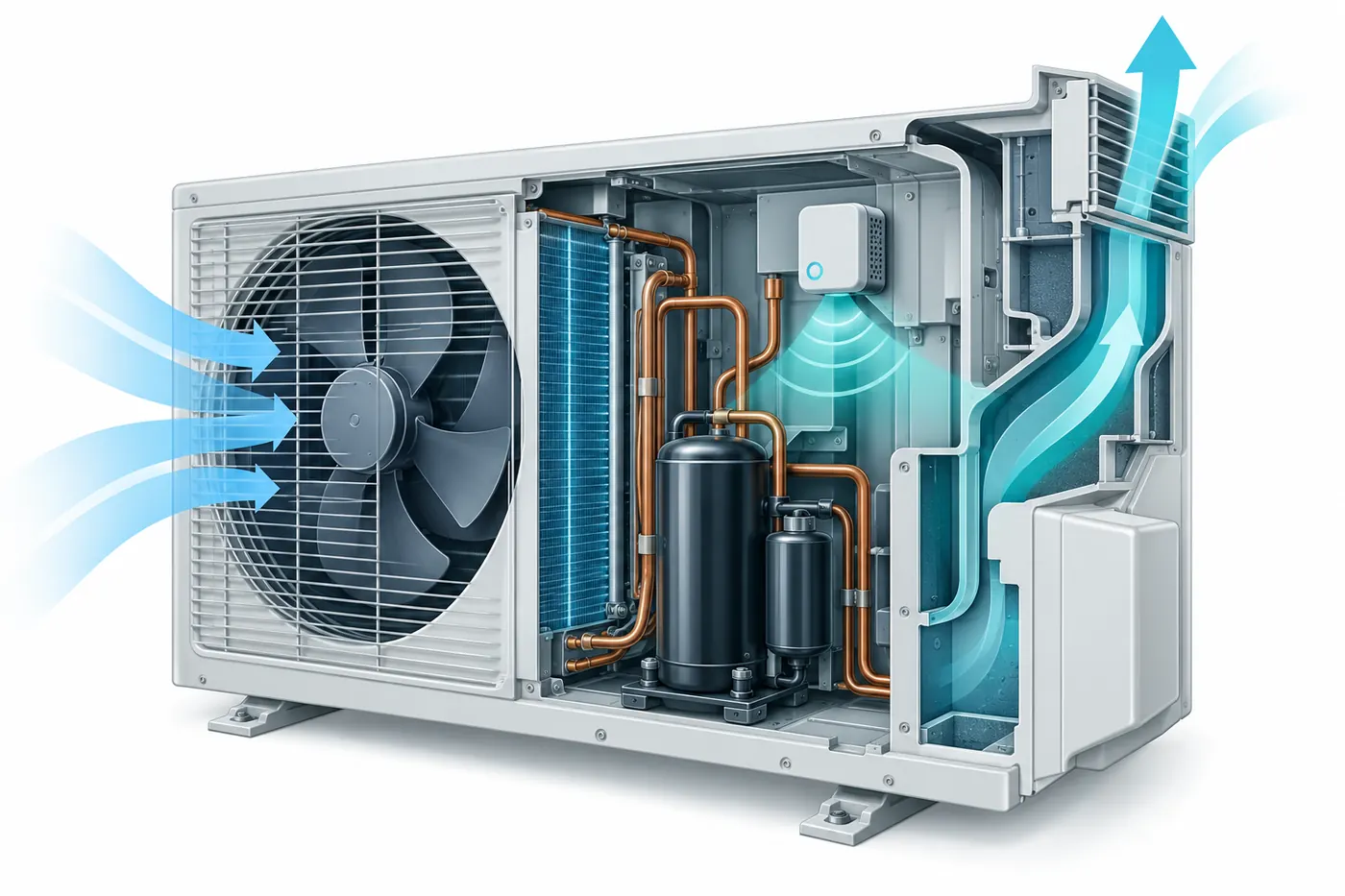
The independent reader question is: what safety or operational action is supposed to follow detection, and what evidence shows that the assembled system performs it? That question is more useful than “which sensor technology is best?” It prevents a component datasheet from being mistaken for a completed installed-system assessment.
Job 3: Find the leaking part during service
A technician moves a portable instrument around a suspected area to locate a source. The probe samples a very different air parcel from a room monitor. Response can rise sharply close to a joint even while a permanent detector elsewhere reads low. Conversely, a room alarm can indicate a release somewhere in its coverage area without identifying the fitting to repair.
Portable detectors are often described by a minimum detectable leak rate, such as grams per year, under a stated test method and refrigerant. That figure describes the instrument's response to a standardized leak in a particular procedure. It is not the same physical quantity as ambient ppm, and it cannot be converted to ppm without a dispersion model and sampling conditions. In service, probe distance, travel speed, airflow, contamination and refrigerant selection all affect the result. A very sensitive setting may increase nuisance responses; a less sensitive pass may help localize a large source after an initial indication.
Các EPA GreenChill refrigeration management guide describes automated leak detection alongside manual inspection and leak location. Its examples are useful for the workflow distinction, though model specifications and legal details in an older guide should not be treated as current product requirements. The technician still needs the instrument manual, a suitable method for the refrigerant, and a repair/verification process.
Job 4: Identify the refrigerant before handling it
A system or recovered cylinder may contain a different refrigerant from the label, a mixture of refrigerants, or noncondensable gas. Service decisions can then depend on what is in the sealed charge, not on whether refrigerant is present in the room. An identifier takes a controlled sample and reports a result within its supported gases and method. Some devices only accept or reject a targeted refrigerant; others report components. Neither type is automatically a full laboratory purity test.
Các EPA's guidance on contaminated motor-vehicle refrigerants explicitly notes that labels, fittings and pressure can be misleading, and that even sophisticated identifiers have limits with blends. Those points are particularly important for automotive service, where one incorrect charge can contaminate recovery equipment or another system. For broader refrigerant identification, confirm the refrigerant designation and blend information before selecting an instrument's supported-gas list; a product catalog is useful for context but does not replace a composition test.
The identifier also cannot locate a tiny fitting leak. A portable leak locator cannot certify cylinder composition. A fixed ambient monitor cannot diagnose system charge. These are complementary measurements, not competing answers to one question.
Match sensing principle to the actual refrigerant and task
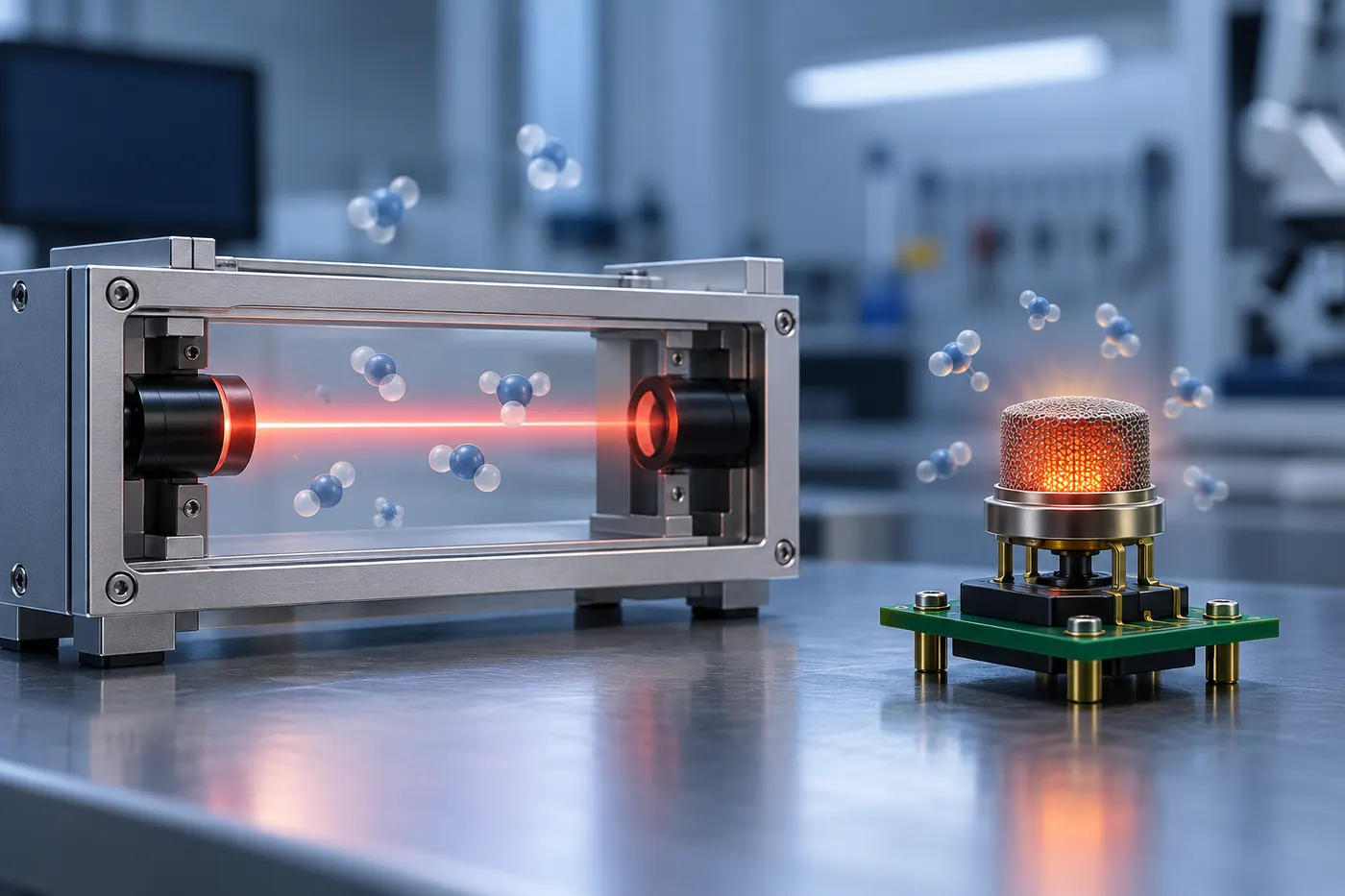
There is no valid ranking of “infrared, semiconductor, electrochemical and photoacoustic” that applies to every refrigerant, concentration and installation. First establish the target molecule or blend, then the sampling situation and acceptance criterion.
Infrared absorption. Many refrigerants absorb infrared radiation, so an optical sensor can compare transmitted energy in selected bands to a reference and estimate concentration under its calibration. Optical filters, path length, temperature compensation and the spectral overlap of other gases shape selectivity. “NDIR” describes a measurement principle, not a guarantee of zero cross-sensitivity or universal refrigerant identification. Check the exact target-gas list and interference tests.
Metal-oxide semiconductor (MOS). A heated sensing layer changes electrical characteristics when exposed to certain gases. MOS can support compact detection products, but response may be broad and strongly dependent on humidity, temperature, aging and other vapors. The output may be an indication rather than a highly selective analytical concentration. A manufacturer should document the target refrigerant and likely interferents; the buyer should test representative site conditions.
Photoacoustic and other optical methods. Absorbed modulated light can generate a measurable acoustic response. In a complete instrument, the optical source, cell, microphone or detector, gas handling and compensation determine performance. A technology name alone does not establish field accuracy or suitability for a maintenance space.
Electrochemical detection. Electrochemical cells are common for certain toxic or reactive gases, but it is technically unsound to claim that a generic electrochemical cell quantitatively detects a broad range of ordinary refrigerants. The target substance and manufacturer validation must be explicit. The old version of this article implied otherwise; that generalization should not guide procurement.
Technology selection also has a system dimension. A point sensor measures at its location. An aspirating system moves air through tubing to an analyzer; transport delay, leaks, contamination or a blocked line then become part of the measurement. A portable instrument trades continuous coverage for mobility and close access. Whichever architecture is chosen, the actual installed path from gas to decision needs validation.
What interferents and aging change
An interference claim should name the interfering substance, its challenge concentration, the target refrigerant, the sensor configuration and the measured effect. Cleaning solvents, other refrigerants, water vapor and combustion products may be relevant in different sites, but their importance depends on the technology and installation. A broad statement such as “not affected by other gases” is not enough for a design review. For a blend, ask whether the tested response reflects the blend as supplied or a single component used as a surrogate. That distinction can matter when a detector's algorithm assumes one optical or chemical signature.
Long-term stability is also a system property. Dust can obstruct an inlet, filters can saturate, a pump can weaken, optical surfaces can foul, and a heated element can change response after exposure to contaminants. A maintenance interval should be supported by the manufacturer and adjusted when site conditions warrant. Record what a functional check actually proves: a display self-test verifies electronics differently from a controlled gas-response check, while neither automatically verifies every remote sampling point. The accepted method should follow the device instructions and the facility's safety process.
Translate a datasheet into a purchase specification
The strongest comparison is a question-and-evidence table, not a list of adjectives such as “fast” or “accurate.”
| Câu hỏi | Evidence to request | Common misreading |
|---|---|---|
| Which refrigerant, including any blend, is covered? | Exact gas name/designation, calibration, supported versions and interference data | Treating “refrigerant sensor” as universal |
| Where is the sample taken? | Inlet location, flow path, mounting orientation and sampling method | Assuming room concentration equals concentration at a fitting |
| What range and resolution are usable? | Range, lower limit, uncertainty and reference conditions | Using resolution as accuracy |
| How quickly is the system response delivered? | Sensor response plus filters, transport, controller delay and output action | Quoting element T90 as total alarm time |
| What environmental conditions were tested? | Temperature, humidity, condensation, dust, chemicals and airflow | Treating operating range as guaranteed accuracy range |
| What happens when measurement fails? | Fault outputs, diagnostics, maintenance behavior and system response | Reading a missing signal as zero gas |
| How is it maintained? | Calibration/check method, service interval, replaceable parts and records | Assuming a factory setting lasts indefinitely |
For an OEM, add supply voltage, interface, pinout, startup behavior, environmental protection and safety/system certification requirements. For a facility owner, add location plan, alarm integration, technician access, maintenance responsibility and proof of end-to-end response. For a service team, add supported refrigerants, probe consumables, battery state, contamination behavior and the conditions behind a published leak-rate figure. These are different purchase specifications even when all three suppliers use the word “refrigerant detector.”
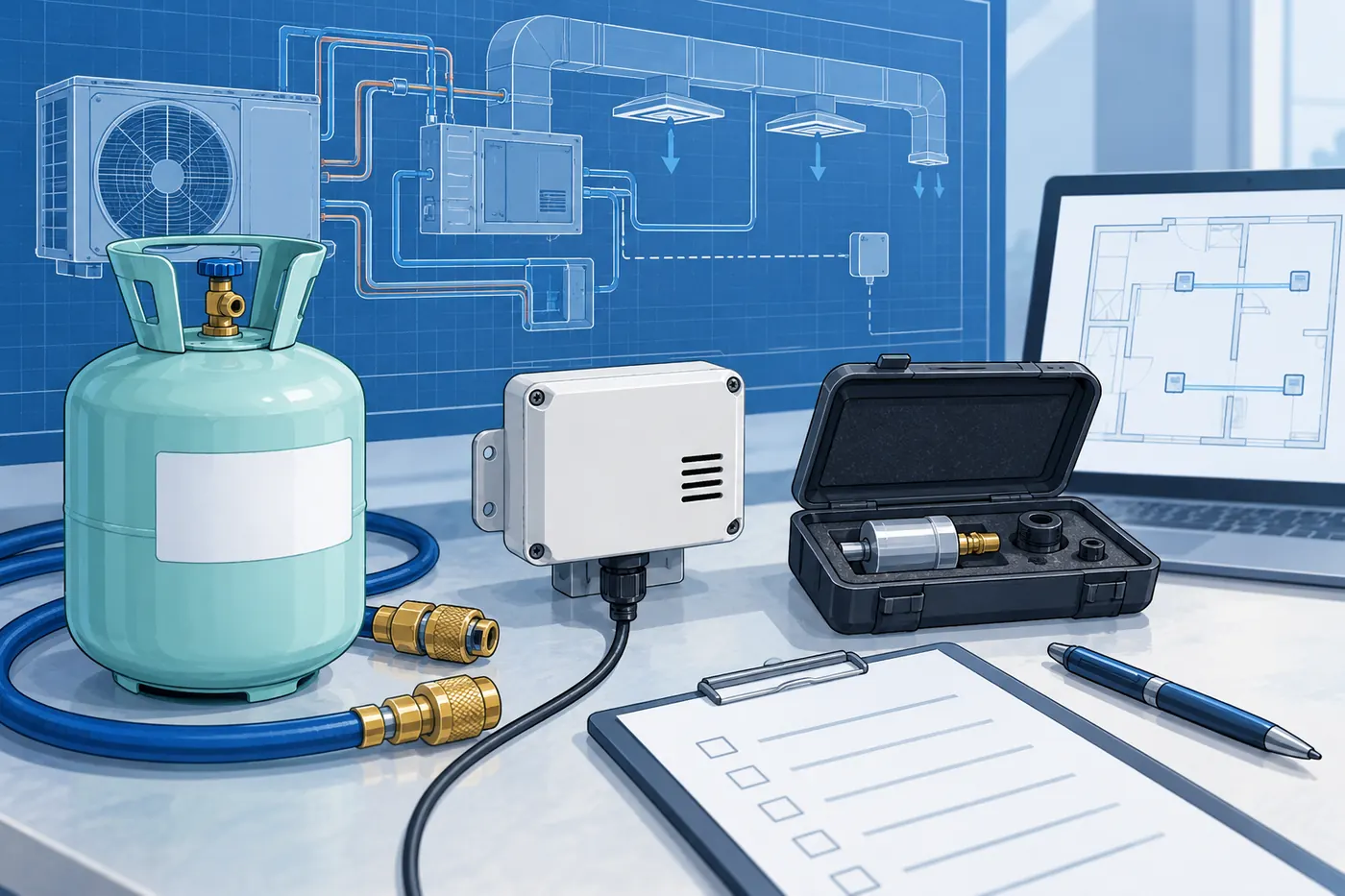
Why concentration cannot tell you the leak rate or remaining charge
Ambient concentration is a snapshot of gas in an air parcel. A leak rate is a flow of refrigerant mass over time. System charge is the amount contained in the circuit. A concentration detector does not measure either of the latter directly.
In a simple well-mixed room model, concentration changes depend on release rate, ventilation and volume. Real rooms add incomplete mixing, moving air, thermal effects and sensor lag. The same ppm reading can result from a small persistent release with weak ventilation or a larger brief release with stronger ventilation. Without the boundary conditions, converting ppm to grams per year is guesswork. Similarly, a charged system can have a leak while its room monitor reads zero at a remote point; a system may be low on charge due to an earlier leak that has since stopped.
Equipment-side measurements can help infer loss. Pressure, temperature, liquid level and performance can reveal anomalies, but those signals also respond to load and operating state. The EPA's direct-versus-indirect ALD explanation is a useful framework: direct ambient sensing and indirect equipment analytics answer related but distinct questions. If a facility needs both early indication and diagnosis of system condition, the solution may need both measurement streams.
A commissioning sequence that tests the decision, not just the sensor
- Record the intended refrigerant and equipment context. Confirm the actual fluid and relevant equipment documentation rather than relying on a generic label. For a blend, keep the full designation; do not substitute a similar refrigerant's calibration.
- Write the required decision. Is this an investigation alarm, a room warning, an equipment mitigation input, a service-locator tool, or an identity check? Specify who acts and what observable output indicates success.
- Map the sample path. For a point detector, document its location and airflow assumptions. For an aspirating system, document each inlet and line. For a portable detector, document the search method and access constraints.
- Check model-specific evidence. Match target gas, range, reference conditions, response, cross-sensitivity, environmental limits and maintenance requirements to the task. Treat marketing category pages as a starting index, not test evidence.
- Validate the assembled system. Follow the detector and equipment manufacturers' commissioning procedures. Confirm not only a local indication but the intended control/alarm response and a distinct fault response. Use qualified personnel and applicable safety procedures for challenge materials and refrigerant handling.
- Keep a service record. Record the installed model, firmware/configuration where relevant, calibration/check dates, alarm path and any changes to ventilation or room layout. A later renovation can change the sample path without changing the sensor.
This sequence deliberately avoids a universal test-gas dose or alarm set point. Those values depend on the refrigerant, application, instrument approval and jurisdiction. Reusing an example from a different appliance or market can be unsafe.
Examples of choosing the right measurement
A small air-conditioning appliance with a defined mitigation function. Begin with the appliance's refrigerant, equipment design and required control sequence. Evaluate an embedded sensor module against the expected release location and concentration range, then verify the entire equipment response. A wall-mounted facility detector could be useful for another purpose, but it does not automatically replace the appliance's validated RDS.
A commercial machinery room with several circuits. A permanent point or aspirating system can watch selected air locations and raise an alarm when refrigerant appears. If a technician arrives after an alarm, a handheld instrument is used to inspect the circuits and find the leaking connection. The two tools complement each other. If the site also tracks operational temperatures and levels, indirect analytics may give an earlier or different signal of lost charge.
An automotive shop facing an unknown charge. An ambient leak probe does not answer whether the vehicle contains the refrigerant its label claims. Use an identifier suitable for the vehicle and refrigerants under consideration, then follow the appropriate recovery and service process. After identity and safety are established, use a leak locator to investigate a suspected loss. The EPA's MVAC contamination guidance explains why labels and pressure alone are insufficient.
A refrigerator with a single service complaint. If the question is “where is the leak?”, a moving service probe and a suitable repair method may be more relevant than installing a permanent room network. If the question is ongoing supervision of a larger occupied area, the design changes. Avoid purchasing an instrument solely because its detection limit is numerically small; the limit's unit and test conditions must match the job.
Frequently asked questions
Does every refrigerant sensor measure ppm?
No. Some installed analyzers estimate ambient concentration in ppm; some alarm modules expose a state or output without showing a concentration; handheld leak locators may report relative response or a sensitivity specification in leak-rate units; identifiers report identity or composition. Ask what the instrument samples and how its output was validated.
Can one R-32 sensor also be used for R-454B?
Only if the specific model and configuration are documented and validated for both. R-454B is a blend, and a similar application does not establish equivalent calibration or response. Review the manufacturer’s target-gas data and the finished system's requirements.
Is the most sensitive portable detector the best fixed monitor?
No. Portable sensitivity is often tested near a standardized leak; fixed monitoring needs dependable coverage, a stable ambient measurement, fault handling, environmental endurance and an integrated alarm path. The performance specifications are not directly comparable.
Can a room monitor estimate how much refrigerant is left in a circuit?
Not from a concentration reading alone. It measures air at a location. Remaining charge needs an equipment-side assessment under controlled conditions. A room monitor can still provide important evidence that a release occurred.
What is the first document to request from a supplier?
Request the current datasheet and installation/operation instructions for the exact model, including supported refrigerants and the conditions behind its claims. For an RDS or safety alarm, also request the system-level integration and verification requirements that apply to the equipment and market.
Sources and further reading
- U.S. EPA: Automatic Leak Detection Requirements fact sheet — direct and indirect measurement concepts within its stated U.S. regulatory scope.
- U.S. EPA: GreenChill Guide on Refrigeration Management — permanent detection and manual inspection workflow; historical publication, not a source for current model specifications.
- UK Energy Technology List: Automated permanent refrigerant leak detection systems — fixed-point and aspirating designs within the program's criteria.
- ASHRAE: Refrigerant designations — identify the fluid and consult the relevant current standards.
- U.S. EPA: Handling contaminated automotive refrigerants — identity-check limitations and service context.
For the installed-versus-service workflow, continue with portable and fixed refrigerant detection. For refrigerant-specific sensor background, GasNose's refrigerant sensor overview is a useful companion; confirm any product claim against its own current datasheet.
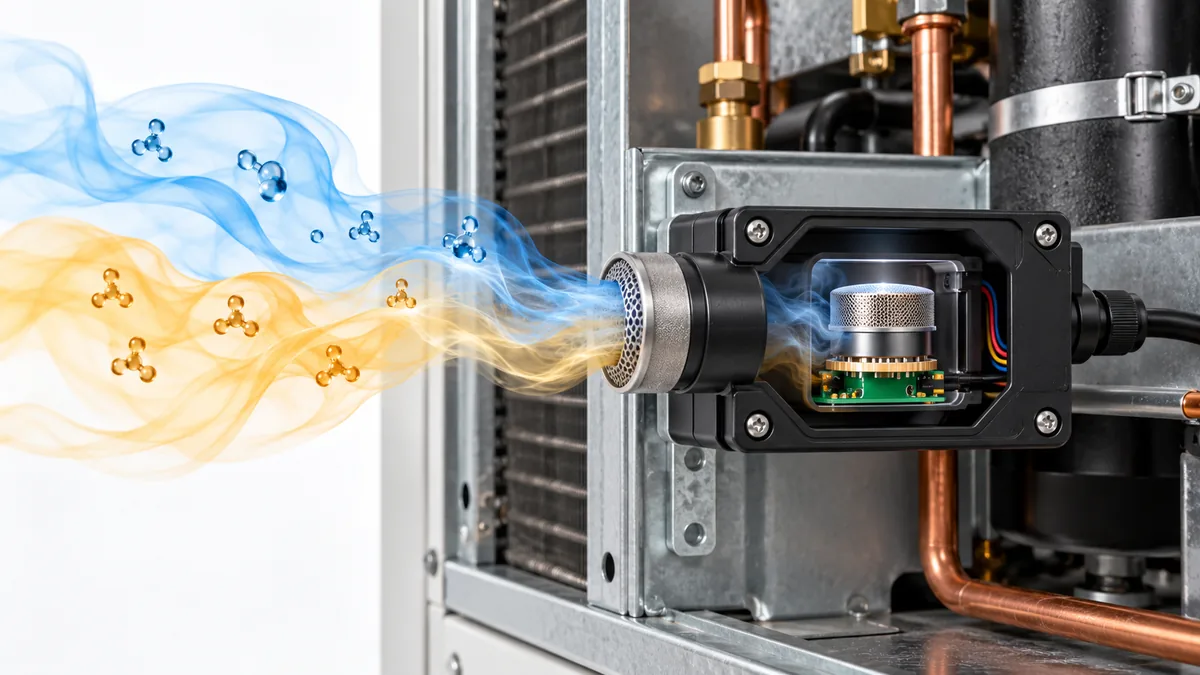
Một loại khí khác có thể kích hoạt máy dò chất làm lạnh không? Đọc các tuyên bố về độ nhạy cảm chéo
Hiểu độ nhạy chéo của máy dò chất làm lạnh, so sánh bằng chứng NDIR và MOS, đồng thời đọc các tuyên bố về nhiễu khí mà không loại bỏ cảnh báo thực.
Đọc thêm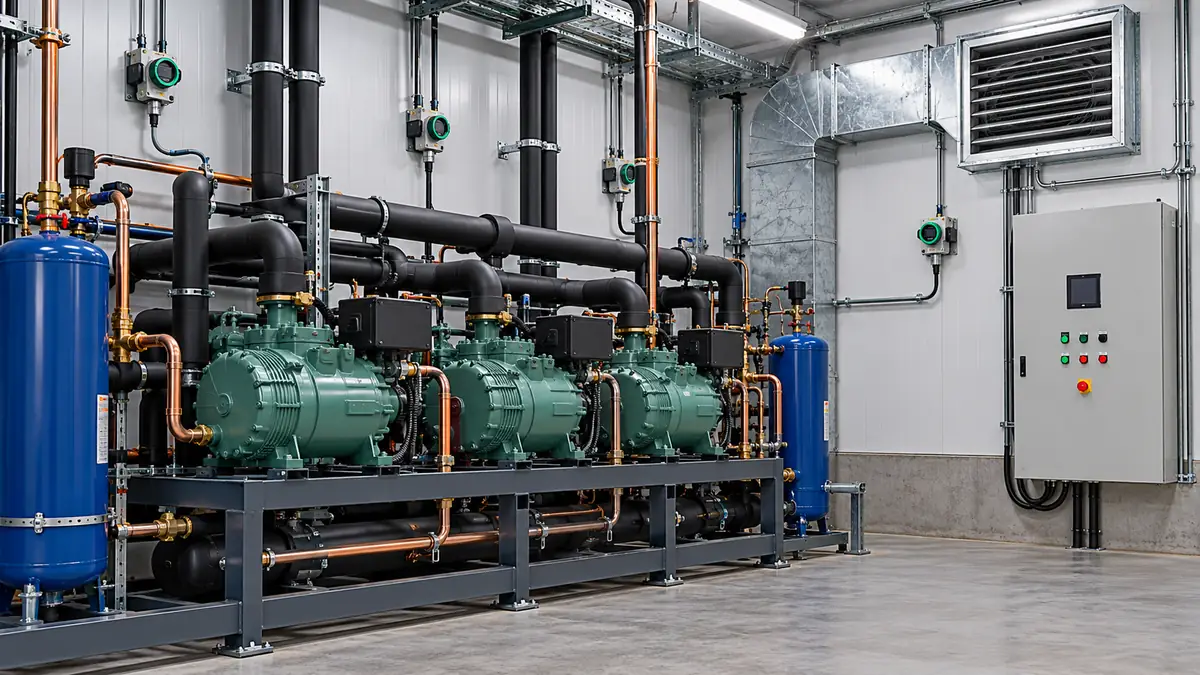
Nhật ký giám sát khí trong phòng làm lạnh nên ghi lại những gì?
Xây dựng nhật ký khí đốt hữu ích trong phòng thực vật bằng cách ghi lại danh tính máy dò, cấu hình, cảnh báo, lỗi, phản hồi thông gió và bằng chứng bảo trì.
Đọc thêm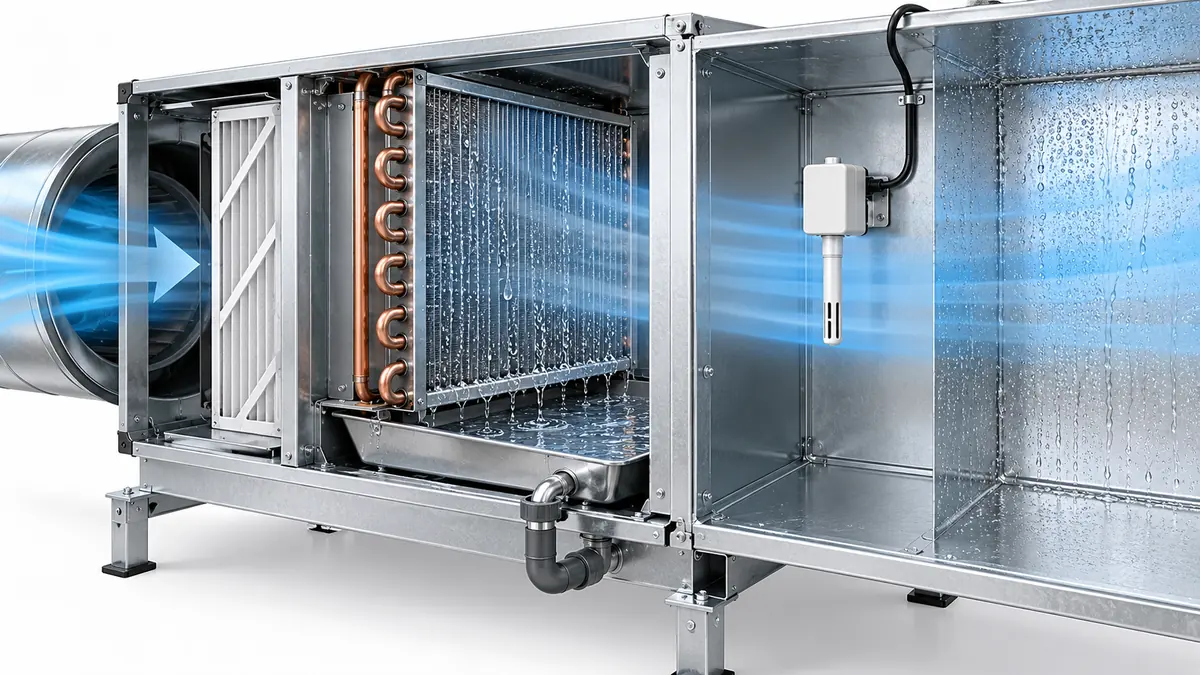
Khi nào hiện tượng ngưng tụ làm sai cảm biến HVAC?
Tìm hiểu khi nào hiện tượng ngưng tụ ở cuộn dây, đầu dò và vỏ bọc HVAC làm thay đổi chỉ số cảm biến và cách phân biệt hệ thống thoát nước dự kiến với tình trạng ướt không mong muốn.
Đọc thêm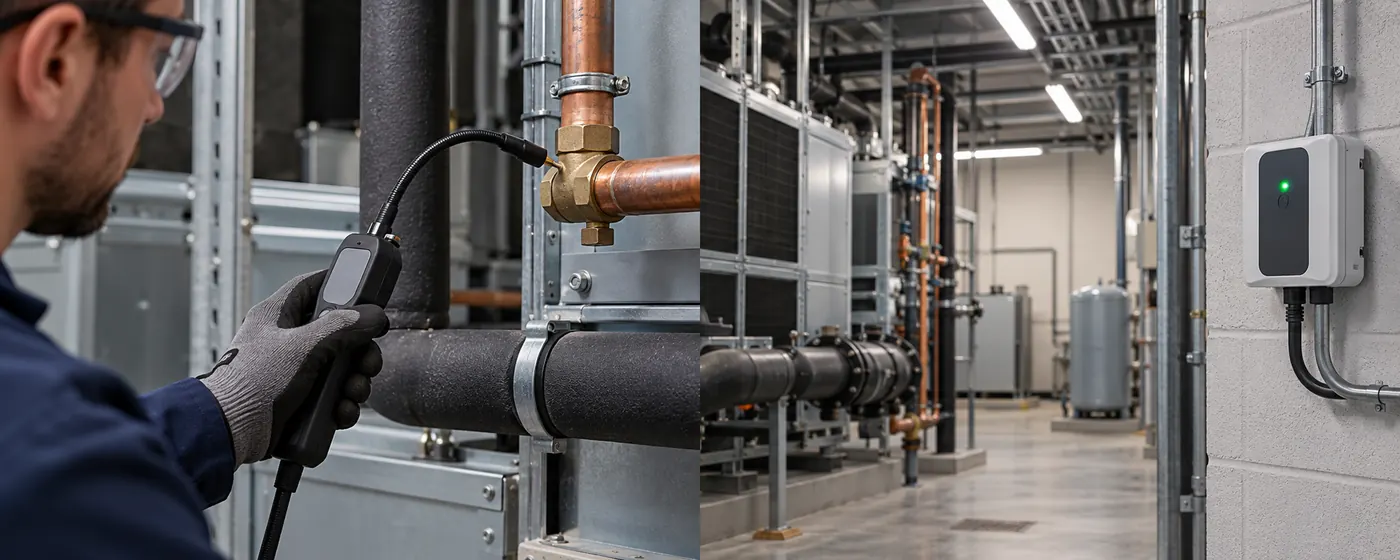
Phát hiện chất làm lạnh di động và cố định: Công việc của chúng khác nhau như thế nào
So sánh thiết bị định vị rò rỉ cầm tay, thiết bị giám sát điểm cố định và hệ thống hút theo vị trí mẫu, chuỗi phản hồi và nhu cầu vận hành thử.
Đọc thêm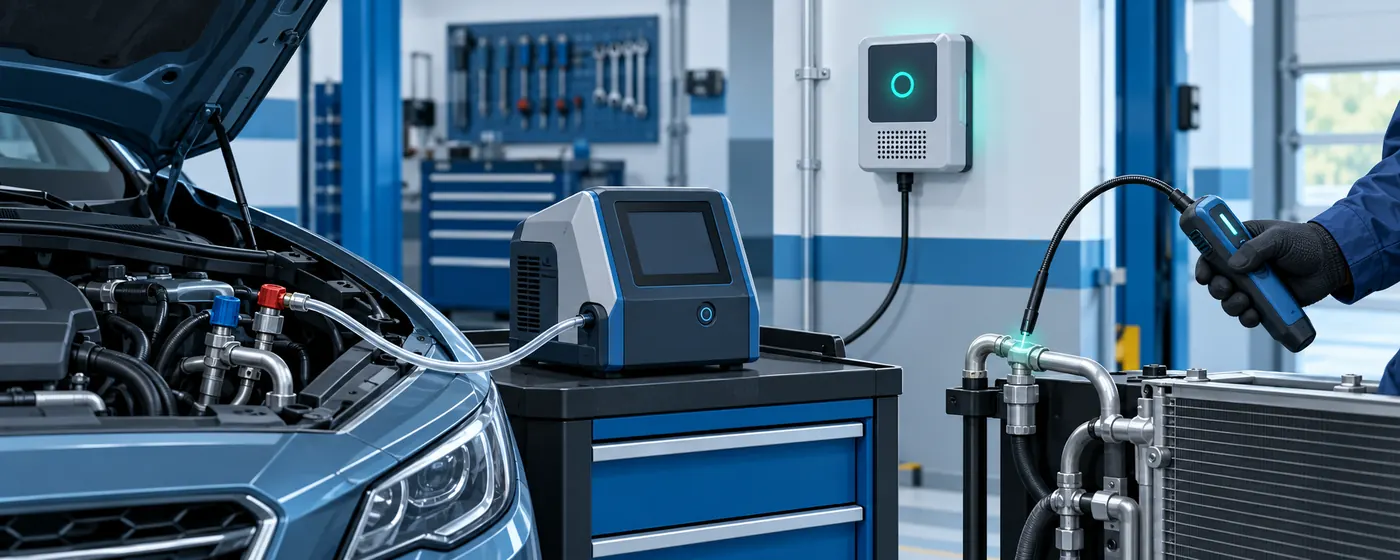
Nhận dạng chất làm lạnh và đo nồng độ: Bạn cần thử nghiệm nào?
Phân biệt thiết bị nhận dạng điện tích kín với giám sát nồng độ môi trường xung quanh, vị trí rò rỉ cầm tay và kiểm tra độ tinh khiết của chất làm lạnh chính thức.
Đọc thêm
Độ ẩm ảnh hưởng như thế nào đến kết quả đọc của cảm biến quang học PM2.5
Tìm hiểu lý do tại sao độ ẩm, khả năng hấp thụ nước, sương mù và sự ngưng tụ có thể ảnh hưởng đến ước tính PM2.5 quang học cũng như cách điều tra và xác nhận mức tăng đột biến của không khí ẩm.
Đọc thêm
Bình luận (1)
[…] instrument cannot be treated as a detector that has reliably measured zero gas. Our guide to refrigerant-sensor measurement tasks discusses how the target gas, unit and installation role affect a selection […]