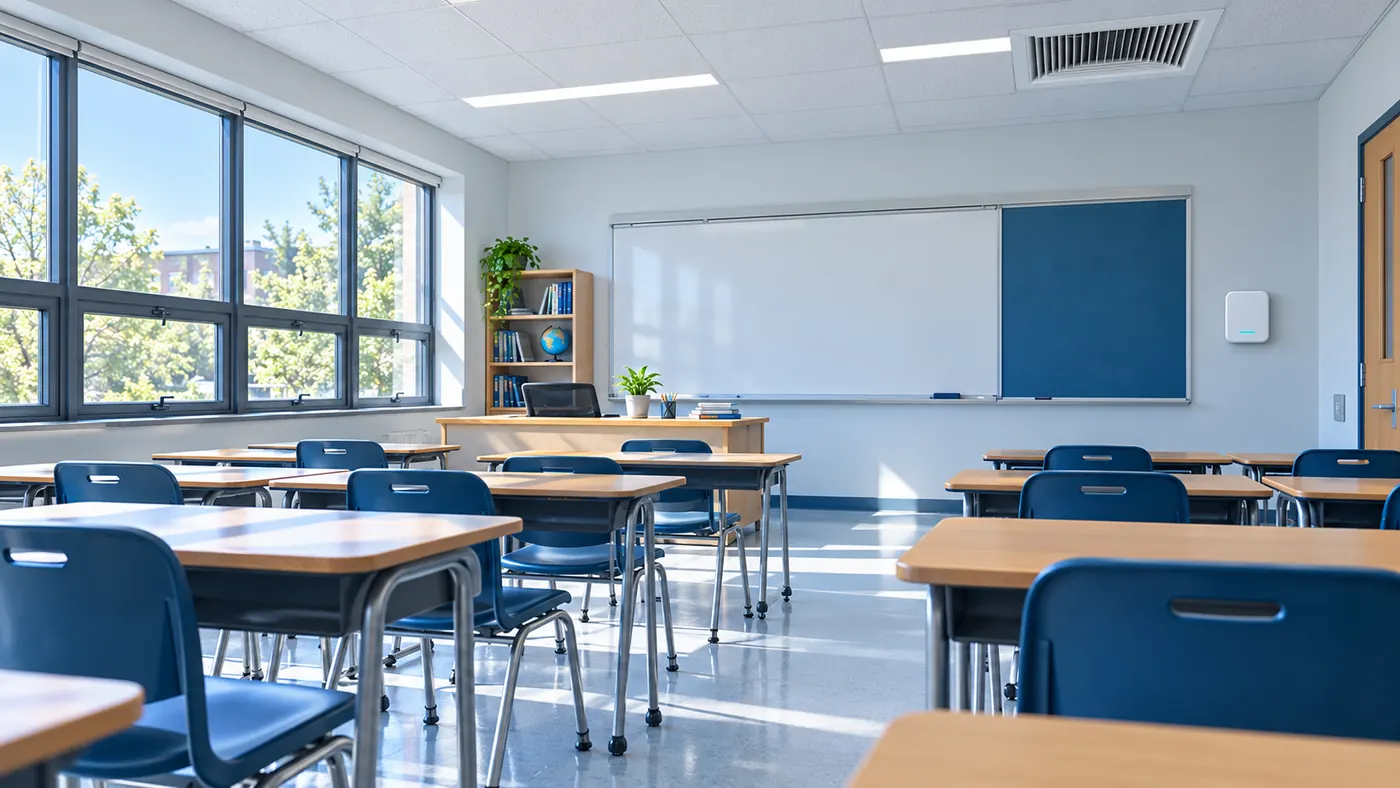
在教室放置二氧化碳監測儀,可以對學生和教職員通常居住的空氣進行採樣,並準確記錄其位置。 在一個典型的課堂上, UK Department for Education's ventilation guidance 建議將非色散紅外線 (NDIR) 監視器放置在大約就座頭部或桌子的高度,遠離門、窗和通風口,並距離人員至少 0.5 m。這是一個有用的起點,而不是通用安裝規範或保證一個讀數代表每張桌子。一個好的位置還具有明確的目的、無障礙的入口、安全的安裝以及可重複的方法來檢查其讀數在佔用的課程中是否有意義。
The position matters because a classroom is not a perfectly mixed box. A student exhales a short-lived plume. A window can produce a stream of incoming or outgoing air. A supply diffuser, radiator, corridor door and densely occupied corner can all produce local conditions. Moving the same instrument by a few metres may change the displayed value without any change in the building's ventilation plant. Placement is therefore part of the measurement method, not a decoration chosen after the purchase order.
本指南適用於教師、設施工作人員和學校領導制定日常工作 通風觀察。它不能取代當地的建築規範、委託通風測試或專家評估。如果需要正式的合規決定,學校應使用指定的當地測量方法和合格的從業人員。有關結果數字的含義,請參閱我們的 課堂二氧化碳讀數解讀指南。
在挑選牆壁之前先明確問題
詢問監視器將支援什麼決定。老師可能需要立即指示教室在上課期間變得悶熱。設施團隊可能會在時間表更改之前和之後的相似日期中比較同一教室。一個學區可能會篩選幾個教室,以決定在哪裡進行進一步調查。這些工作可以使用相同類型的直接二氧化碳監測儀,但不一定使用相同的採樣計劃或報告。
為每台設備寫一句話目的: 觀察12號教室佔用課程的趨勢, for example. Record whether the unit is fixed or rotates among rooms, whether staff will read the display or review a time-series log, and who responds to recurring readings under the applicable school guidance. A portable display placed on a teacher's desk is easy to see but can be moved without documentation. A fixed unit preserves a consistent position but may hide behind a new cabinet or become inaccessible for maintenance. Neither format solves the placement question by itself.
顯示的頻道應該是 直接二氧化碳測量 suitable for this use, rather than an “eCO₂” estimate derived from volatile organic compound response. Read the finished monitor's manual for its inlet, measurement method, warm-up, logging interval and calibration method. The DfE calls out NDIR technology as an effective choice. A separate 直接 CO2 與 eCO2 的解釋 在檢查產品說明時很有用。不要認為以「空氣品質監測儀」為名銷售的產品根本可以測量二氧化碳。
精心挑選房間
從持續使用的房間開始,通風觀察可能會改變真正的決定。這 Welsh Government's education-setting guidance 描述了使用二氧化碳監測儀來識別通風不良的佔用空間,並建議適當時在空間之間移動設備。時間表、房間容量和投訴歷史記錄可以幫助對有限數量的儀器進行優先排序。記錄選擇房間的原因,以便工作人員不會將受監控的子集解釋為對學校的完整調查。
| 空間 | 有用的第一個問題 | 取樣注意事項 |
|---|---|---|
| 標準佔用教室 | 反覆出現的課程時間模式是否顯示需要檢查室外空氣供應? | 注意班級人數、課程時長和入口位置。 |
| 小團體房 | 短暫而密集的時段是否會產生可重複的趨勢? | 距離一個人非常近的顯示器可能會誇大房間讀數。 |
| 教學空間大或不規則 | Are conditions different in occupied subareas? | One point may be especially unrepresentative; assess the air paths and test multiple points. |
| Laboratory or workshop | Does routine use create a ventilation concern? | CO₂ does not measure process gases, fumes or chemical exposures; use the required specialist controls. |
| Corridor, stairwell or transient lobby | Is a particular air-transfer question being investigated? | A transit reading is usually a weak proxy for a classroom's occupied ventilation. |
| Unoccupied room | What is the starting or background condition? | It does not describe the room under teaching load. |
具有異常活動、潮濕或化學來源的房間可能需要進行二氧化碳以外的室內空氣品質調查。不要讓方便的顯示器取代對濕度、燃燒器具、清潔產品、過濾或室外污染的檢查。這 US EPA's school IAQ reference guide 將這些問題與通風一起解決,而不是將它們簡化為一種氣體。

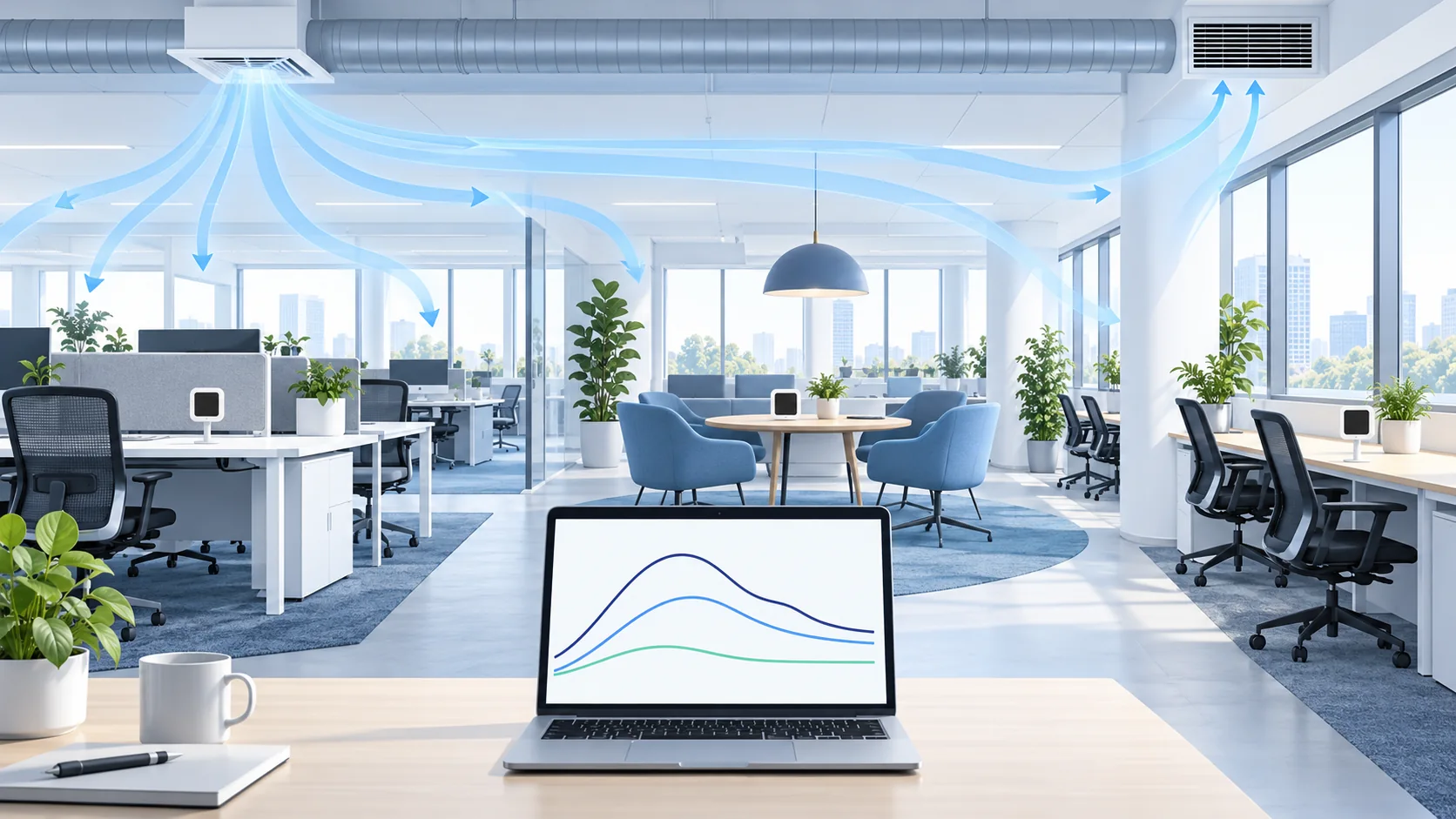
學校計劃圖像只是優先順序的說明;它不是測量的通氣圖。真實的房間清單需要 ID 和實際的建築區域資訊。如果單位輪換,請保留部署登記冊,以便在設備移動後,一個房間的圖表不會分配給另一個房間。
繪製一個簡單的氣路草圖
Before choosing a spot, walk the room while it is used normally. Locate openable windows, external doors, corridor doors, mechanical supply and return openings, fan units and any spaces where people cluster. Identify the normal student seating pattern, teacher position and likely obstructions. Ask how those conditions change across the day. The preferred position samples broadly representative occupied air, not a local jet or one person's breath.
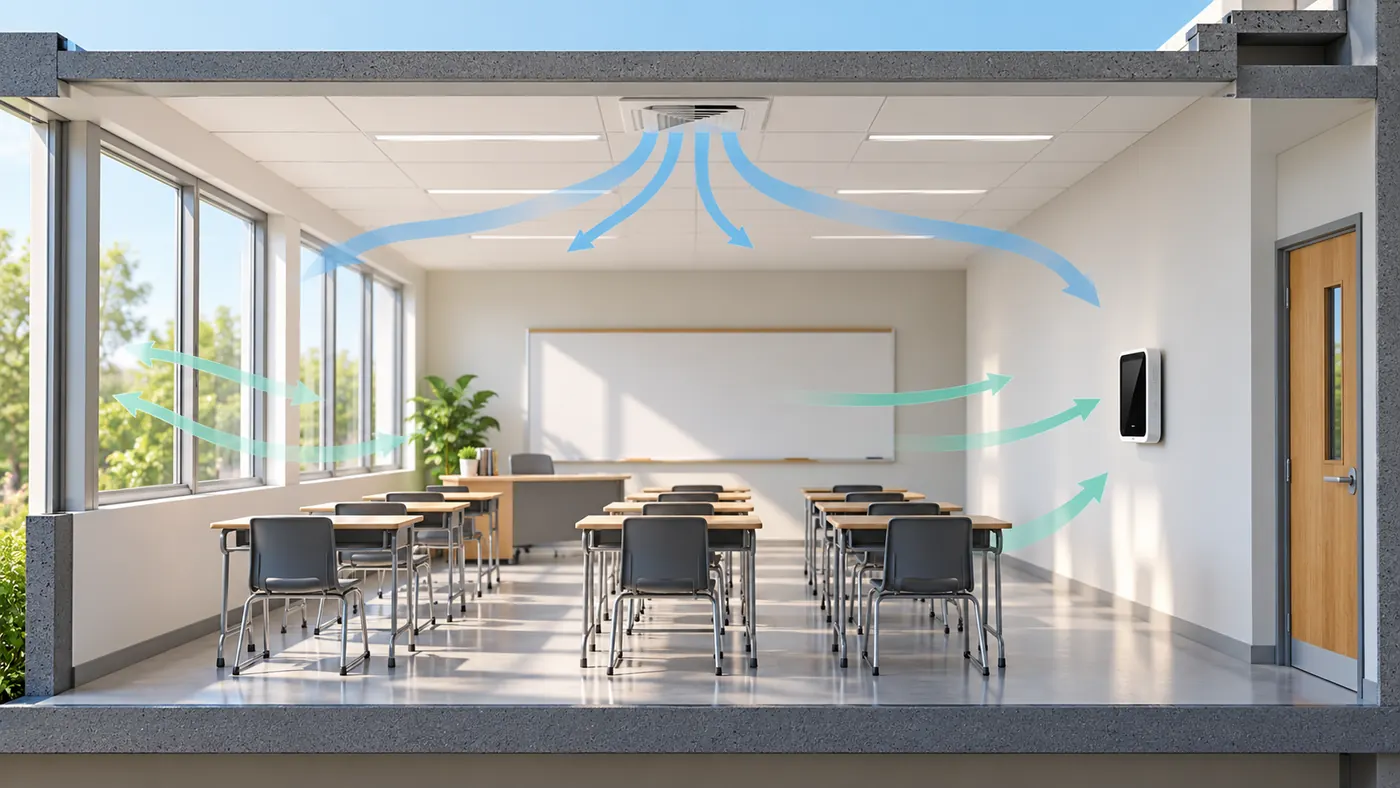
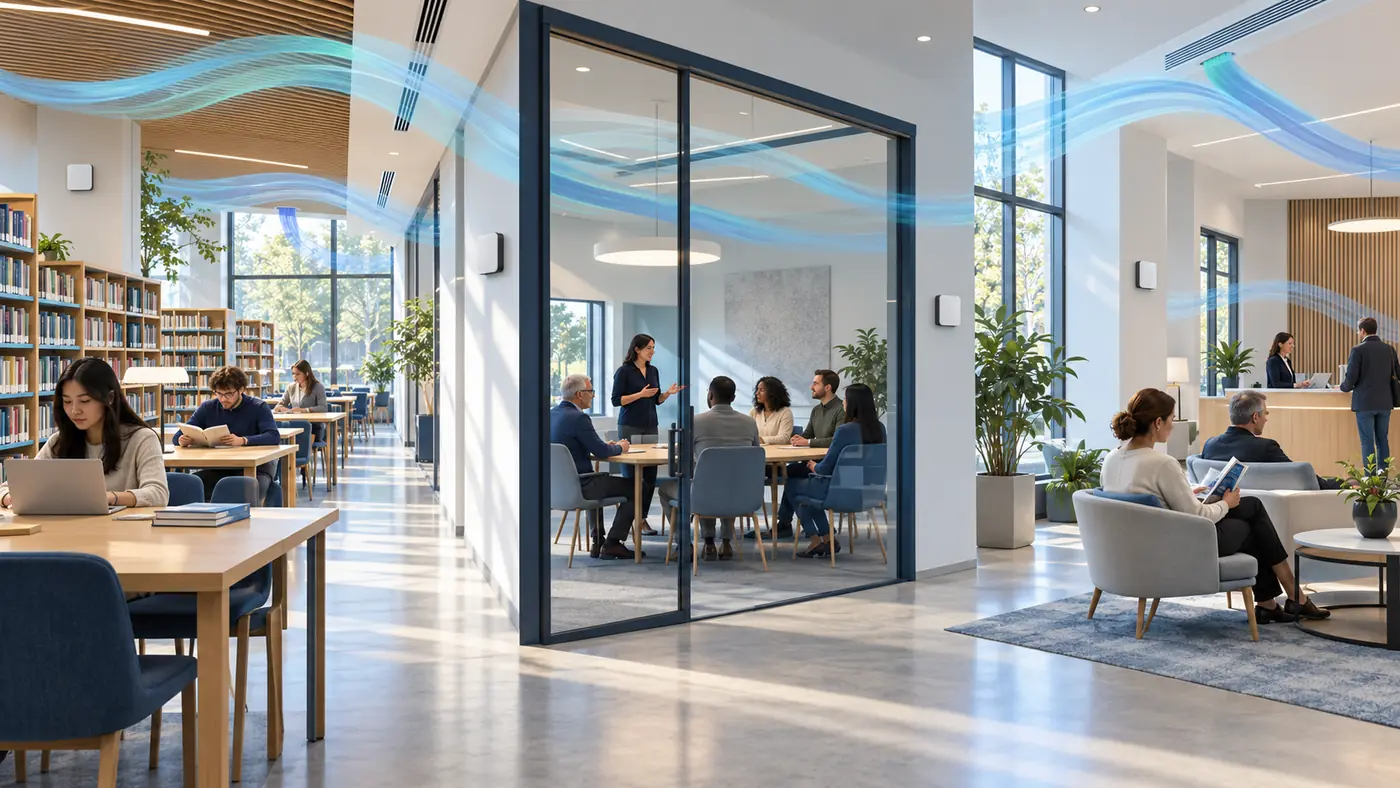
影像中的藍色路徑表示空氣可能的運動;實際方向、速度和混合必須在房間內觀察或測量。窗戶並不總是入口,打開的走廊門不一定是室外空氣。機械通氣可能會根據時間表或佔用情況改變模式。吊扇可以混合空氣而不輸送室外空氣。如果監測儀旨在評估通氣策略的變化,這些差異很重要。
這 UK Health and Safety Executive's CO₂-monitoring advice cautions against positions beside windows, doors and ventilation openings and against placing units close to people. A monitor in a supply-air jet may report lower CO₂ than the occupied zone, while a monitor directly in an exhaled plume may report higher. Neither local extreme is an honest summary of the room. If the only available power socket is in such a location, use a suitable battery-powered unit or arrange a safe installation instead of accepting a visibly biased position without documenting it.
Use the occupied breathing zone as the starting reference
對於坐著學生的普通教室,桌子或坐著的頭部高度是英格蘭 DfE 指南中的實用起始高度。它將入口放置在人們實際使用的空氣附近,同時避開天花板、地板和局部供氣噴嘴。指南也指出,設備與人的距離至少為 0.5 m。這個特定的距離屬於那個指導,不應該默默地變成世界性的技術法則。同一份文件建議使儀器遠離門、窗和通風口。
What counts as “away” must be judged in the actual room. A position can meet a tape-measure distance yet still sit directly in a window draft or under a high-velocity diffuser. Conversely, a wall unit may be useful if it is near the occupied area, unobstructed and checked against a second position. Read the manufacturer's installation instructions for clearance and orientation around the inlet. A display behind curtains, under a shelf or inside a closed display case measures the microenvironment of that obstruction. A unit at arm's length from the nearest desk can be safer from tampering, but the staff must still be able to see or retrieve its data.
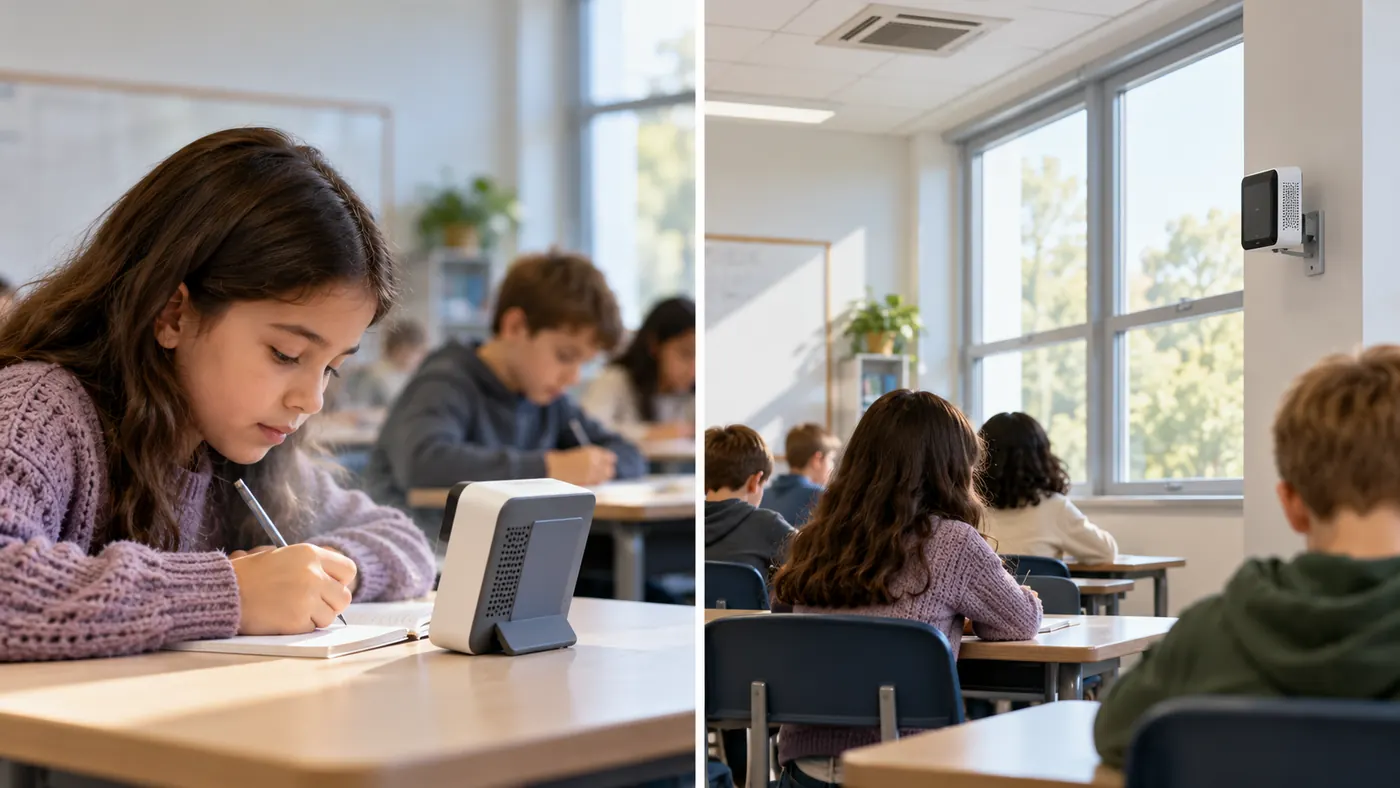
The breath plume in the illustration explains a local sampling error, not a fixed plume size. People move and talk. If a unit is used on a table, note whether a pupil routinely sits close to it. If a wall location is chosen, record the inlet height and distance from nearby seats, window and outlet. Take a photograph for the school's internal facilities record if permitted, but a public article does not need a classroom photograph or pupil image.
需要額外小心的情況
非常高的天花板、分區佈局或狹長的房間可以產生單點隱藏的空間模式。自然通風經常隨著風向和窗戶位置的變化而變化。原創的 自然通風教室的實地研究 investigated spatial CO₂ differences; its lesson for practice is to examine whether the particular room is sufficiently represented, not to copy one “best” wall position into every building. A monitor near a teacher's desk may represent that area well while missing a densely occupied back corner. A classroom adjacent to a busy road may also have a trade-off between opening windows and outdoor pollution that CO₂ alone cannot settle.
Portable HEPA cleaners are another source of confusion. A particle filter may change air movement and particle levels, but it generally does not remove CO₂ or provide outdoor air. Do not put the CO₂ inlet in a cleaner's discharge stream and then treat a falling or unchanged number as proof that the cleaner is working or failing. Our 空氣清淨機和二氧化碳指南 將兩個測量問題分開。
將「每個教室一個」作為初始抽樣計劃
One unit can be useful in a typical room; it cannot prove that every location has the same concentration. The DfE's suggestion of one device for a typical classroom is a manageable starting point. An unusual room may require a second location, a temporary rotation or a specialist assessment. The ASHRAE 關於室內二氧化碳的立場文件 將感測器位置和測量品質描述為解釋讀數的條件。它還警告不要將二氧化碳數值轉換為通用的 IAQ 判定。
A practical placement trial can answer whether the chosen point is adequate for the school's purpose:
- 使用上述指導建立候選位置並記錄粗略的房間草圖。
- 在可比較的佔用期間,在該位置以及一兩個其他可能的佔用區域位置取得讀數或記錄資料。僅當佔用和通風足夠穩定以進行比較時才順序使用相同的儀器;否則同時使用合適的儀器。
- 記錄時間、人數、打開的門窗、系統模式以及設備的任何移動。移動設備後立即進行的快速現場讀數可能仍會反映其先前的位置和反應時間。
- 比較時間序列形狀和任何持續的差異,而不僅僅是一個最大值。如果較大的差異改變了預期的決定,請保留多個地點或獲得合格的評估。
- 選擇並記錄最終位置。當房間佈局或通風佈置發生變化時重新檢查。
There is no universal numerical tolerance for two positions in this informal screen. Instrument uncertainty, response time and the room's dynamics must be considered before deciding whether a difference is meaningful. A school cannot use a casual five-minute walk-around as a formal proof of outdoor-air flow. The point is to reveal obvious local bias before a dashboard turns one sensor into an authoritative room label.
比較位置前檢查儀器
並排放置在同一空氣中的兩台儀器通常應在其規定的規格範圍內表現出大致一致的行為。這是一個 共置檢查, not a field calibration or certification. Allow both instruments to warm up as required, place their inlets in similar air without blocking each other, synchronize clocks and review readings over enough time to see their trend. If they disagree substantially, do not assume that two positions in the classroom caused the difference. Review the product's accuracy statement, service history, automatic baseline settings, calibration instructions and data-processing intervals.

這 CO2 監測儀精度規格指南 explains why a display that increments by one ppm may still have a much larger measurement uncertainty. A direct CO₂ channel can also drift or behave poorly when its baseline-correction assumptions are wrong for a space. Do not reset or recalibrate equipment merely to make two screens match. Follow the manufacturer's procedure, document what was done and seek support if a discrepancy persists. For networked devices, ensure the time zone and clock are correct before comparing logs.
如果用不同的模型評估幾個學校房間,明顯的房間排名可以反映儀器的差異。首先將它們放在一起,記下型號和序號,並在可能的情況下故意旋轉設備以查看圖案是否遵循房間或設備。這 辦公室區域比較法 describes the same principle for other occupied buildings.
Install for everyday school use
The final position must be safe and sustainable. Follow the manufacturer's mounting instructions and the school's electrical, fire and safeguarding policies. Secure a fixed unit so that it cannot fall or obstruct movement. Route power and data cables safely. Do not wedge a fire door open, change a controlled HVAC setting or place a unit where its maintenance would expose staff or pupils to a hazard. If the monitor has a display for teachers, make it readable without inviting frequent handling that changes the sample. If it is a logger, ensure authorized staff can actually retrieve and interpret the time series.
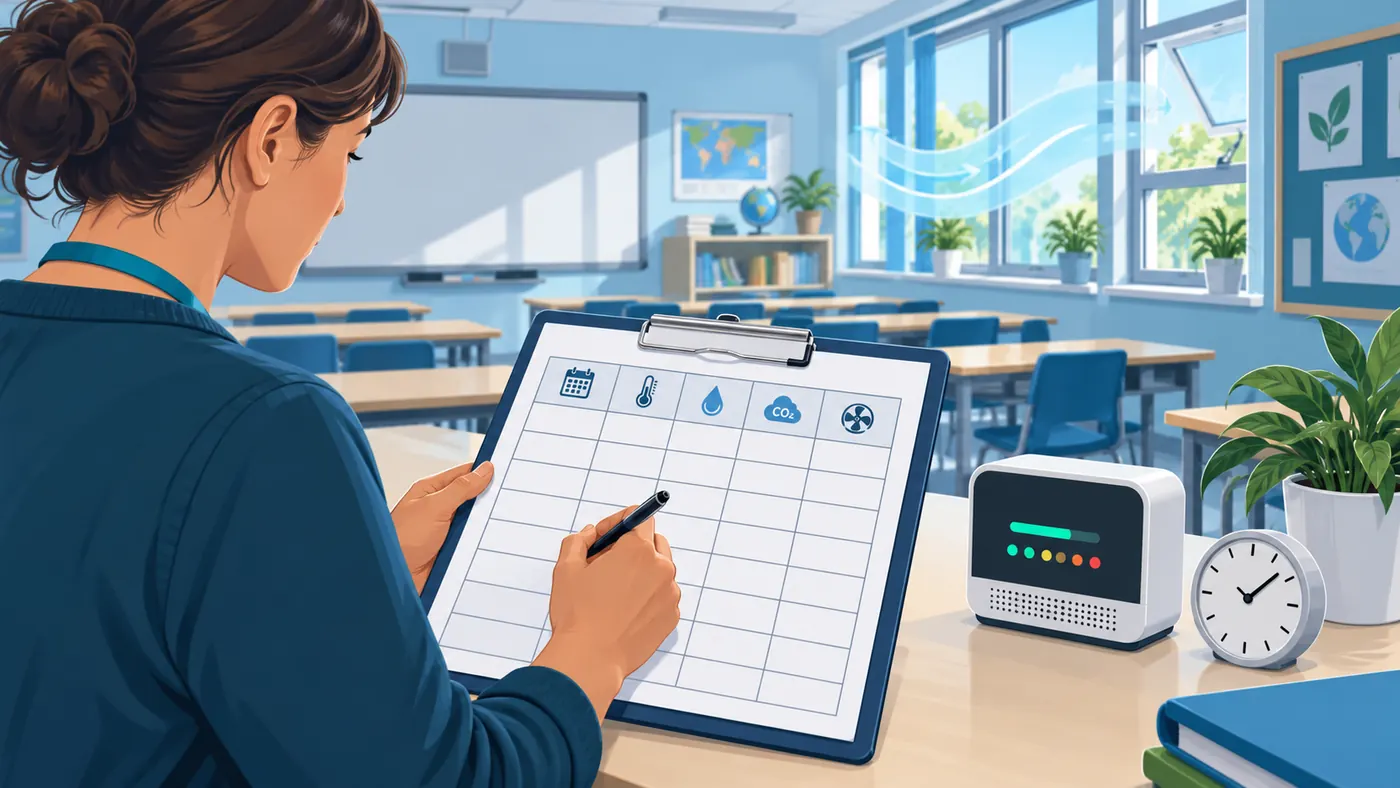
Give every installation a simple record: room ID; device make, model and serial number; CO₂ measurement method; inlet height; exact wall or table position; nearby openings; installation date; logging interval; time zone; calibration or verification status; responsible owner; and a photo or sketch stored in the school's own system. Record changes as new versions, not by overwriting the original. A subsequent furniture move, new divider, sealed window or diffuser adjustment can make yesterday's representative point a poor one.
必須對設備進行維護。定期檢查電源、顯示和資料傳輸。請參閱製造商關於校準、維修和更換的建議。確定誰注意到了扁平線圖、不可信的值或長時間的資料缺失期。一個無標籤的監視器默默地停止報告可能比根本沒有監視器更具誤導性。學校也應避免公開展示或報告,讓個別學生在室內閱讀;入住人數和房間環境通常足以進行通風工作。
偵錯清單
在接受該職位之前,請與將使用數據的人員確認以下內容:
| 查看 | 記錄或示範什麼 |
|---|---|
| 目的 | 顯示器支援的房間和決策。 |
| 測量 | 直接 CO2 方法、產品說明和目前使用狀態。 |
| 地點 | 入口高度、距常規座位、窗戶、門和供/回水出口的距離。 |
| 氣路 | 課程期間的正常門窗和機械模式。 |
| 無障礙 | 安全安裝、電源、視覺性或日誌記錄存取權和指定擁有者。 |
| 時間 | 正確的時鐘、時區、記錄間隔和占用時間表。 |
| 交叉檢查 | 當決定需要時進行共置或空間試驗,但有例外。 |
| 跟進 | 審查安置的當地指導/行動流程和日期。 |
這 美國 EPA 學校通風檢查表 is a broader facilities companion. It asks staff to examine ventilation operations and maintenance instead of expecting a sensor alone to diagnose a system. The installation record should connect to the school's maintenance and IAQ process. If a particular reading becomes important, staff should be able to reconstruct where it came from and what the room was doing.
常見安置問題
Should the monitor go on the teacher's desk?
It may be a practical temporary location if the inlet is in representative occupied air, clear of the teacher's own breath and away from a window, supply jet or obstruction. A desk also makes accidental relocation easy. Mark the exact position and assess whether a fixed spot or logger would make comparisons more reliable. A desktop unit tucked under papers or behind a computer is a poor placement.
安裝在天花板上是否會因為暖空氣上升而更好?
Not for routine seated classroom CO₂ observation. The reading should answer a question about occupied air, and the DfE's starting guidance points to seated head or table height. The actual vertical pattern depends on ventilation and room geometry. If a high-mounted building sensor is used for a control system, interpret it according to that system's design and commissioning rather than assuming it is interchangeable with a breathing-zone observation.
Can we put it next to the open window to see whether ventilation is working?
That might tell you about the local window stream, not the room's occupied air. Use a representative room position to observe the class, and separately document window status. If a formal study of the window's effect is required, compare occupied conditions carefully and consider other sampling positions. Opening a window can also change temperature, noise and outdoor pollutant exposure.
每個教室應該有兩個顯示器嗎?
不是自動的。正如教育部建議的那樣,典型的教室可以從一個合適的單元開始。複雜的幾何形狀、不尋常的空氣路徑或高風險的決策都可以證明額外的分數是合理的。在沒有計劃的情況下添加螢幕之前,將有限的資源花費在可靠的設備、合理的佈局、維護和有意義的後續工作上。
如果移動設備後讀數有變化怎麼辦?
記錄移動的時間和新位置。考慮儀器響應和改變的當地空氣樣本,然後比較類似的佔用時間。搬家後發生變化並不能證明房間通風有變化。如果差異持續存在並影響決策,請調查空間變化和儀器一致性。
保持展示位置與決策掛鉤
A useful classroom monitor is a documented observation point. It helps staff see patterns in occupied time and test whether a reasonable action has changed those patterns. It does not certify the whole room, measure every contaminant or identify the cause of a problem without supporting evidence. The best placement is one that can be defended from the room's occupancy and air paths, maintained safely, and revisited when conditions change.
為了重複讀數,將房間、設備、位置、佔用時間和通風狀態一起記錄。這些詳細資訊使設施團隊能夠區分房間變更和儀器移動、時間表變更或資料遺失間隔。