
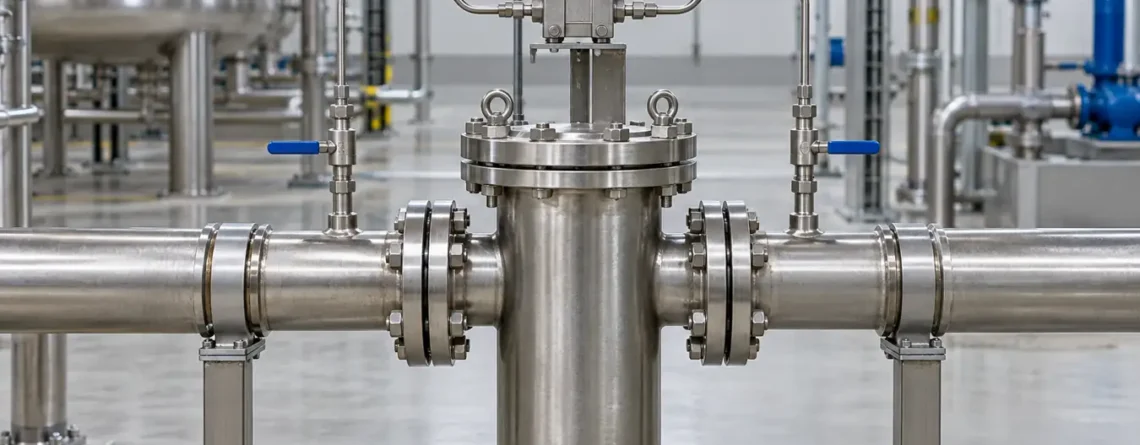
Choose a differential pressure sensor by defining the two pressure points, the useful differential range and the maximum pressure each port can experience. Then check accuracy at the operating point, medium compatibility, pressure taps, impulse lines and the way the signal will be verified. A device suitable for a few pascals across an air filter may be unsuitable for a small pressure drop in a high-pressure liquid line, even when both readings are called differential pressure.
Differential pressure is a difference between two pressures, not a direct measurement of filter cleanliness, flow or liquid level. A reliable system must bring representative pressure from each point to the sensor and correctly scale its output. This guide follows that measurement chain from the process taps to the displayed number.
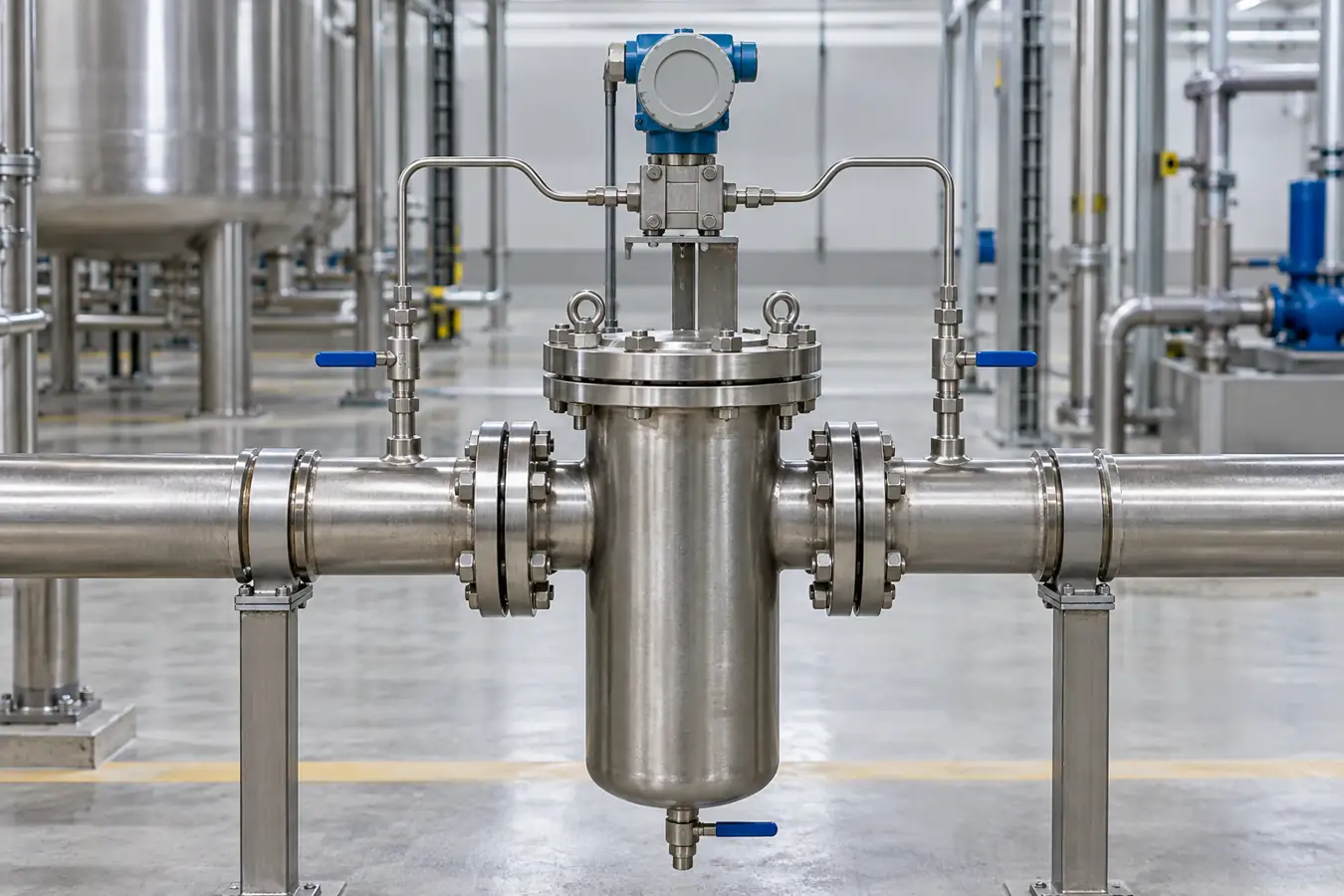
Define the two pressure points and the decision
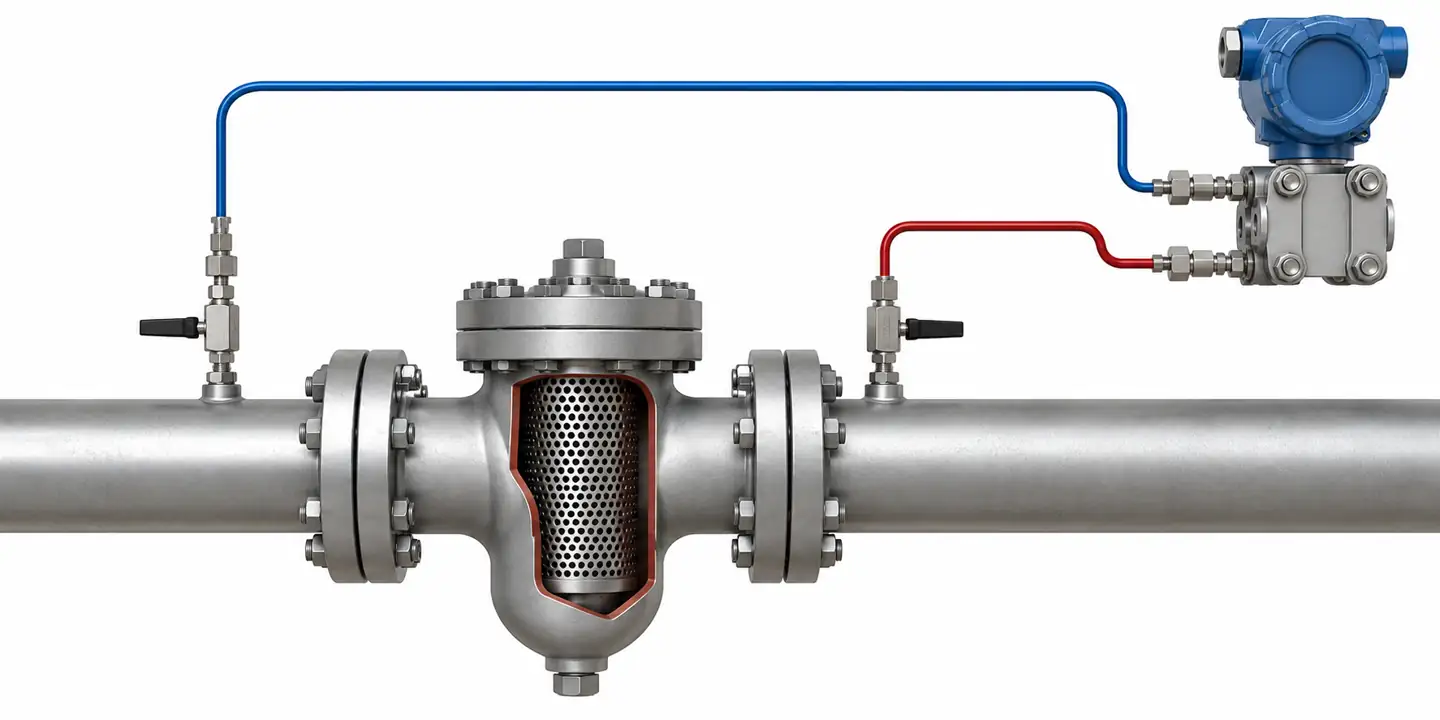
For a differential transmitter with high and low ports, the reported differential is conventionally ΔP = P(H) − P(L). A positive result means pressure at the H port is higher than at the L port; a negative result means the reverse. The sign depends on the connections and the instrument's convention, so label both taps and the controller input.
A differential pressure across a filter may increase as resistance to flow increases. However, the reading also depends on flow rate, fluid properties and operating conditions. A higher value is not automatically proof that the filter alone has become blocked. Compare at similar operating conditions and use the equipment manufacturer's maintenance criteria.
| 测量工作 | Pressure points | What the number can support | Additional information needed |
|---|---|---|---|
| Filter monitoring | Upstream and downstream of the filter. | Trend the pressure loss under comparable flow conditions. | Flow, medium, filter specification and operating state. |
| Room pressurization | Controlled room and a defined reference space. | Trend pressure difference and direction. | Door state, airflow and applicable facility criteria. |
| Flow element | Two taps across an engineered primary element. | Infer flow using the element's validated relationship. | Fluid properties, element geometry, installation and calculation. |
| Tank level | Appropriate liquid and reference-side pressures. | Infer hydrostatic head under a defined arrangement. | Liquid density, tap geometry, gas pressure and reference-line condition. |
对于许多压差流量元件,在适用计算的条件下,流量近似与压差的平方根成正比。它不是通用的直接一对一转换。接近零的差值、偏移和不确定性会对推断的低流量产生很大影响。主要元件、流体特性和安装必须与变送器一起考虑。
将测量范围与耐压分开
差分测量范围描述了传感器设计用于测量的差异。 静态或共模压力 描述了两个端口处共同存在的压力。当双方都处于高压下时,过程可能会出现很小的差异。例如,10 bar 的上游压力和 9.9 bar 的下游压力会产生 0.1 bar 的差异,而两个端口仍然承受接近 10 bar 的压力。这些值是说明性的;它们不是特定设备的评级。
这种区别很重要,因为传感器可能具有足够的差动量程,但最大工作压力或单侧过载限制不足。在启动、关闭、维护或堵塞期间,一个端口可能会经历与另一个端口截然不同的压力。记录正常压力和最大压力 每个 connection, expected transient conditions, maximum differential and manufacturer-defined limits. Never assume burst pressure is a normal operating limit.
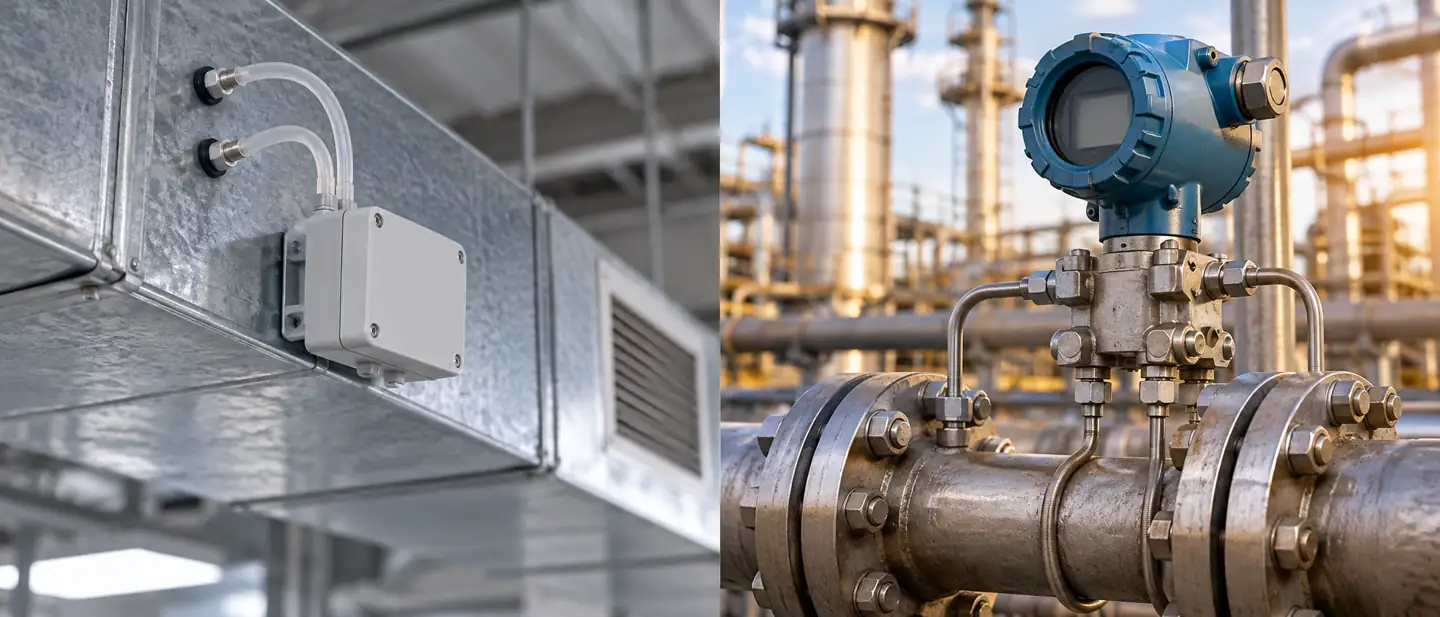
这 Yokogawa EJA130E product information lists differential measurement, static pressure and pressure-limit information separately. Its published figures apply to the stated model and configuration; consult the exact specification for the selected capsule and option. A low-pressure air device such as the Johnson Controls DP150 is designed for a different building-control application. Similar labels do not make the devices interchangeable.
What to ask for in a specification
- Differential measuring range, including whether negative values are needed.
- Maximum working pressure and whether it applies to both ports together.
- Maximum one-sided differential or overload rating in each direction.
- Temperature and medium conditions behind the specified ratings.
- Pressure connection, wetted materials, sealing and mounting requirements.
- Reference accuracy basis, temperature effect, static-pressure effect and long-term stability.
- Output type, power supply, response time, electrical isolation and fault indication.
Manufacturers may use different definitions for “overpressure,” “proof pressure” and “burst pressure.” Use the definitions in the actual datasheet and do not substitute one for another. A sensor's ability to survive an exceptional event does not necessarily mean it remains accurate immediately afterward.
Select a useful differential range
Choose the narrowest range that covers the expected measurement and credible transients while meeting the device's pressure limits. An unnecessarily wide span can make a small working signal difficult to distinguish from offset, noise or a percentage-of-span error. A span that is too narrow can saturate during startup or process upsets and leave no useful indication of the event.
从正常操作范围和决策点开始。过滤系统可能具有清洁的运行基线、维护决策水平和更高的可预见干扰。房间压力系统可能需要检测零附近的微小正差和负差。询问仪器是否支持双向范围以及如何报告所选刻度之外的读数。
一些多范围发射器允许现场选择跨度。确认精度声明是否随所选范围变化、输出是否自动重新调整以及是否必须更新控制器。记录发射机和控制系统中的设置。连接到不正确缩放的模拟输入的正确传感器可以生成看似合理但不正确的工程值。
Read accuracy in the context of the actual signal
An accuracy expressed as a percentage of full scale or calibrated span is not the same as a percentage of reading. As a simple calculation, suppose a device has a ±1% of 100 Pa span reference accuracy under stated conditions. That component is ±1 Pa. At a 10 Pa reading, ±1 Pa represents 10% of that reading. This is arithmetic for an illustrative specification, not an estimate of a particular sensor's installed performance.
Reference accuracy may combine nonlinearity, hysteresis and repeatability under defined laboratory conditions. It may exclude temperature effects, static-pressure effects, mounting effects, drift, power supply and the uncertainty of the test reference. The 江森自控 DP150 规格 确定该系列所规定的准确性的基础。这 WIKA CPT8900 规格 show that high-accuracy instruments can state separate static and differential characteristics. Compare like with like and check the actual model's conditions.
不要自动添加每个数据表编号,就好像所有误差总是在同一方向上发生一样,并且不要假设独立误差始终可以通过和平方根组合。有意义的不确定性预算取决于规范定义和应用。对于关键决策,确定主要贡献者并使用适合项目的记录方法。
静压和零移
When both ports experience a large common pressure, the transmitter can exhibit a static-pressure effect even if the differential is small. A zero check at atmospheric pressure may not fully describe behavior at the working line pressure. The Rosemount 3155 reference manual includes a model-specific discussion of high-static-pressure zero correction. The permitted procedure depends on the transmitter and process arrangement; use the actual manual and site procedure.
反复调零并不能代替查找泄漏、堵塞、液柱不均或改变安装的情况。在进行调整之前,记录所发现的指示并确定两个端口在指定条件下真正达到预期的相等压力。保留原样的结果和条件以供以后比较。
一个差动传感器还是两个独立的压力传感器?
Subtracting two separate pressure measurements is possible, but each sensor contributes uncertainty to the result. Consider two transmitters that each read around 10 bar while the difference of interest is 0.1 bar. A small offset on either input can be a substantial fraction of the calculated difference, even though each individual pressure appears reasonable. The two channels may also have different temperature responses, drift or sampling delays.
A dedicated differential transmitter measures the pressure difference as its primary variable. It still has offset, temperature and common-pressure effects, and it must be rated for the pressure applied at each port. It is not automatically superior for every job: two sensors can be useful where individual pressures are needed or where their uncertainty is demonstrably acceptable. Compare the actual error budgets, installation and safety requirements for the intended decision.
For a subtraction in a controller, use compatible pressure references and synchronize the readings. Subtracting an absolute pressure from a gauge pressure without accounting for their different references is not a valid differential measurement. Also document what happens if one signal is missing or out of range; a controller should not silently treat a failed channel as a real zero.
The impulse lines are part of the instrument
Pressure taps, tubing, valves and fittings carry the two process pressures to the sensing element. A transmitter cannot correct a pressure that never reaches its port because a line is blocked, leaking or isolated. The location and condition of both taps therefore affect the meaning of the reading.
For a gas service, accumulated liquid can create unwanted hydrostatic head or a blocked path. For a liquid service, trapped gas can affect response and stability. Steam and high-temperature services often require arrangements determined by the equipment manufacturer and site engineering practice. Unequal liquid columns, temperature differences and long tubing runs can contribute offsets or delays. The precise design depends on the fluid, pressure, temperature and process safety requirements.
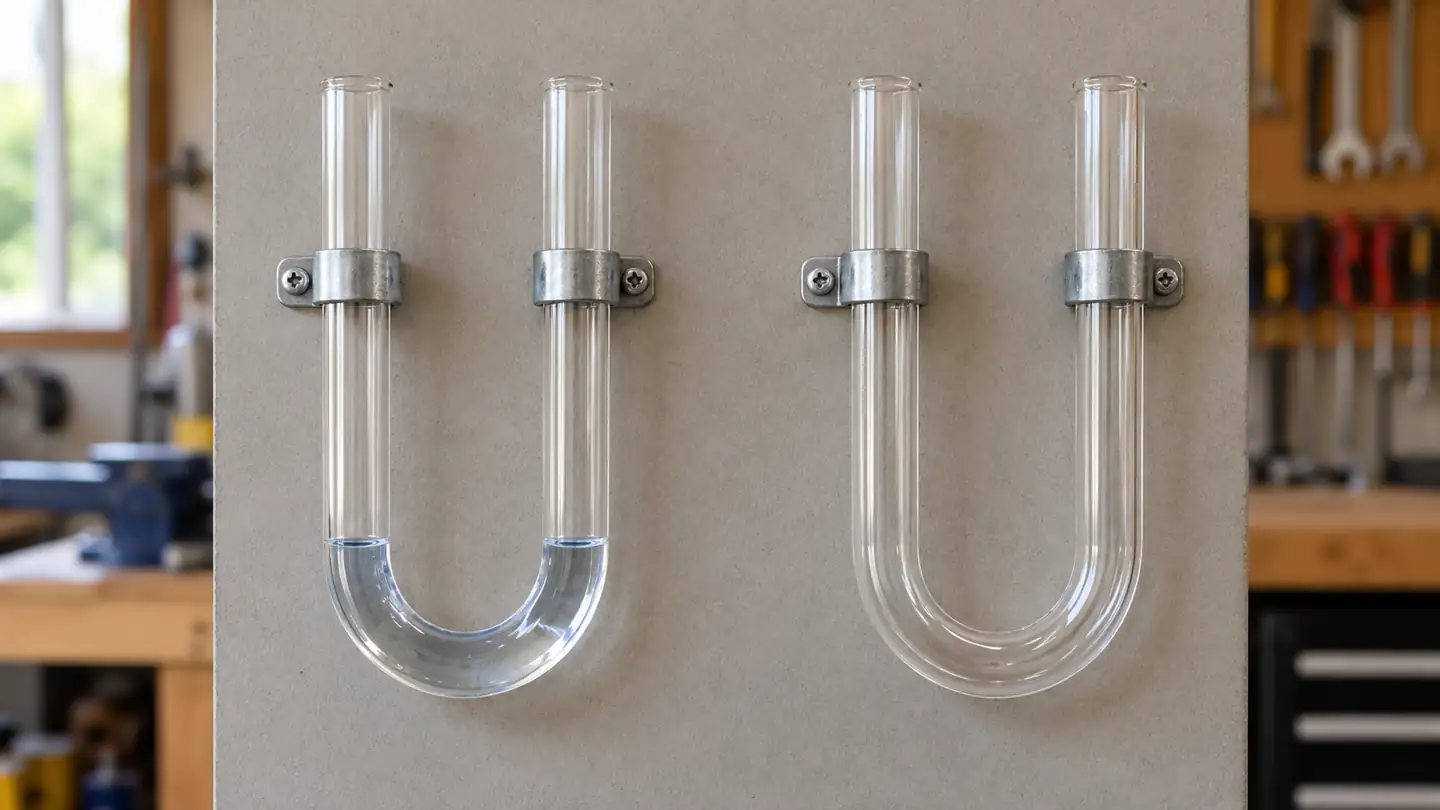
Place taps where they represent the intended pressure difference and can be inspected. A tap in a stagnant pocket may see accumulated solids; one near strong turbulence or a bend may not represent the pressure assumed by a flow-element calculation. Protect lines from mechanical damage and route them so that inspection and maintenance are practical. Follow the applicable primary-element and transmitter manuals for tap orientation, manifold design and commissioning.
Do not open or equalize process connections based on a generic online checklist. Pressurized, hot, toxic or flammable systems require site-specific isolation and operating procedures. A visual review of a trend does not establish that an impulse line is safe to service.
Choose materials, mounting and electrical output together
For liquid or gas process service, confirm compatibility of diaphragms, seals, fittings and any fill fluid with the actual medium, cleaning chemicals and temperature. If a diaphragm seal is required, its capillary and fill-fluid temperature behavior become part of the measurement chain. An installation with aggressive cleaning cycles can differ from a nominal room-temperature datasheet condition.
Mount the instrument according to its manual. A change in orientation or a mechanically stressed connection may affect zero for some low-range devices. An enclosure rating does not automatically establish chemical compatibility or suitability for every washdown method. Consider vibration, condensation, sunlight, accessibility and the environment around electrical connectors.
Analog outputs such as 4–20 mA or voltage signals and digital outputs each require a matching controller input. Verify the supply, wiring, load limits, signal range, units and fault state. With a 4–20 mA output, determine whether the controller interprets the lower and upper values as the intended engineering range and whether an out-of-range current indicates a measurement or fault condition. The specific behavior belongs to the transmitter and controller manuals.
Compare a filter application with a room-pressure application
In a filter application, the required pressure points lie on opposite sides of an element. The useful signal is the loss across that element at an identified operating flow. Before choosing a range, collect expected clean and maintenance-condition values from the filter or system documentation, then consider startup and abnormal-flow conditions. A sensor mounted on a bypass with both lines routed to the same side of the filter can show a credible number that answers the wrong question. A process sketch with clearly identified taps is therefore part of the specification.
In a room-pressure application, a small change around zero can reverse the inferred pressure direction. Doors, reference-space pressure and ventilation operating modes may affect the reading. Bidirectional range, low-end offset and stability may matter more than a large maximum span. Determine whether the decision is based on a brief indication, a sustained trend or an alarm; then evaluate the sensor and control system at the relevant timescale. Do not infer a particular room's compliance from a generic differential-pressure threshold.
These examples also show why a signal's physical meaning should be recorded with its units. “Pressure 20 Pa” is incomplete without two locations and a sign convention. Across a filter it describes a loss; between rooms it describes their relative pressure. If either tap is moved, label the resulting series so that the apparent step is not mistaken for a process change.
Scaling and sign: an illustrative calculation
假设变送器配置为 −100 至 +100 Pa,并在该范围内线性产生 4–20 mA。在该配置下,4 mA 对应于 -100 Pa,12 mA 对应于 0 Pa,20 mA 对应于 +100 Pa。如果控制器错误地采用 0 至 200 Pa 范围,则相同的 12 mA 信号将显示 100 Pa 而不是零。仪器和控制系统可能各自运行正常,但组合指示是错误的。
此示例并未规定每个模型的输出配置。有些设备提供其他等级或故障电流行为。调试期间,记录信号路径两端配置的下限和上限范围值、单位和输出约定。在几个合适的测试点进行确认,包括零和做出决定的区域。接线或结垢检查与压力路径检查是分开的:其中一个可以通过,而另一个仍然错误。
调试与验证

Commissioning should establish the instrument configuration and the installed measurement path. Record the model, serial number, port assignments, selected range, output scaling, mounting position, medium and relevant pressure and temperature conditions. Confirm that both pressure paths are connected to their intended taps and that the controller's engineering units match the transmitter configuration.
Verification uses a suitable reference to compare the output at specified points, including the working region and zero when appropriate. Check the reference instrument's range and uncertainty; it should be suitable for the tolerance being evaluated. A laboratory comparison at atmospheric pressure is useful but may not capture field effects from common pressure, impulse lines and process temperature. Record the conditions so the result is not mistaken for a complete installed-system validation.
Check the reference and document the result
Choose a reference that covers the test range and has uncertainty appropriate to the acceptance tolerance. A reference instrument with a wide range may be insufficiently precise at a very small differential even if it can display the value. Calibration records should identify the reference, its status, the applied points and the environment. For an analog output, record both the actual electrical signal and the controller's displayed engineering value when the purpose is to validate the entire chain.
在安全和技术上适当的情况下,比较增加和减少的测试点以揭示滞后或卡住的机制。让仪器和参考按照其程序要求稳定。快速检查可以显示系统是否响应,但本身无法建立长期稳定性或其对温度和静压的完全不确定性。报告实际检查的内容,并避免将结论扩展到测试条件之外。
An as-found result is valuable even if the instrument later passes after adjustment. It shows whether earlier data might have been affected and whether the verification interval is appropriate. Preserve the original configuration, the reason for adjustment and the as-left check. If a pressure line was cleaned or replaced at the same time, record that intervention separately: a better reading may be due to the restored pressure path rather than an electronic calibration change.
| Symptom | Possible causes to investigate | Evidence that helps |
|---|---|---|
| Negative value where positive was expected | Reversed ports, actual flow reversal or sign/scaling configuration. | Tap labels, process direction and transmitter configuration. |
| Flat value despite process change | 线路阻塞、封闭隔离、饱和、冻结输出或实际过程稳定性。 | 压力路径的状态标志、信号检查和合格检查。 |
| 反应慢 | 管道过长或部分堵塞、阻尼、滞留气体或过程行为。 | 根据批准的程序进行响应比较和线路状况。 |
| 维护后换班 | 安装变化、管线填充、温度、调零或配置变化。 | 现状/现状记录和记录的安装条件。 |
| 信号嘈杂 | 脉动、振动、电气干扰或不合适的阻尼。 | 原始信号、过程运行状态和接线检查。 |
在更换或重新校准变送器之前对整个链条进行故障排除。这 ICS施耐德讨论 说明了为什么不正确的压力路径和零条件可能类似于有缺陷的传感器。其示例是诊断提示,不能替代安装的过程和限制。
采购工作表
在请求报价之前,说明媒介和目的;在工艺草图上标记 H 和 L 丝锥;指定最小、正常和最大差异;列出每个端口的正常和最大静压;并描述可信的单方面压力事件。包括工作温度、清洁化学品、材料、电力输出和所需的响应时间。
Next, define the required uncertainty at the decision point rather than asking only for a high accuracy percentage. Include expected ambient and process conditions, calibration interval and reference availability. Ask the supplier to identify which specifications apply to the exact part number and which conditions are excluded. Finally, record who will install, inspect and verify the pressure paths over the sensor's working life.
Preserve context in the long-term record
Store the two tap locations, sensor orientation, range and units with the signal tag. Include the active configuration and a dated note when the instrument, primary element, pressure lines or controller scaling changes. A trend that shifts after a maintenance event is easier to interpret when the record shows whether a line was cleaned, a transmitter was re-ranged or a filter was replaced.
For filter monitoring, record the flow or operating mode alongside differential pressure. Comparing a reading at low flow with one at high flow can exaggerate or conceal the effect of filter loading. For a room, record ventilation mode and relevant door events where practical. For a flow element, retain the calculation configuration and the fluid-property basis. These supporting variables let an operator distinguish a change in the process from a change in the conditions under which the pressure was measured.
For a broader HVAC context, the guide to interpreting HVAC pressure readings discusses how air, refrigerant and hydronic pressure readings answer different questions.
常见问题
Is differential pressure the same as gauge pressure?
不会。压差比较两个定义的压力点。表压将压力与当地大气压进行比较。设备可以测量相对于大气的差异,但必须说明其配置和参考。
我可以减去两个独立的压力传感器吗?
Sometimes, if their ranges, references, timing and combined uncertainty suit the task. When the desired difference is small relative to each sensor's range, offsets and drift can dominate the subtraction. Evaluate the entire measurement uncertainty before assuming two general pressure sensors are adequate.
为什么小压差需要高压额定变送器?
Both ports can sit at high common pressure while their difference is small. The differential span describes the measured difference; the working and overload ratings describe pressure resistance under defined conditions.
Does a higher filter differential always mean the filter is clogged?
No. A filter's pressure drop also depends on flow and other operating conditions. Compare similar states and follow the filter manufacturer's criteria.
Does zero adjustment fix a blocked impulse line?
No. Zero adjustment cannot restore a representative process pressure to a blocked or leaking path. Inspect and verify the measurement chain using the applicable site procedure before changing calibration.
How often should a differential pressure transmitter be checked?
Use the manufacturer's instructions, site requirements, process risk and observed stability to establish an interval. Maintain verification records and revise the schedule when evidence supports it.








发表评论