CO2 sensors play a crucial role in monitoring carbon dioxide levels in various environments. Among the different types of CO2 sensors available, Non-Dispersive Infrared (NDIR), Semiconductor, and Thermal Conductor sensors are widely used. In this article, we will analyze the advantages and disadvantages of these three sensor types to understand their unique characteristics and applications

NDIR CO2 Sensors

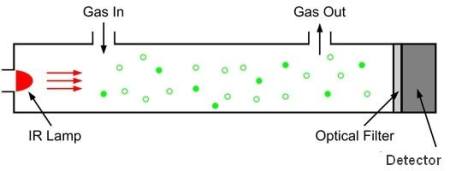
ndir sensor principle

NDIR sensors contain an infrared light source, a measuring chamber, and a detector. The infrared light source emits specific wavelengths of light that are absorbed by CO2 molecules. The detector measures the amount of light that passes through the chamber, and the difference in the detected light intensity is used to determine the CO2 concentration.

Advantages

  • High Accuracy: NDIR sensors offer high accuracy in measuring carbon dioxide concentrations, making them suitable for critical applications.
  • Wide Measuring Range: These sensors can detect CO2 concentrations across a wide range, from low to high levels.
  • Long-Term Stability: NDIR sensors exhibit excellent long-term stability, ensuring reliable performance over extended periods.
  • Established Technology: NDIR technology has been widely used and proven effective in various industries.

Disadvantages

  • Higher Cost: NDIR sensors tend to be more expensive compared to semiconductor and thermal conductor sensors.
  • Power Consumption: These sensors can consume more power during operation, which may limit their use in battery-powered devices.

Semiconductor CO2 sensors

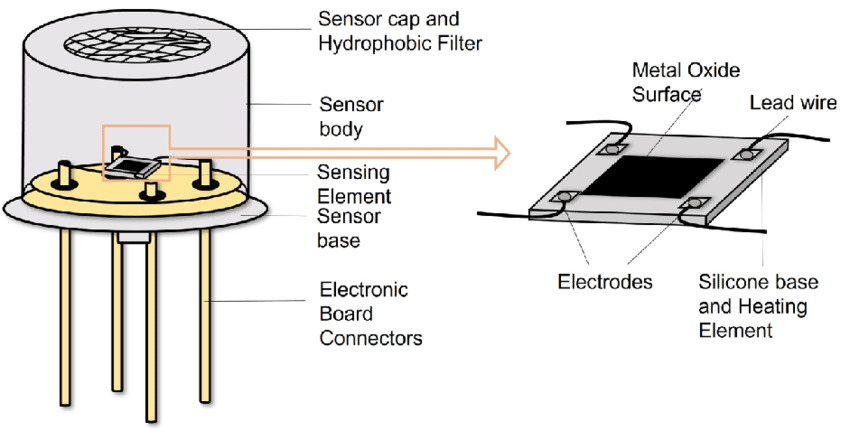
The working principle of metal oxide semiconductor MOS sensors

Semiconductor CO2 sensors utilize a solid-state sensing element to detect carbon dioxide levels. The sensing element consists of a thin film of semiconductor material, typically metal oxides or polymers, that undergoes a change in electrical conductivity when exposed to CO2. This change in conductivity is then measured and converted into CO2 concentration.

Advantages

  • Compact Size: Semiconductor sensors are small and compact, making them suitable for portable and space-constrained applications.
  • Fast Response Time: These sensors offer rapid response times, providing real-time data on CO2 levels for immediate action or adjustments.
  • Cost-Effective: Semiconductor CO2 sensors are relatively more cost-effective compared to NDIR sensors, enabling wider adoption.
  • Low Power Consumption: These sensors are energy-efficient, consuming minimal power during operation, making them suitable for battery-powered devices and IoT applications.

Disadvantages

  • Less Accuracy: Semiconductor sensors may have lower accuracy compared to NDIR sensors, especially at lower CO2 concentrations.
  • Limited Measuring Range: These sensors may have a narrower measuring range compared to NDIR sensors.
  • Sensitivity to Environmental Factors: Semiconductor sensors can be sensitive to temperature and humidity variations, which may affect their performance.

Thermal Conductor CO2 Sensors

thermal conductivity grande

The sensor consists of two elements: a reference channel and a measurement channel. Both channels are heated to a specific temperature. The reference channel is exposed to the ambient air, while the measurement channel is exposed to the air sample being tested.

When the air sample contains CO2, the thermal conductivity of the gas in the measurement channel changes. CO2 has a higher thermal conductivity compared to other gases present in the air. As a result, the heat transfer in the measurement channel is different from the reference channel.

By measuring the temperature difference between the two channels, the sensor can determine the concentration of CO2 in the air. The change in thermal conductivity is directly proportional to the concentration of CO2.

Advantages

  • High Accuracy: Thermal conductor sensors offer high accuracy in detecting carbon dioxide concentrations.
  • Fast Response Time: These sensors provide rapid response times, enabling real-time monitoring of CO2 levels.
  • Long-Term Stability: Thermal conductor sensors exhibit excellent long-term stability, ensuring consistent and reliable performance.
  • Low Maintenance: These sensors require minimal maintenance, reducing operational costs.

Disadvantages

  • Limited Measuring Range: Thermal conductor sensors may have a more limited measuring range compared to NDIR sensors.
  • Larger Size: These sensors may be larger in size compared to semiconductor sensors, limiting their use in certain applications.

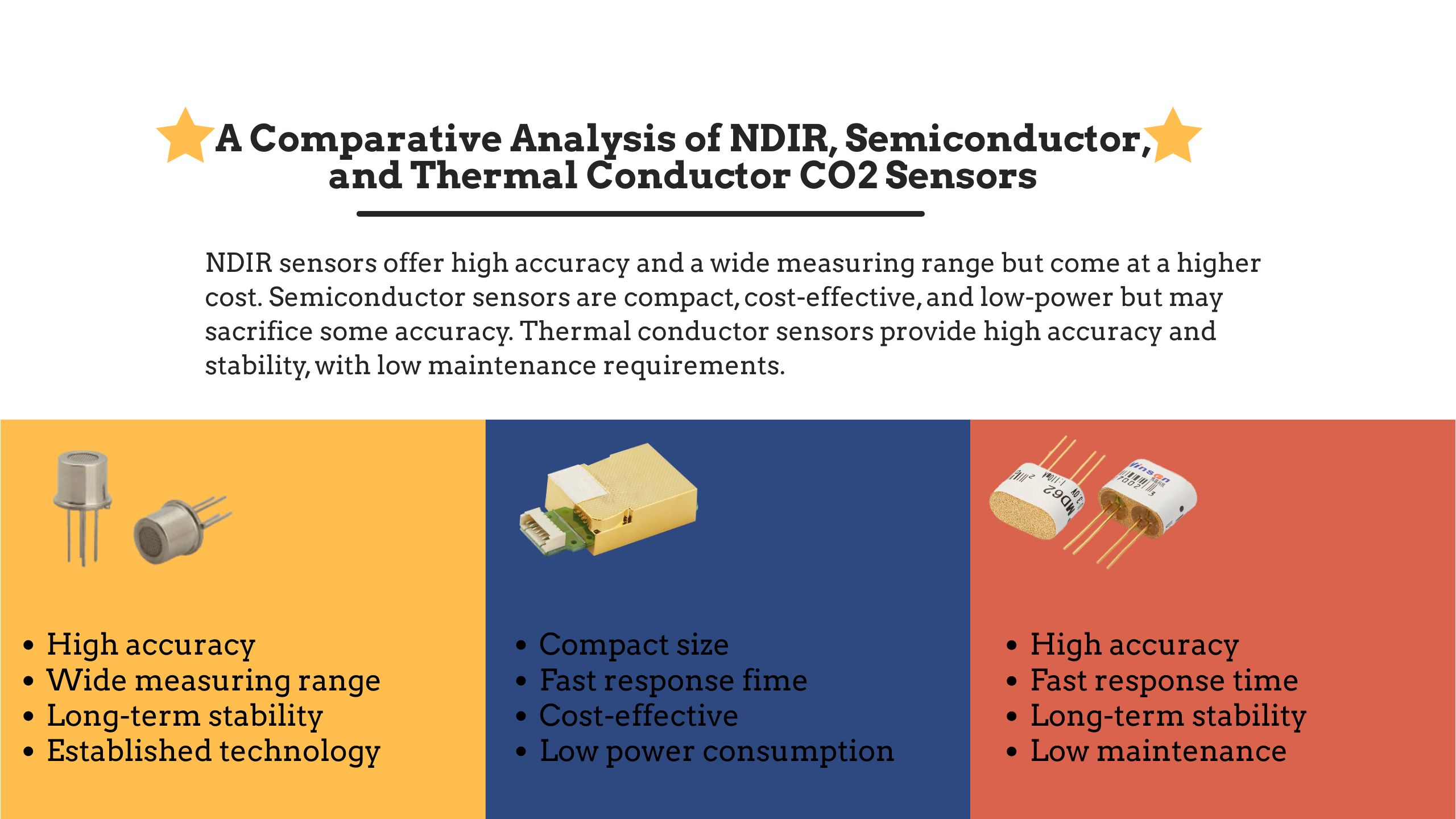
Table of NDIR, Semiconductor, and Thermal Conductor CO2 Sensors Advantages and Disadvantages

NDIR CO2 SensorsSemiconductor CO2 SensorsThermal Conductor CO2 Sensors
Advantages– High accuracy– Compact size– High accuracy
– Wide measuring range– Fast response time– Fast response time
– Long-term stability– Cost-effective– Long-term stability
– Established technology– Low power consumption– Low maintenance
Disadvantages– Higher cost– Less accuracy– Limited measuring range
– Power consumption– Limited measuring range– Larger size
– Sensitivity to environmental
factors

How to Choose the Right CO2 Sensor: NDIR, Semiconductor, or Thermal Conductor?

Selecting the appropriate CO2 sensor for a specific application is crucial to ensure accurate and reliable carbon dioxide monitoring.

1. Accuracy Requirements

If high accuracy is a top priority, NDIR CO2 sensors are an excellent choice. They offer precise measurements across a wide range of carbon dioxide concentrations. For instance, in a laboratory setting where accurate CO2 monitoring is crucial for experiments or in indoor air quality monitoring in hospitals, NDIR sensors provide reliable data.

2. Size and Portability

When size and portability are essential, Semiconductor CO2 sensors excel. These compact sensors are ideal for applications such as wearable devices, handheld instruments, or IoT applications. For example, in personal CO2 monitors used for assessing indoor air quality in homes or offices, semiconductor sensors provide a convenient and portable solution.

3. Power Efficiency:

Semiconductor CO2 sensors are known for their low power consumption, making them suitable for battery-powered devices or applications where energy efficiency is a priority. For instance, in wireless environmental monitoring systems installed in remote areas or smart building management systems, semiconductor sensors help conserve energy.

4. Cost Considerations:

If budget plays a significant role in the decision-making process, Semiconductor CO2 sensors are often the more cost-effective option. These sensors offer a balance between accuracy and affordability, making them suitable for applications where cost optimization is necessary. For example, in large-scale HVAC systems that require multiple sensors for air quality control, semiconductor sensors provide a cost-effective solution.

5. Long-Term Stability:

For applications that demand long-term stability and minimal maintenance, Thermal Conductor CO2 sensors are an excellent choice. These sensors exhibit excellent stability over extended periods and require little upkeep. In greenhouses or industrial processes where continuous and reliable CO2 monitoring is essential, thermal conductor sensors provide a reliable and hassle-free solution.

Conclusion

Each type of CO2 sensor has its unique advantages and disadvantages, making them suitable for different applications. NDIR sensors offer high accuracy and a wide measuring range but come at a higher cost. Semiconductor sensors are compact, cost-effective, and low-power but may sacrifice some accuracy. Thermal conductor sensors provide high accuracy and stability, with low maintenance requirements. Understanding the strengths and limitations of each sensor type is crucial in selecting the appropriate CO2 sensor for specific applications, ensuring accurate and reliable carbon dioxide monitoring.

Comments (2)

Leave a Reply

Your email address will not be published. Required fields are marked *