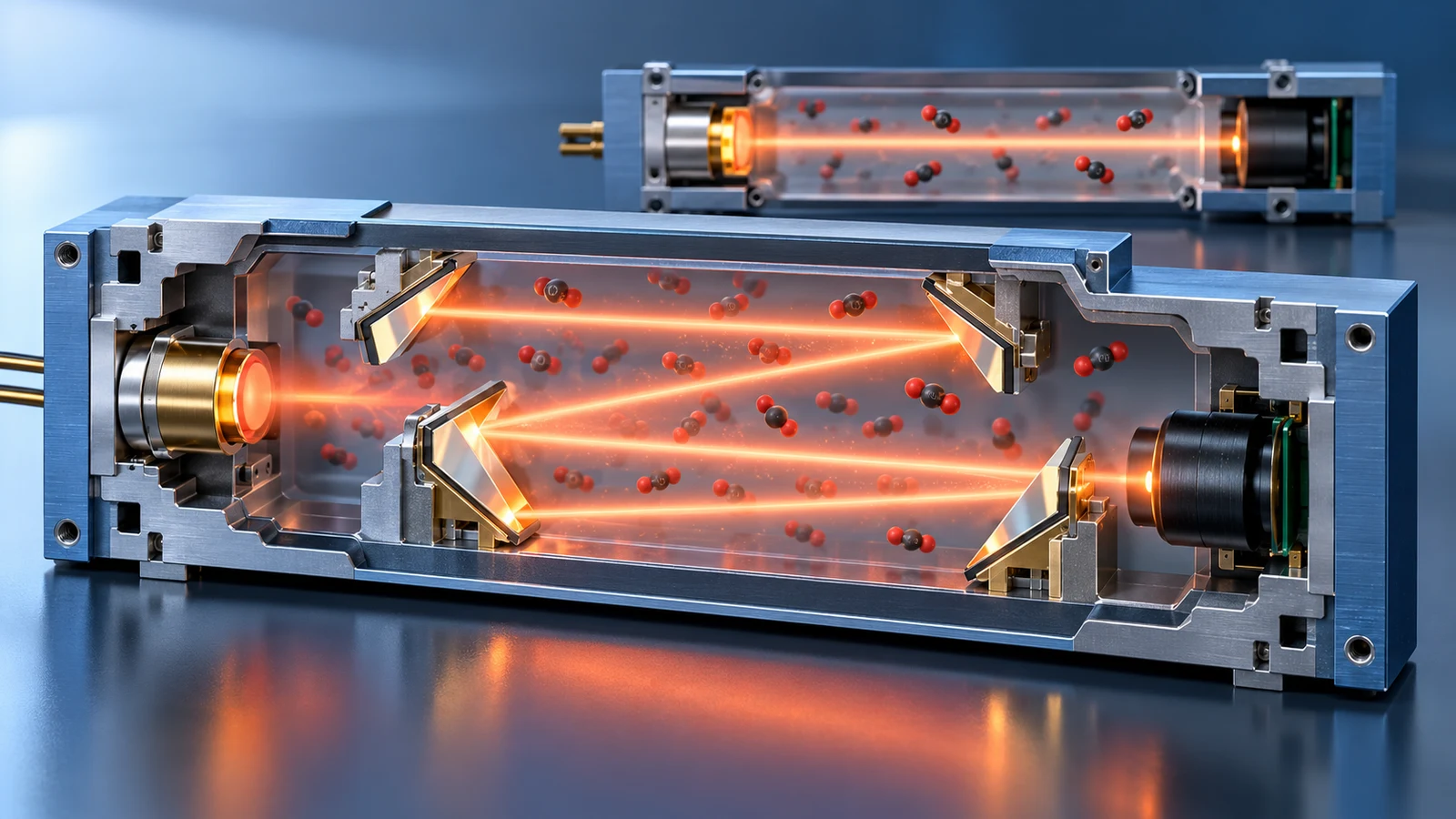
Optical Path Length in CO2 Sensors: Range, Sensitivity and Size
Learn how NDIR optical path length affects low-CO2 signal, high-concentration range, cell geometry and module size, and which specifications to compare.
Read More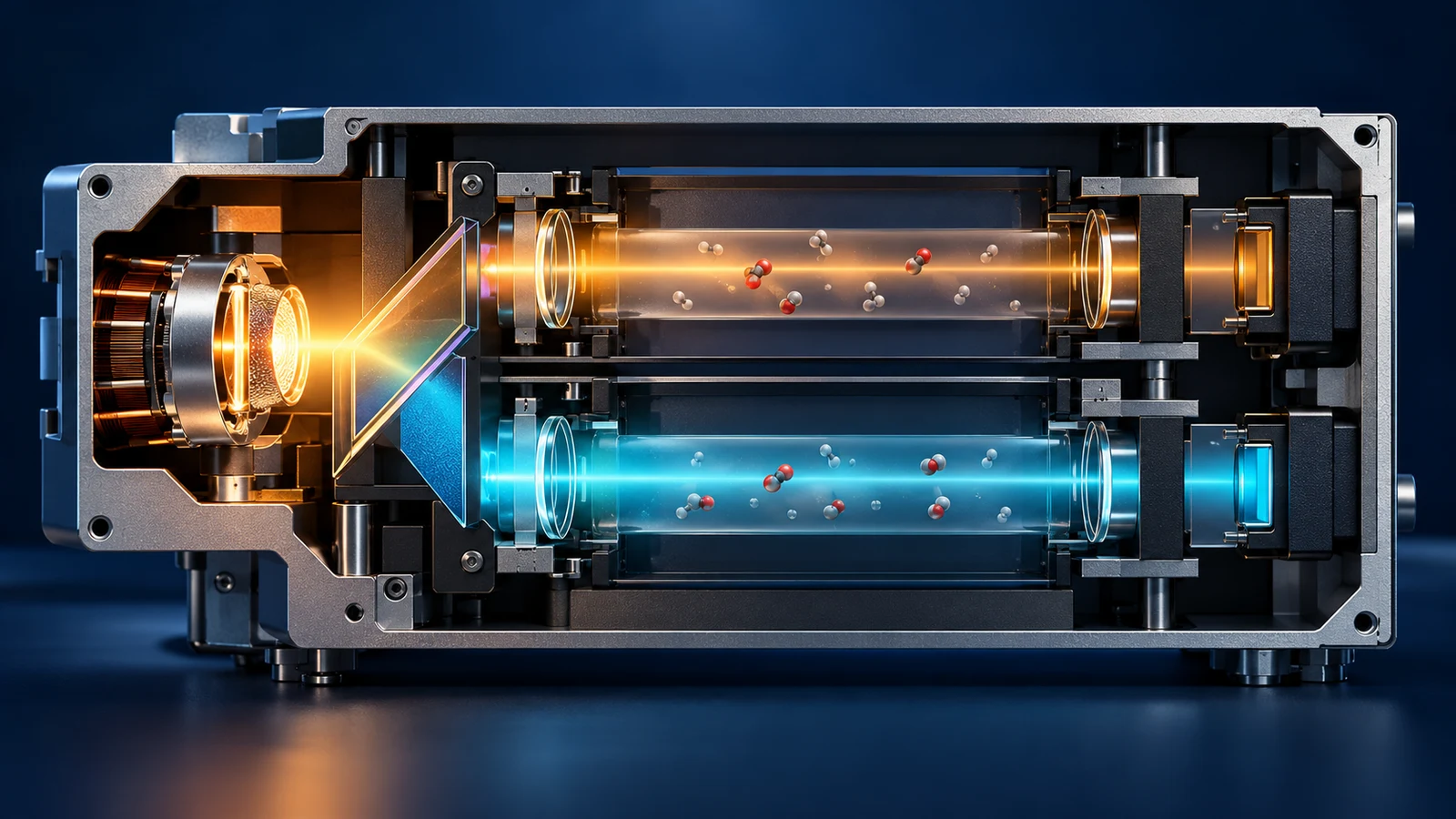
NDIR Reference Channels: What They Correct and What They Cannot
Understand the optical reference in NDIR CO2 sensors: common-mode drift, shared-path contamination, temperature and pressure limits, and calibration implications.
Read More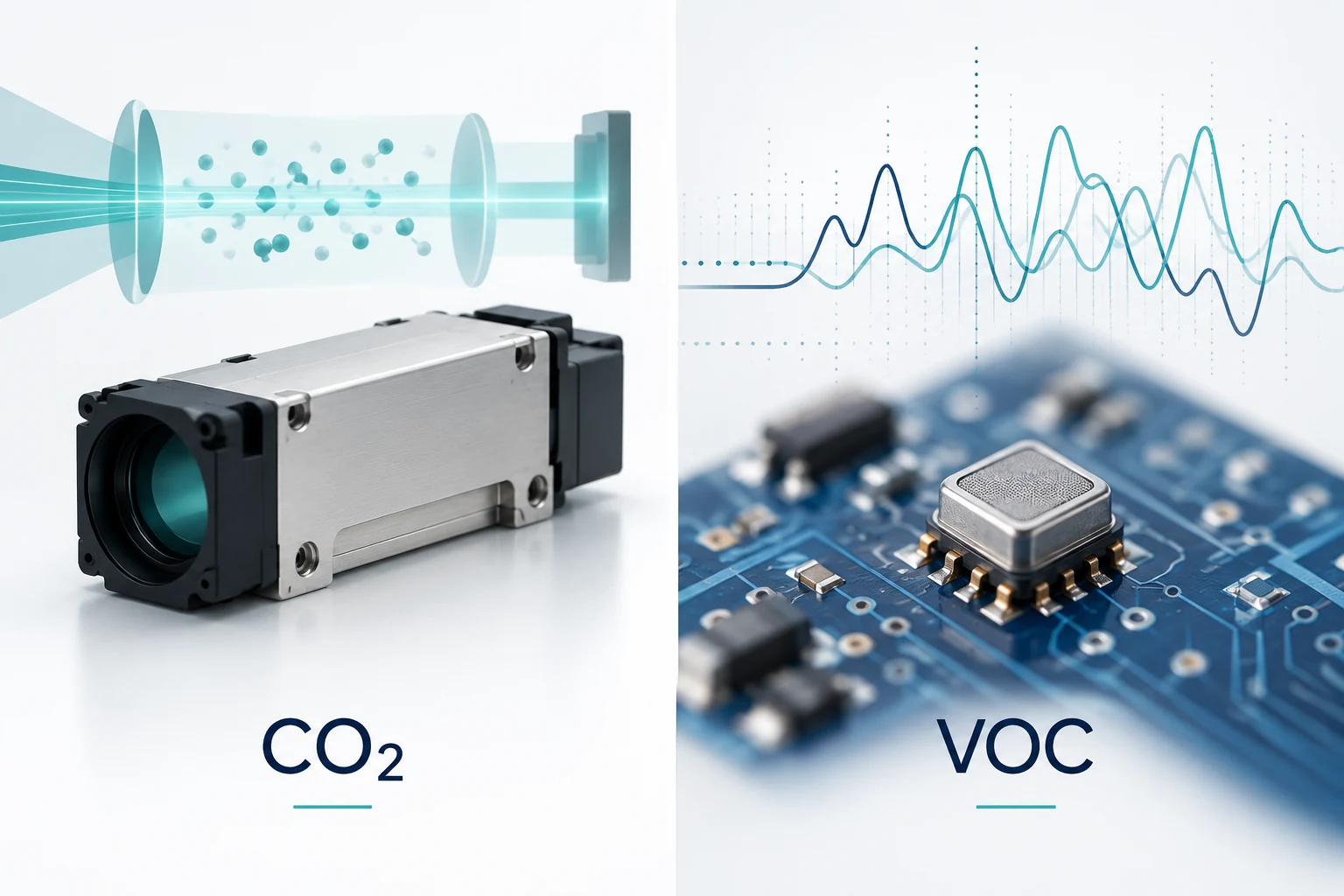
CO2 Sensor vs VOC Sensor: Direct CO2, eCO2 and TVOC Explained
Compare direct CO2 measurement with VOC signals, eCO2 estimates and TVOC outputs. Learn what each channel measures and how to verify an air quality monitor.
Read More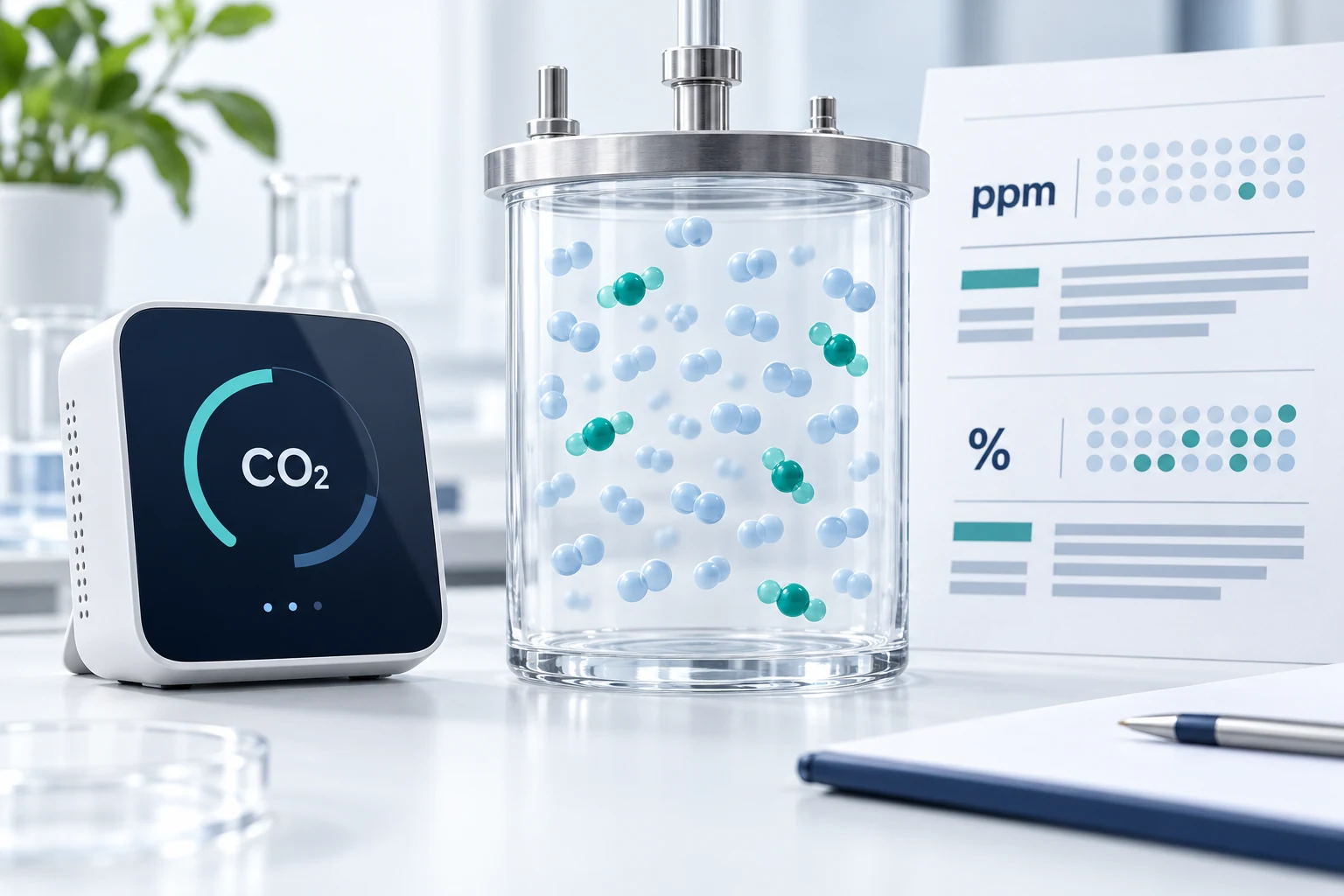
CO2 ppm Meaning: Percent Conversion and Sensor Ranges
Understand CO2 ppm, mole and volume fractions, ppm-to-percent conversion, wet and dry reporting bases, and what a sensor's range does and does not establish.
Read More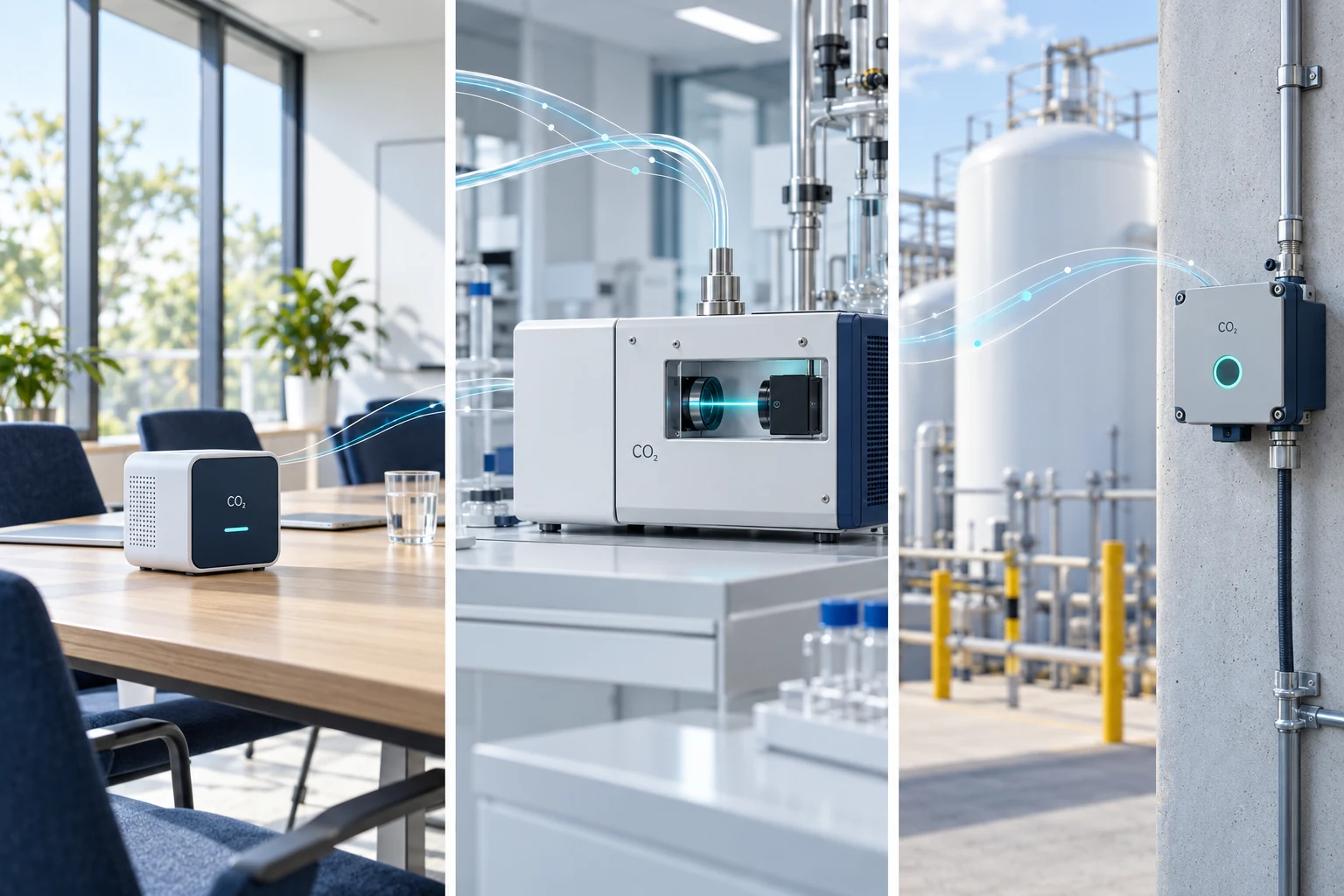
CO2 Measurement: Methods, Sensor Selection and Reliable Readings
Choose CO2 measurement methods and instruments for room air, process samples or gas detection. Compare ranges, sampling, calibration and useful data records.
Read More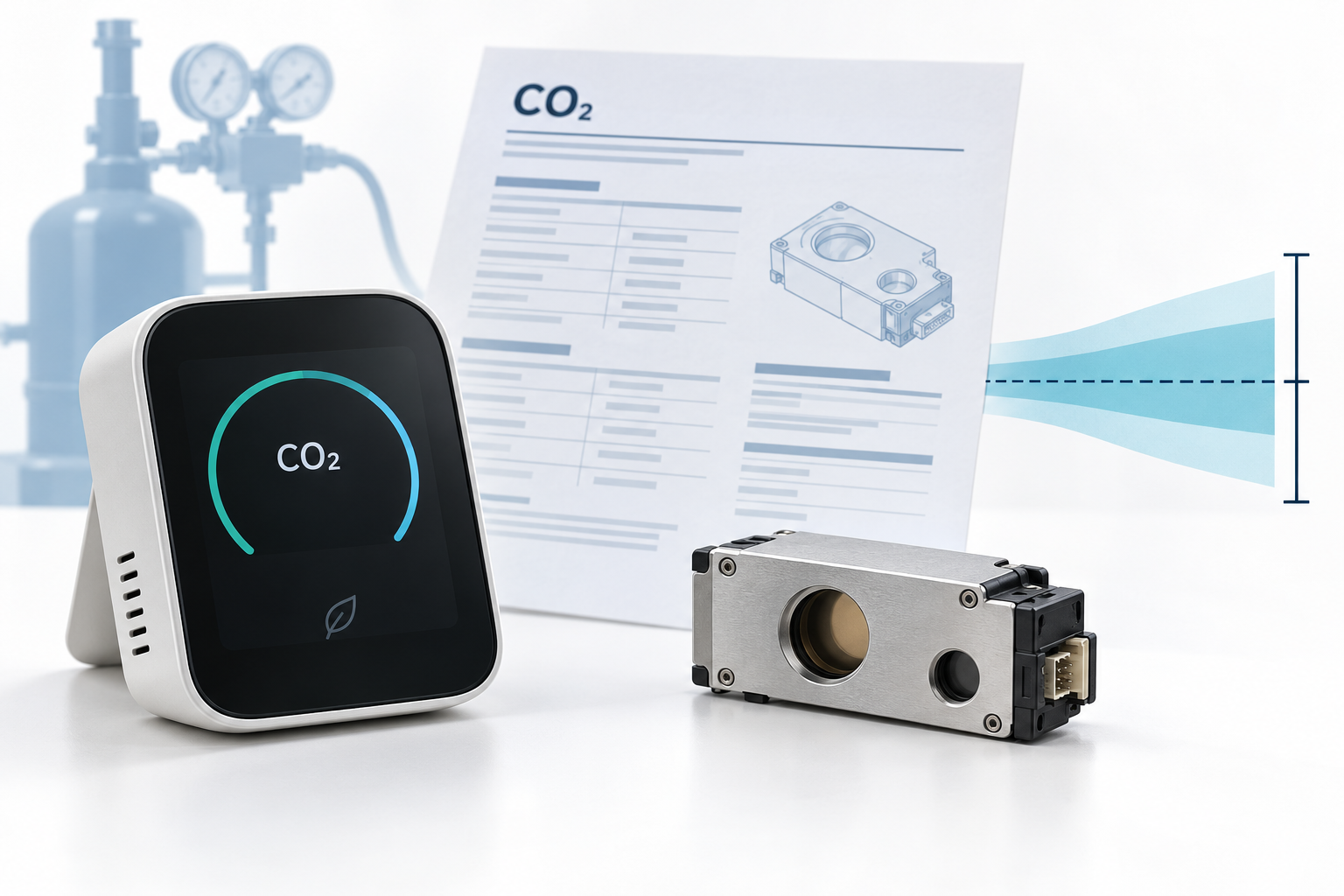
How to Read a CO2 Monitor Accuracy Specification
Read CO2 monitor accuracy specifications correctly: calculate ppm plus percent of reading, distinguish full-scale error and resolution, and compare operating conditions.
Read More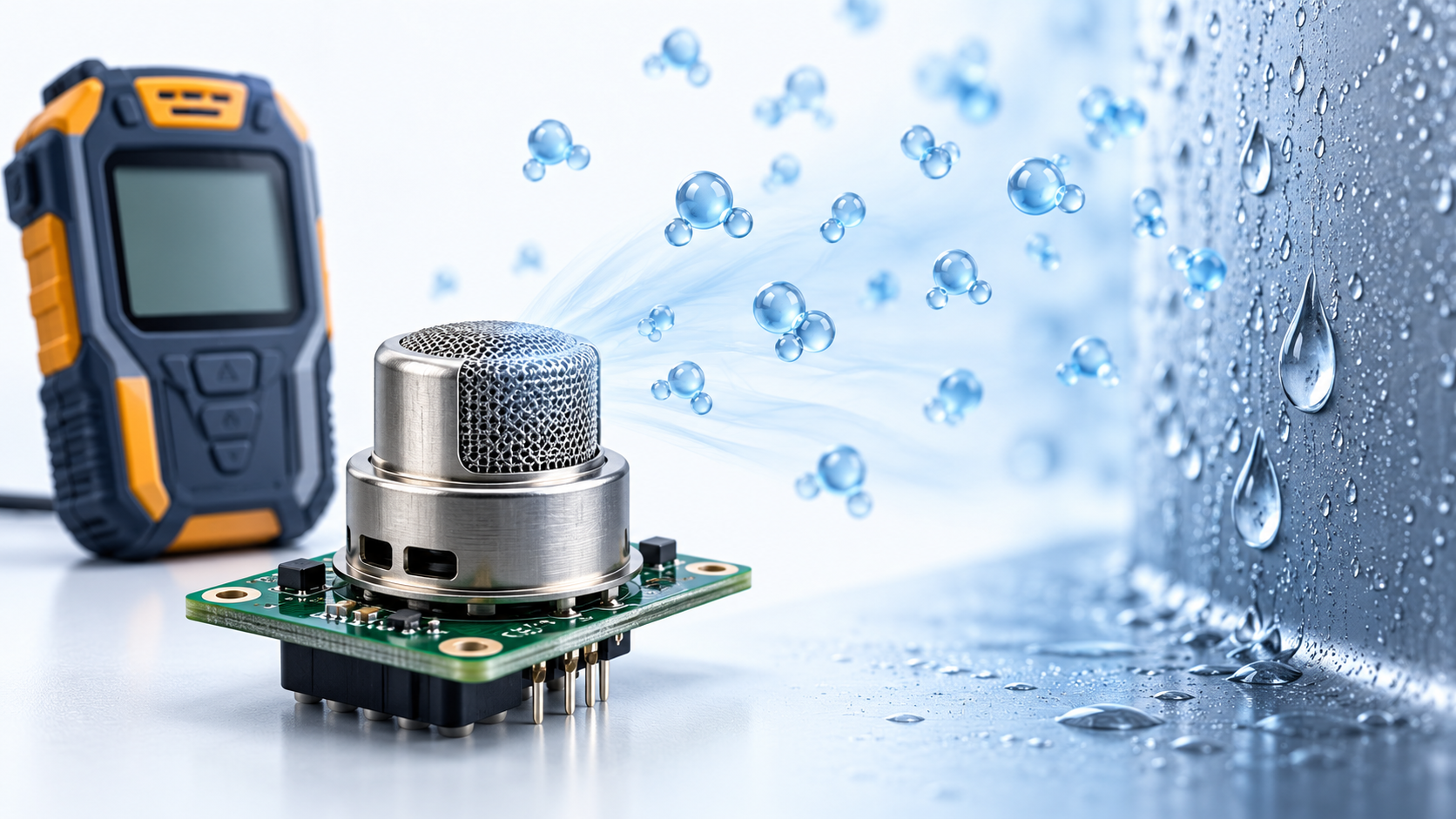
How Humidity Affects Gas Sensor Readings
Learn how humidity affects gas sensor response, wet-basis concentrations and condensation, and what to check when selecting or troubleshooting a gas detector.
Read More