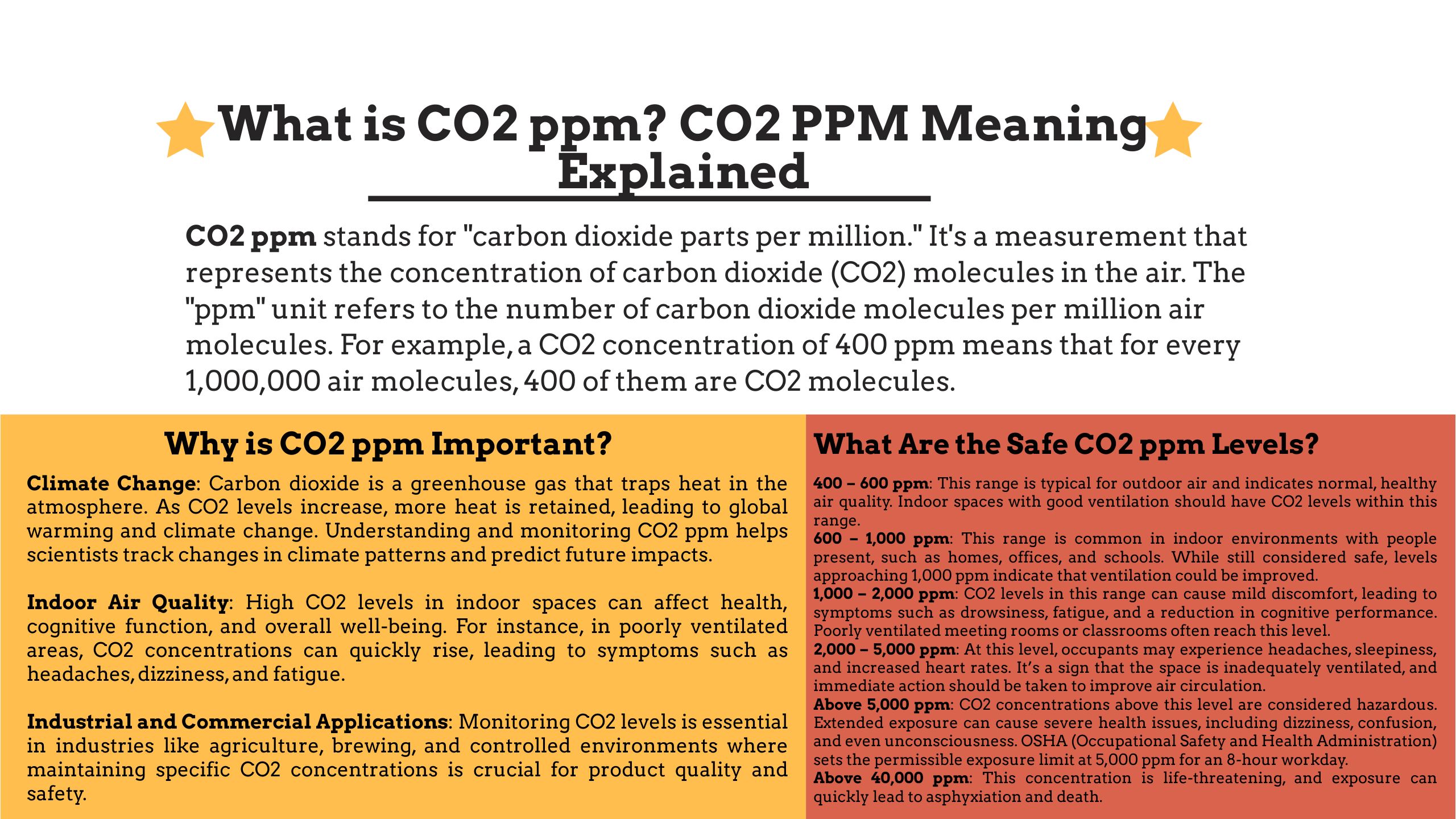
CO2 ppm stands for “carbon dioxide parts per million.” It’s a measurement that represents the concentration of carbon dioxide (CO2) molecules in the air. The “ppm” unit refers to the number of carbon dioxide molecules per million air molecules. For example, a CO2 concentration of 400 ppm means that for every 1,000,000 air molecules, 400 of them are CO2 molecules.
Understanding CO2 ppm in Our Atmosphere
Carbon dioxide is a naturally occurring gas in our atmosphere, produced by processes such as respiration, decomposition, and volcanic eruptions. However, human activities like burning fossil fuels, deforestation, and industrial processes have significantly increased CO2 levels over time.
Historically, atmospheric CO2 levels have fluctuated, but since the industrial revolution, they have risen dramatically. Before industrialization, CO2 levels were around 280 ppm, but today they exceed 400 ppm, a level that hasn’t been seen for millions of years.
Why is CO2 ppm Important?
Monitoring CO2 ppm is crucial for several reasons:
- Climate Change: Carbon dioxide is a greenhouse gas that traps heat in the atmosphere. As CO2 levels increase, more heat is retained, leading to global warming and climate change. Understanding and monitoring CO2 ppm helps scientists track changes in climate patterns and predict future impacts.
- Indoor Air Quality: High CO2 levels in indoor spaces can affect health, cognitive function, and overall well-being. For instance, in poorly ventilated areas, CO2 concentrations can quickly rise, leading to symptoms such as headaches, dizziness, and fatigue.
- Industrial and Commercial Applications: Monitoring CO2 levels is essential in industries like agriculture, brewing, and controlled environments where maintaining specific CO2 concentrations is crucial for product quality and safety.
What Are the Safe CO2 ppm Levels?
The concentration of CO2 ppm varies in different environments, and understanding what constitutes a safe or unsafe level is vital. Here’s a breakdown of CO2 levels and their effects on health and comfort:
- 400 – 600 ppm: This range is typical for outdoor air and indicates normal, healthy air quality. Indoor spaces with good ventilation should have CO2 levels within this range.
- 600 – 1,000 ppm: This range is common in indoor environments with people present, such as homes, offices, and schools. While still considered safe, levels approaching 1,000 ppm indicate that ventilation could be improved.
- 1,000 – 2,000 ppm: CO2 levels in this range can cause mild discomfort, leading to symptoms such as drowsiness, fatigue, and a reduction in cognitive performance. Poorly ventilated meeting rooms or classrooms often reach this level.
- 2,000 – 5,000 ppm: At this level, occupants may experience headaches, sleepiness, and increased heart rates. It’s a sign that the space is inadequately ventilated, and immediate action should be taken to improve air circulation.
- Above 5,000 ppm: CO2 concentrations above this level are considered hazardous. Extended exposure can cause severe health issues, including dizziness, confusion, and even unconsciousness. OSHA (Occupational Safety and Health Administration) sets the permissible exposure limit at 5,000 ppm for an 8-hour workday.
- Above 40,000 ppm: This concentration is life-threatening, and exposure can quickly lead to asphyxiation and death.
Related Read: Understanding and Managing Typical CO2 Levels at Home: A Comprehensive Guide
How is CO2 ppm Measured?
Measuring CO2 ppm is done using CO2 sensors, which are designed to detect the concentration of carbon dioxide in the air. These sensors are widely used in various applications, from HVAC systems to greenhouses and industrial safety.
Types of CO2 Sensors:
- Infrared (NDIR) Sensors: Non-dispersive infrared (NDIR) sensors are the most common type used to measure CO2 levels. They work by using an infrared light source that passes through an air sample. CO2 molecules absorb specific wavelengths of light, and the sensor measures the amount of light absorbed, providing an accurate reading of CO2 concentration.
- Chemical Sensors: These sensors use a chemical reaction to detect CO2 levels. While they can be accurate, they tend to be less durable than NDIR sensors and require more frequent calibration.
- Electrochemical Sensors: These sensors measure CO2 by monitoring the electrical changes that occur when CO2 reacts with a specific electrolyte. They are more commonly used for detecting other gases but can measure CO2 in certain applications.
-
 Read moreQuick View
CO2 ppm and Climate Change
One of the most significant reasons for monitoring CO2 ppm is its impact on climate change. Carbon dioxide is a major greenhouse gas that traps heat in the Earth’s atmosphere, contributing to the warming of our planet. The increasing concentration of CO2 in the atmosphere is directly linked to human activities, such as burning fossil fuels, deforestation, and industrial processes.
Historical CO2 ppm Levels
- Pre-Industrial Levels (Before 1800s): Approximately 280 ppm
- 1960: Around 315 ppm
- 2021: Surpassed 415 ppm
- Present: Continuously rising at an alarming rate
According to climate scientists, keeping CO2 levels below 350 ppm is critical to maintaining a stable climate. However, as we continue to emit CO2 at current rates, we risk reaching levels that will result in more severe and unpredictable climate impacts, such as rising sea levels, extreme weather events, and loss of biodiversity.
Reference Links: Carbon Dioxide and Climate Change
CO2 ppm and Indoor Air Quality
Maintaining safe indoor air quality is essential, especially in workspaces, homes, and schools. High CO2 levels indoors can indicate poor ventilation, which can lead to health problems and decreased productivity.
How to Improve Indoor CO2 Levels:
- Increase Ventilation: Open windows and doors, or use mechanical ventilation systems to allow fresh air to circulate.
- Use Air Purifiers: Some air purifiers are equipped with carbon filters that can help reduce CO2 levels.
- Monitor CO2 Levels: Using CO2 detectors can help you monitor air quality and take action if levels become too high.
- Implement Green Building Practices: Incorporate plants that can absorb CO2 and improve indoor air quality.
Related Read: The Benefits of CO2 for Plants: A Comprehensive Guide
CO2 ppm in Occupational Settings
Workplaces such as factories, breweries, and laboratories often need to monitor CO2 levels to ensure employee safety. The Occupational Safety and Health Administration (OSHA) has set the permissible exposure limit (PEL) for CO2 at 5,000 ppm over an 8-hour workday. Employers are required to monitor CO2 concentrations, especially in environments where CO2 is used or produced.
How is CO2 ppm Managed in Controlled Environments?
Certain industries require precise control of CO2 ppm levels, such as:
- Agriculture: In greenhouses, CO2 enrichment is used to promote plant growth. Typically, CO2 levels are maintained between 800 and 1,200 ppm to optimize photosynthesis.
- Breweries and Wineries: During fermentation, CO2 is released, and monitoring ppm levels ensures worker safety.
- Data Centers: Maintaining appropriate CO2 levels helps in managing cooling systems, as excessive heat generation can increase CO2 levels.
CO2 Ppm and Human Health
Both high and low CO2 levels can impact human health:
- Low CO2 Levels (<400 ppm): This is typical outdoor air and is considered healthy.
- Moderate CO2 Levels (600-1,000 ppm): Acceptable indoor air quality.
- High CO2 Levels (1,000-2,000 ppm): Leads to drowsiness, poor concentration, and headaches.
- Very High Levels (>2,000 ppm): Prolonged exposure can cause nausea, increased heart rate, and even asphyxiation.
How Can You Measure and Monitor CO2 ppm in Your Home or Workplace?
To ensure you maintain healthy air quality, it’s advisable to invest in a CO2 monitor. These devices range from simple handheld models to sophisticated systems that can provide real-time data on CO2 concentrations, humidity, and temperature.
Tips for Choosing a CO2 Monitor:
- Accuracy: Look for monitors with a high accuracy rating, typically ±50 ppm.
- Data Logging: This feature allows you to track CO2 levels over time.
- Alarm Systems: Choose a monitor with an alarm that alerts you when CO2 levels exceed a safe threshold.
Conclusion
Understanding CO2 ppm is vital for environmental monitoring, ensuring indoor air quality, and safeguarding health and safety. As CO2 levels continue to rise globally, it is more important than ever to monitor and manage these levels effectively. Whether for personal health, workplace safety, or combating climate change, tracking CO2 ppm plays a critical role in maintaining a healthier and more sustainable environment.