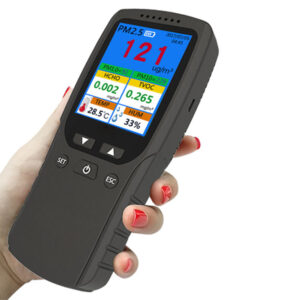
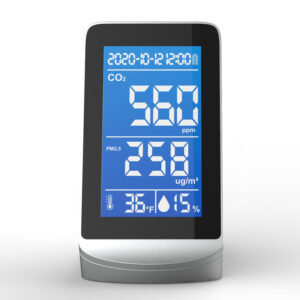
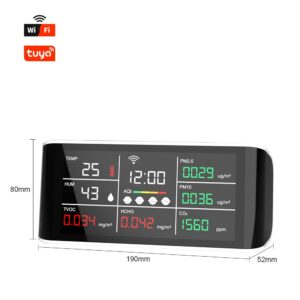
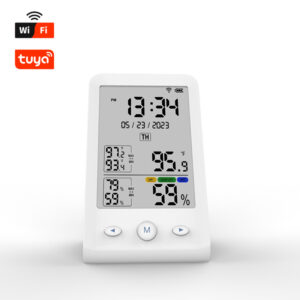
Semiconductor sensors, especially metal oxide sensors (MOS), have been vital components in gas detection and environmental monitoring for decades. These sensors operate based on the principle that the electrical conductivity of certain metal oxides changes when they interact with various gas molecules. Their sensitivity, robustness, and affordability make them an essential technology for industries ranging from automotive and environmental monitoring to smart homes and healthcare.
This article provides a comprehensive overview of Semiconductor (Metal Oxide) Sensors, including their working principles, materials, applications, advantages, limitations, and future trends.
What Are Semiconductor (Metal Oxide) Sensors?
![]()
Semiconductor (metal oxide) sensors are gas sensors that detect the presence of gases by monitoring changes in electrical resistance through a metal oxide surface. When target gas molecules interact with the metal oxide layer, the chemical reactions alter the material’s conductivity, which is then measured and interpreted.
The most commonly used metal oxides include:
- Tin Dioxide (SnO₂)
- Zinc Oxide (ZnO)
- Tungsten Oxide (WO₃)
- Titanium Dioxide (TiO₂)
- Iron Oxide (Fe₂O₃)
Each oxide has different sensitivities toward specific gases, enabling diverse applications.
How Semiconductor (Metal Oxide) Sensors Work
The fundamental operation relies on surface chemistry and solid-state physics. Here’s the general mechanism:
Adsorption of Oxygen
When the metal oxide sensor is exposed to air at an elevated temperature (typically 150–400°C), oxygen molecules from the air adsorb onto the sensor’s surface, capturing free electrons from the conduction band of the metal oxide and forming oxygen ions (O₂⁻, O⁻, or O²⁻).
This electron capture creates a depletion layer, increasing the resistance of the metal oxide.
Interaction with Target Gases
When a reducing gas (like CO, CH₄, or H₂) encounters the surface, it reacts with the adsorbed oxygen ions, releasing the trapped electrons back to the metal oxide and thereby decreasing the sensor’s resistance.
Conversely, oxidizing gases (like NO₂) can further trap electrons, increasing resistance.
Resistance Change
The resulting change in electrical resistance is proportional to the concentration of the target gas, allowing for quantitative detection.
Structure of a Metal Oxide Sensor
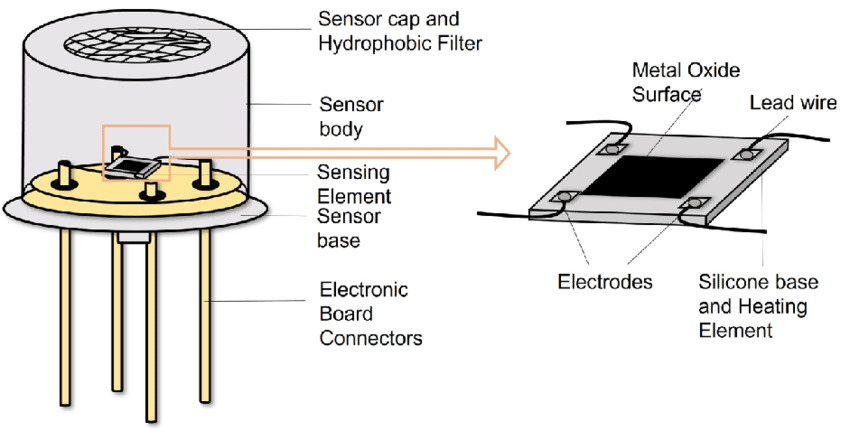
A typical semiconductor (metal oxide) sensor consists of:
- Substrate: Usually made of ceramic or alumina.
- Sensing Layer: A thin film of metal oxide material.
- Electrodes: Metal contacts to measure resistance changes.
- Heater: Embedded or attached to maintain the required operating temperature.
- Protective Layer: Sometimes included for mechanical or chemical protection.
MEMS-Based Sensors
Recent advancements involve Micro-Electro-Mechanical Systems (MEMS) technologies to miniaturize sensors, making them smaller, faster, and more energy-efficient.
Types of Metal Oxide Sensors
Depending on the metal oxide material and design, MOS sensors can detect a variety of gases:
| Metal Oxide | Target Gases |
|---|---|
| Tin Oxide (SnO₂) | CO, CH₄, H₂, Alcohols |
| Zinc Oxide (ZnO) | NH₃, NO₂, H₂S |
| Tungsten Oxide (WO₃) | NOx gases |
| Titanium Dioxide (TiO₂) | VOCs, O₃ |
| Iron Oxide (Fe₂O₃) | CO, NH₃ |
The selection of material influences sensitivity, selectivity, and operating conditions.
Key Performance Metrics
Understanding performance parameters is crucial:
- Sensitivity: Ability to detect low concentrations.
- Selectivity: Ability to distinguish one gas from others.
- Response Time: How fast the sensor reacts to the target gas (typically seconds).
- Recovery Time: Time to return to baseline after gas removal.
- Operating Temperature: Temperature required for optimal operation.
- Stability: Long-term reliability and minimal drift.
Applications of Metal Oxide Sensors
Environmental Monitoring
- Air quality monitoring (CO, NO₂, O₃ detection)
- Pollution tracking
Automotive Industry
- Cabin air quality control
- Exhaust gas monitoring
- Hydrogen leak detection in fuel cell vehicles
Industrial Safety
- Detection of toxic and flammable gases
- Workplace environment control
Smart Homes
- Indoor air quality (IAQ) management
- Smart thermostats and ventilation control
Healthcare
- Breath analysis for medical diagnostics (e.g., acetone for diabetes monitoring)
- Hospital indoor environment safety
Agriculture
- Monitoring ammonia (NH₃) levels in animal farms
- Detecting ethylene gas (C₂H₄) for fruit ripening
Advantages of Semiconductor (Metal Oxide) Sensors
- High Sensitivity: Detect even ppm or ppb levels of gases.
- Low Cost: Simple manufacturing processes.
- Durability: Operate in harsh environments.
- Compact Size: Easily integrated into portable devices.
- Fast Response: Suitable for real-time monitoring.
Limitations and Challenges
Despite their strengths, MOS sensors have drawbacks:
- High Operating Temperature: Consumes more power, which can be an issue for battery-powered devices.
- Cross-Sensitivity: Can respond to multiple gases, complicating interpretation.
- Humidity Sensitivity: High humidity levels can affect sensor readings.
- Drift Over Time: Long-term stability can be an issue, requiring recalibration.
- Selectivity Issues: Without additional filters or algorithms, differentiating between gases can be challenging.
Strategies to Overcome Challenges
- Doping with Catalytic Materials: Incorporating platinum, palladium, or gold nanoparticles improves selectivity.
- Temperature Cycling: Varying the sensor temperature to create unique gas response signatures.
- Use of Sensor Arrays: Combining multiple sensors with machine learning for better gas identification.
- Humidity Compensation: Using algorithms or parallel humidity sensors.
Emerging Technologies and Trends
The future of MOS sensors is exciting:
Nanostructured Materials
Nanowires, nanotubes, and nanoparticles significantly increase surface area, improving sensitivity and lowering operating temperatures.
Hybrid Sensors
Combining MOS with organic semiconductors or polymers for enhanced selectivity.
AI and Machine Learning
Using advanced algorithms to interpret complex sensor outputs, enabling better gas identification and quantification.
Energy Harvesting Sensors
Self-powered sensors using ambient energy sources for sustainable monitoring.
Integration with IoT
Smart sensors connected to cloud platforms for remote monitoring and data analysis.
Case Studies
Air Quality Monitoring Stations
Governments worldwide deploy MOS-based sensor nodes for continuous urban air monitoring, providing real-time public health data.
Hydrogen Leak Detection in Electric Vehicles
Automakers are integrating MOS sensors to detect minute hydrogen leaks, critical for safety in hydrogen-fueled vehicles.
Indoor Air Quality in Smart Homes
Leading smart thermostat brands use MOS sensors to control ventilation based on real-time air quality measurements.
Comparison with Other Gas Sensor Technologies
| Feature | Metal Oxide Sensors | Electrochemical Sensors | Infrared Sensors |
|---|---|---|---|
| Sensitivity | High | Very High | High |
| Selectivity | Moderate | High | Very High |
| Cost | Low | Medium | High |
| Operating Temperature | High | Low | Room Temperature |
| Lifespan | Medium | Limited | Long |
| Power Consumption | Moderate-High | Low | Low |
Each technology has strengths and weaknesses; MOS sensors are often chosen for their low cost and durability.
Environmental and Health Considerations
Modern MOS sensor development also considers environmental impacts:
- Eco-Friendly Manufacturing: Minimizing toxic chemicals and energy usage.
- Recyclable Materials: Developing sensors with sustainable or biodegradable components.
- Safe Operation: Ensuring no harmful emissions or byproducts during sensor use.
Conclusion
Semiconductor (Metal Oxide) Sensors represent a cornerstone of modern gas detection technologies. Their affordability, sensitivity, and robustness have enabled widespread adoption across numerous industries. While challenges like cross-sensitivity and high operating temperatures exist, ongoing research into nanotechnology, AI-enhanced interpretation, and material innovation is steadily overcoming these limitations.
As global concerns over air quality, industrial safety, and health monitoring grow, the demand for reliable, smart, and efficient gas sensors will only increase. Metal oxide sensors, with their proven history and promising future, will undoubtedly continue playing a key role in our increasingly connected and environmentally conscious world.