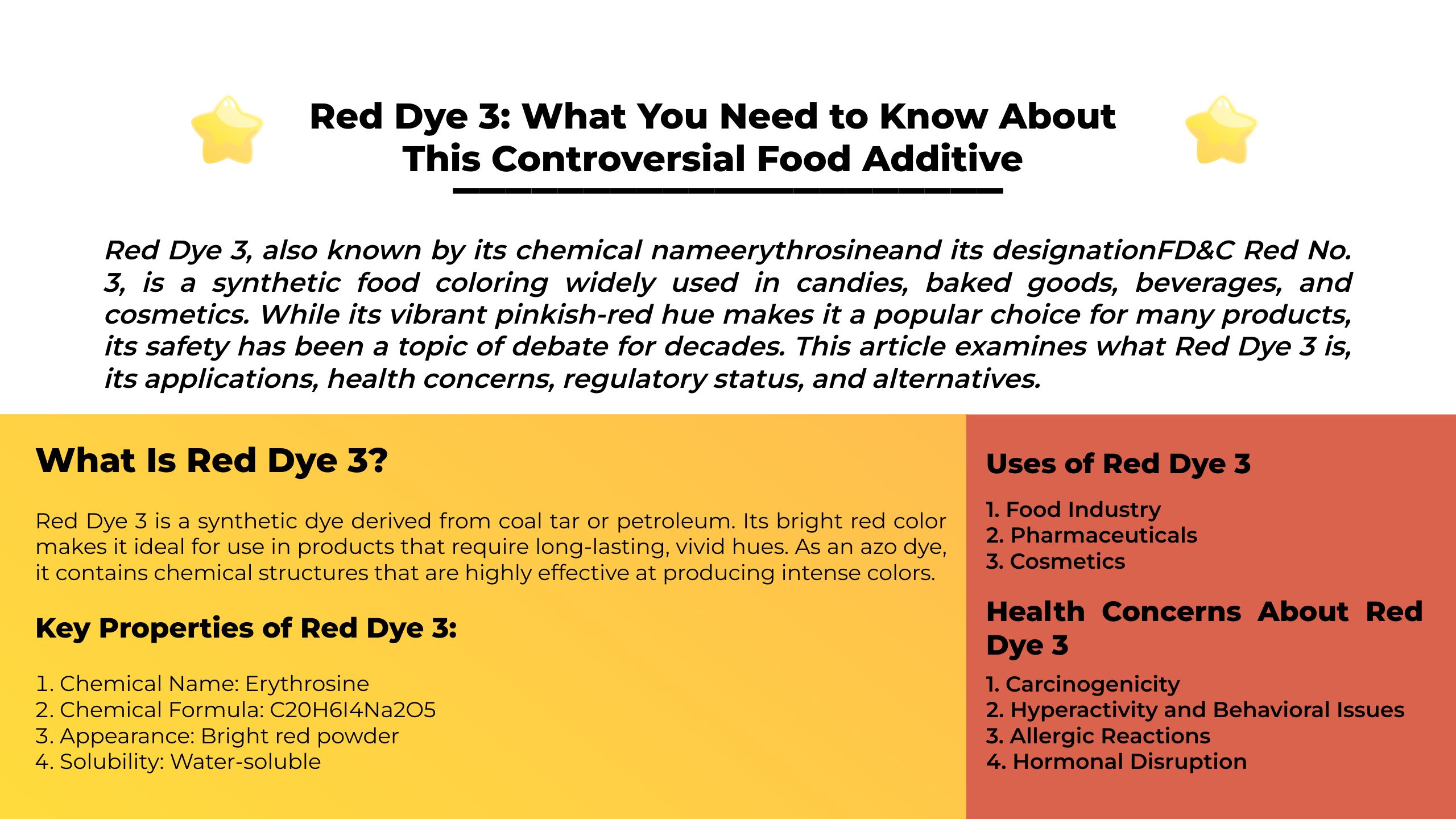
Red Dye 3, also known by its chemical name erythrosine and its designation FD&C Red No. 3, is a synthetic food coloring widely used in candies, baked goods, beverages, and cosmetics. While its vibrant pinkish-red hue makes it a popular choice for many products, its safety has been a topic of debate for decades. This article examines what Red Dye 3 is, its applications, health concerns, regulatory status, and alternatives.
What Is Red Dye 3?
Red Dye 3 is a synthetic dye derived from coal tar or petroleum. Its bright red color makes it ideal for use in products that require long-lasting, vivid hues. As an azo dye, it contains chemical structures that are highly effective at producing intense colors.
Key Properties of Red Dye 3:
- Chemical Name: Erythrosine
- Chemical Formula: C20H6I4Na2O5
- Appearance: Bright red powder
- Solubility: Water-soluble
Uses of Red Dye 3
Red Dye 3 is used in various industries due to its visual appeal and stability:
1. Food Industry
- Candies: Found in gummies, lollipops, and jellybeans.
- Beverages: Adds color to fruit punches, flavored waters, and syrups.
- Baked Goods: Used in icings, frostings, and decorative elements.
2. Pharmaceuticals
- Commonly used to color liquid medicines, capsules, and tablets.
3. Cosmetics
- Found in lipsticks, blushes, and nail polishes.
4. Other Applications
- Utilized in pet food and some textile products.
Health Concerns About Red Dye 3
The safety of Red Dye 3 has been questioned due to studies linking it to potential health risks. The most notable concerns include:
1. Carcinogenicity
- Animal Studies: In the 1980s, studies showed that high doses of Red Dye 3 caused thyroid tumors in rats. This led to the U.S. Food and Drug Administration (FDA) banning its use in cosmetics and externally applied drugs but allowing its continued use in foods and ingested drugs.
- Human Risk: Although no definitive evidence links Red Dye 3 to cancer in humans, its classification as a potential carcinogen remains controversial.
2. Hyperactivity and Behavioral Issues
- Some studies suggest that synthetic dyes, including Red Dye 3, may contribute to hyperactivity and attention issues in children. This is particularly concerning for individuals with Attention Deficit Hyperactivity Disorder (ADHD).
3. Allergic Reactions
- Red Dye 3 may cause mild allergic reactions in sensitive individuals, including rashes, itching, or hives.
4. Hormonal Disruption
- Some research indicates that Red Dye 3 may interfere with thyroid hormone levels, but more studies are needed to confirm these effects.
Regulatory Status of Red Dye 3
The use of Red Dye 3 is regulated differently across countries due to varying assessments of its safety:
1. United States
- The FDA permits Red Dye 3 in food, beverages, and ingested drugs but prohibits its use in cosmetics and topical medications.
2. European Union
- The European Food Safety Authority (EFSA) allows the use of Red Dye 3 but imposes strict limits on its acceptable daily intake (ADI).
3. Other Countries
- In countries like Japan and Norway, Red Dye 3 is banned due to health concerns.
Labeling Requirements
In many regions, products containing Red Dye 3 must clearly list it on ingredient labels, often as “FD&C Red No. 3” or “Erythrosine.”
Comparison: Red Dye 3 vs. Other Food Dyes
| Aspect | Red Dye 3 (Erythrosine) | Red Dye 40 (Allura Red AC) | Natural Red Dyes |
|---|---|---|---|
| Source | Synthetic (petroleum) | Synthetic (petroleum) | Natural (e.g., beetroot, cochineal) |
| Color Intensity | Bright pinkish-red | Deep red | Variable (less vibrant) |
| Health Concerns | Possible carcinogen, hyperactivity, allergies | Hyperactivity, allergies | Minimal risks |
| Regulatory Status | Restricted in some uses | Widely permitted | Widely permitted |
How to Identify and Avoid Red Dye 3
To avoid products containing Red Dye 3, consumers can:
- Read Labels: Look for terms like “FD&C Red No. 3” or “Erythrosine.”
- Opt for Natural Alternatives: Choose products made with natural coloring agents such as beet juice, turmeric, or annatto.
- Choose Certified Organic Products: Organic standards often prohibit synthetic dyes, including Red Dye 3.
Alternatives to Red Dye 3
Natural alternatives to Red Dye 3 are gaining popularity, driven by consumer demand for healthier and cleaner options. Common substitutes include:
1. Beetroot Powder
- Derived from beets, this natural dye produces a deep red color and is commonly used in candies and baked goods.
2. Annatto Extract
- Made from the seeds of the achiote tree, annatto provides an orange-red hue suitable for dairy and processed foods.
3. Carmine (Cochineal Extract)
- A red dye derived from crushed cochineal insects, often used in cosmetics and high-end food products.
4. Turmeric and Paprika Extracts
- While more orange than red, these are safe and widely used in natural food products.
Consumer Awareness and the Future of Red Dye 3
As public awareness about synthetic food dyes grows, the demand for safer, natural alternatives continues to rise. Many companies are reformulating products to replace Red Dye 3 and similar synthetic dyes with plant-based or organic options.
Regulatory agencies may revisit existing standards as more research becomes available, potentially leading to stricter guidelines or bans on Red Dye 3 in the future.
Conclusion
Red Dye 3 is a synthetic food coloring that has been the subject of significant controversy due to potential health risks. While still permitted in many products, concerns over its safety have led to restrictions in some applications and heightened consumer awareness. By choosing natural alternatives and staying informed about ingredient labels, consumers can make healthier choices for themselves and their families.
As food science and consumer preferences evolve, the shift toward natural and sustainable colorings is likely to redefine the industry, reducing reliance on synthetic additives like Red Dye 3.