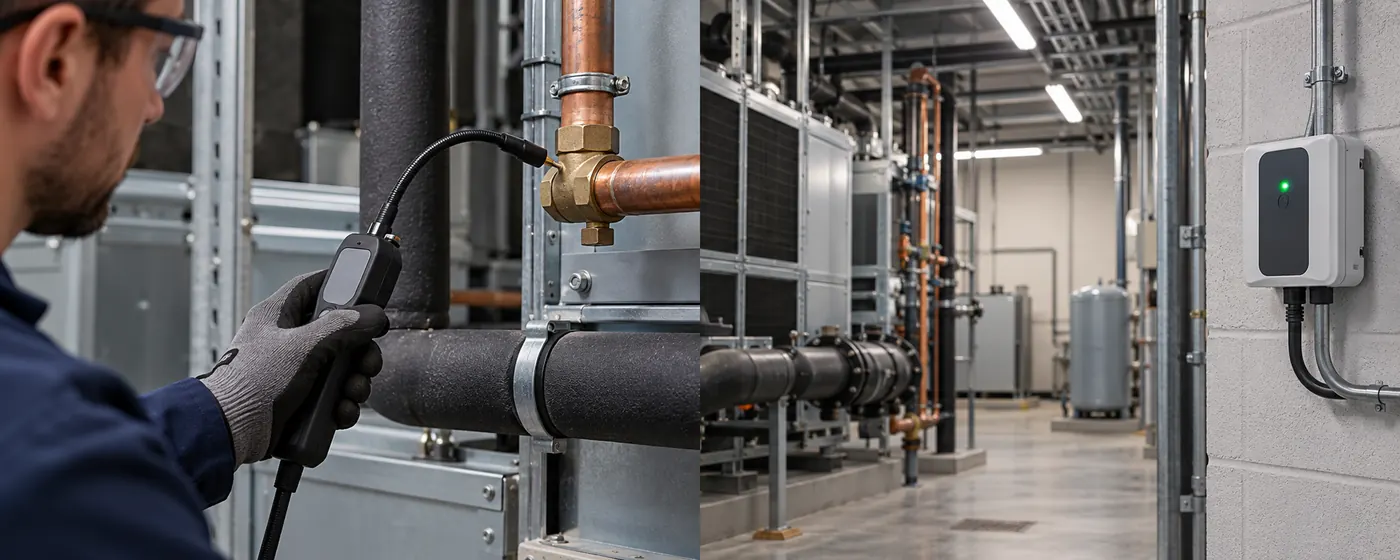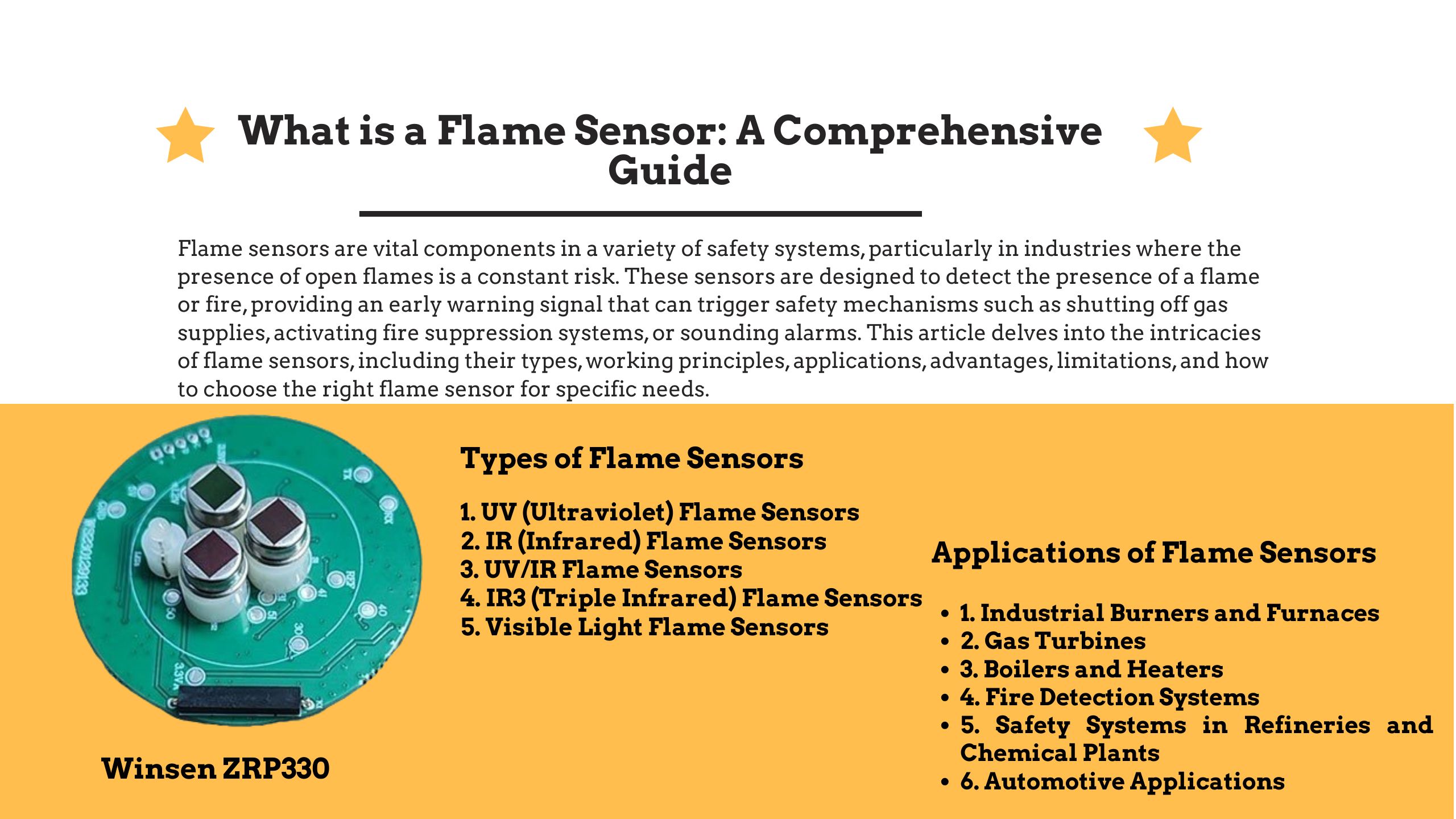
Flame sensors are vital components in a variety of safety systems, particularly in industries where the presence of open flames is a constant risk. These sensors are designed to detect the presence of a flame or fire, providing an early warning signal that can trigger safety mechanisms such as shutting off gas supplies, activating fire suppression systems, or sounding alarms. This article delves into the intricacies of flame sensors, including their types, working principles, applications, advantages, limitations, and how to choose the right flame sensor for specific needs.
Introduction to Flame Sensors
Definition and Purpose
A flame sensor is an electronic device that detects the presence of a flame or fire by recognizing the specific wavelengths of light emitted by the flame. These sensors are primarily used in safety systems to ensure that equipment operates correctly and that any potential fire hazards are detected early to prevent accidents or catastrophic events.
Flame sensors are commonly used in applications such as gas furnaces, industrial burners, boilers, and various types of heating systems. In these settings, they serve as a critical safety feature, ensuring that fuel is only supplied when a flame is present, thus preventing the accumulation of unburned gas that could lead to explosions.
Importance in Safety Systems
The primary importance of flame sensors lies in their ability to provide real-time monitoring of combustion processes. They are integral to the safety of environments where open flames are used, as they can quickly detect the presence (or absence) of a flame and take immediate action to mitigate potential dangers.
For example, in a gas furnace, the flame sensor ensures that the burner flame is lit. If the flame goes out, the sensor will detect this and shut off the gas supply to prevent gas from accumulating and potentially causing an explosion. This automatic safety response is crucial in preventing accidents and ensuring the safe operation of equipment.
Types of Flame Sensors
Flame sensors come in several different types, each designed to detect flames using different principles and suited for various applications. The most common types of flame sensors include:
1. UV (Ultraviolet) Flame Sensors
Working Principle
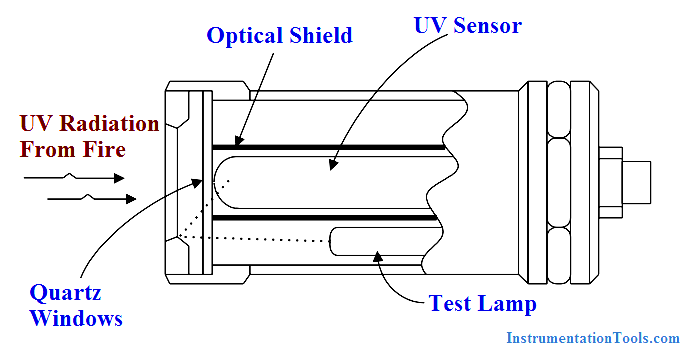
UV flame sensors detect flames by sensing the ultraviolet (UV) radiation emitted by a flame. Flames, especially those from hydrocarbons, emit UV radiation at specific wavelengths, typically between 185 and 260 nanometers. The sensor uses a UV-sensitive photodiode or photomultiplier tube to detect this radiation. When UV radiation is present, the sensor generates a signal indicating the presence of a flame.
Applications
UV flame sensors are widely used in environments where rapid flame detection is crucial, such as in gas turbines, industrial boilers, and large-scale combustion systems. They are particularly effective in detecting flames that emit strong UV radiation, such as those from natural gas, propane, and oil.
Advantages
- Fast Response Time: UV flame sensors can detect flames almost instantaneously, making them ideal for applications where early detection is critical.
- High Sensitivity: These sensors are highly sensitive to UV radiation, allowing them to detect small or distant flames.
- Resistance to False Alarms: UV sensors are less likely to be triggered by non-flame sources of radiation, reducing the likelihood of false alarms.
Limitations
- Limited to UV-Emitting Flames: UV flame sensors can only detect flames that emit UV radiation, so they may not be effective in all situations.
- Sensitivity to Contaminants: The presence of contaminants like dust or oil on the sensor can reduce its effectiveness.
2. IR (Infrared) Flame Sensors
Working Principle
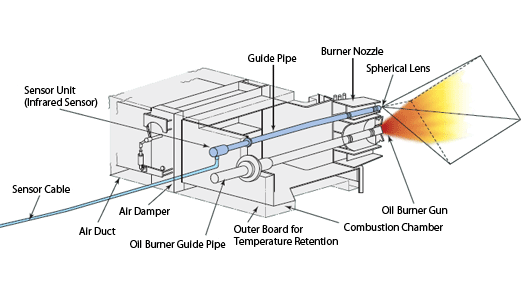
IR flame sensors detect flames by sensing the infrared (IR) radiation emitted by a flame. Flames emit IR radiation at various wavelengths, typically in the range of 1.4 to 3 micrometers. The sensor uses an IR-sensitive photodiode or thermopile to detect this radiation. When IR radiation is detected, the sensor generates a signal indicating the presence of a flame.
Applications
IR flame sensors are commonly used in environments where flames may be obscured by smoke or dust, such as in industrial furnaces, kilns, and ovens. They are also used in outdoor settings where UV sensors might be less effective due to interference from sunlight.
Advantages
- Effective in Smoky or Dusty Environments: IR flame sensors can detect flames even when visibility is reduced, making them suitable for harsh industrial environments.
- Wide Detection Range: IR sensors can detect flames over a broad range of distances, making them versatile for various applications.
- Dual-Wavelength Options: Some IR sensors use dual-wavelength technology to distinguish between flames and other heat sources, reducing the risk of false alarms.
Limitations
- Sensitivity to Heat Sources: IR flame sensors can sometimes be triggered by non-flame heat sources, leading to false alarms.
- Limited Wavelength Sensitivity: IR sensors may not detect flames that do not emit significant IR radiation.
3. UV/IR Flame Sensors
Working Principle
UV/IR flame sensors combine both ultraviolet and infrared detection methods to provide more reliable flame detection. These sensors use both a UV-sensitive and an IR-sensitive detector, allowing them to detect flames that emit both types of radiation. The combination of the two technologies enhances the sensor’s ability to detect flames while reducing the likelihood of false alarms.
Applications
UV/IR flame sensors are often used in environments where reliable flame detection is critical, such as in petrochemical plants, refineries, and large-scale industrial facilities. They are particularly useful in applications where both UV and IR radiation may be present, such as in hydrocarbon fires.
Advantages
- High Reliability: The combination of UV and IR detection makes these sensors highly reliable in detecting flames while minimizing false alarms.
- Versatility: UV/IR sensors can detect a wide range of flames, making them suitable for various applications.
- Resistant to Interference: These sensors are less likely to be triggered by non-flame sources of radiation, such as sunlight or artificial lighting.
Limitations
- Higher Cost: UV/IR flame sensors are typically more expensive than single-technology sensors.
- Complexity: The dual detection technology can make these sensors more complex to install and maintain.
4. IR3 (Triple Infrared) Flame Sensors
Working Principle
IR3 flame sensors use three different infrared wavelengths to detect flames. By analyzing the specific wavelengths of IR radiation emitted by a flame, these sensors can accurately distinguish between real flames and non-flame heat sources. The use of three wavelengths allows the sensor to detect flames with greater precision and reliability.
Applications
IR3 flame sensors are commonly used in high-risk environments where accurate flame detection is critical, such as in oil and gas facilities, chemical plants, and refineries. They are particularly effective in detecting hydrocarbon fires and can be used in both indoor and outdoor settings.
Advantages
- High Accuracy: The use of three IR wavelengths allows for highly accurate flame detection, reducing the likelihood of false alarms.
- Wide Detection Range: IR3 sensors can detect flames at greater distances than other types of sensors.
- Resistant to Environmental Factors: These sensors are less affected by environmental factors such as smoke, dust, or sunlight.
Limitations
- Cost: IR3 flame sensors are among the most expensive types of flame sensors due to their advanced technology.
- Complexity: The triple-wavelength detection system can make these sensors more complex to install and maintain.
5. Visible Light Flame Sensors
Working Principle
Visible light flame sensors detect flames by sensing the visible light emitted by a flame. These sensors use photodiodes or phototransistors that are sensitive to the visible light spectrum. When a flame emits visible light, the sensor detects it and generates a signal indicating the presence of a flame.
Applications
Visible light flame sensors are commonly used in applications where the flame is easily visible and not likely to be obscured by smoke or other environmental factors. They are often used in laboratory settings, small-scale combustion systems, and educational demonstrations.
Advantages
- Simple and Cost-Effective: Visible light flame sensors are relatively simple and inexpensive compared to other types of flame sensors.
- Fast Response Time: These sensors can detect flames quickly, making them suitable for applications where rapid detection is required.
Limitations
- Limited to Visible Flames: These sensors can only detect flames that emit visible light, so they may not be effective in all situations.
- Sensitivity to Ambient Light: Visible light flame sensors can be triggered by non-flame light sources, leading to false alarms.
How Flame Sensors Work
Basic Operating Principle
Flame sensors operate by detecting specific characteristics of a flame, such as its UV, IR, or visible light emissions. The sensor’s detection element, whether it be a photodiode, thermopile, or other component, senses the radiation emitted by the flame and converts it into an electrical signal. This signal is then processed by the sensor’s internal circuitry to determine whether a flame is present.
If the sensor detects a flame, it sends an output signal that can be used to trigger an alarm, shut off fuel supplies, activate fire suppression systems, or initiate other safety measures. The sensor’s response time, sensitivity, and detection range depend on the specific type of sensor and the environmental conditions.
Signal Processing
The signal processing within a flame sensor is crucial for ensuring accurate detection. The sensor must be able to distinguish between the radiation emitted by a flame and other sources of radiation, such as sunlight or artificial lighting. Advanced flame sensors, such as UV/IR or IR3 sensors, use complex algorithms to analyze the detected radiation and filter out false signals.
In some cases, the sensor may also include features such as automatic gain control, temperature compensation, and self-diagnostics to enhance its reliability and accuracy.
Sensitivity and Detection Range
The sensitivity and detection range of a flame sensor depend on several factors, including the type of sensor, the design of the detection element, and the environmental
conditions. Some sensors are designed to detect flames at close range, while others can detect flames at distances of up to several hundred meters.
The sensitivity of a flame sensor is typically adjustable, allowing users to fine-tune the sensor’s response to different levels of flame radiation. This adjustability is important for minimizing false alarms and ensuring that the sensor is effective in the specific environment where it is installed.
Applications of Flame Sensors
Flame sensors are used in a wide range of applications, from industrial safety systems to residential heating equipment. Some of the most common applications include:
1. Industrial Burners and Furnaces
In industrial settings, flame sensors are used to monitor burners and furnaces to ensure that the flame is present and stable. If the flame goes out, the sensor can shut off the fuel supply to prevent the accumulation of unburned gas, which could lead to explosions or fires.
2. Gas Turbines
Flame sensors are used in gas turbines to monitor the combustion process and ensure that the flame is stable. This is critical for maintaining the efficiency and safety of the turbine.
3. Boilers and Heaters
In boilers and heaters, flame sensors are used to detect the presence of a flame and ensure that the fuel is being burned efficiently. If the flame goes out, the sensor can shut off the fuel supply to prevent the risk of an explosion.
4. Fire Detection Systems
Flame sensors are an integral part of fire detection systems in industrial, commercial, and residential settings. They provide early warning of a fire by detecting the presence of flames and triggering alarms or other safety mechanisms.
5. Safety Systems in Refineries and Chemical Plants
In refineries and chemical plants, flame sensors are used to monitor potentially hazardous areas where flammable gases or liquids are present. The sensors provide early detection of flames, allowing for quick response to prevent accidents or disasters.
6. Automotive Applications
Flame sensors are also used in automotive applications, particularly in internal combustion engines, to monitor the combustion process and ensure that the fuel is being burned efficiently.
Advantages of Flame Sensors
Flame sensors offer several advantages that make them an essential component of safety systems in various industries:
- Early Detection: Flame sensors provide early detection of flames, allowing for quick response to prevent accidents or disasters.
- Reliability: Flame sensors are designed to operate reliably in harsh environments, ensuring that they can detect flames even in challenging conditions.
- Versatility: With different types of flame sensors available, they can be used in a wide range of applications, from industrial safety systems to residential heating equipment.
- Cost-Effective: Flame sensors are a cost-effective solution for ensuring the safety of equipment and personnel in environments where open flames are present.
Limitations of Flame Sensors
While flame sensors offer many benefits, they also have some limitations:
- False Alarms: Some flame sensors can be triggered by non-flame sources of radiation, leading to false alarms.
- Environmental Sensitivity: Flame sensors may be affected by environmental factors such as dust, smoke, or ambient light, which can reduce their effectiveness.
- Limited Detection Range: The detection range of a flame sensor may be limited, depending on the type of sensor and the environmental conditions.
- Maintenance: Flame sensors may require regular maintenance to ensure that they continue to operate effectively, particularly in harsh environments.
How to Choose the Right Flame Sensor
Choosing the right flame sensor for a specific application requires careful consideration of several factors:
- Type of Flame: Consider the type of flame that needs to be detected and choose a sensor that is sensitive to the appropriate wavelength of radiation (UV, IR, visible light).
- Environment: Consider the environmental conditions where the sensor will be installed, including factors such as dust, smoke, temperature, and humidity.
- Response Time: Consider the required response time of the sensor, particularly in applications where rapid detection is critical.
- Detection Range: Consider the required detection range of the sensor, particularly in large-scale applications where the sensor needs to detect flames at a distance.
- Integration with Safety Systems: Consider how the sensor will be integrated with other safety systems, such as alarms, fire suppression systems, or fuel shutoff systems.
- Cost: Consider the cost of the sensor and whether it fits within the budget for the safety system.
Conclusion
Flame sensors play a critical role in ensuring the safety of environments where open flames are present. By detecting the presence of a flame and triggering safety mechanisms, these sensors help prevent accidents and protect both equipment and personnel. Understanding the different types of flame sensors, their working principles, applications, advantages, and limitations is essential for selecting the right sensor for a specific application. As technology continues to evolve, flame sensors are likely to become even more reliable and versatile, further enhancing their ability to safeguard against fire hazards.