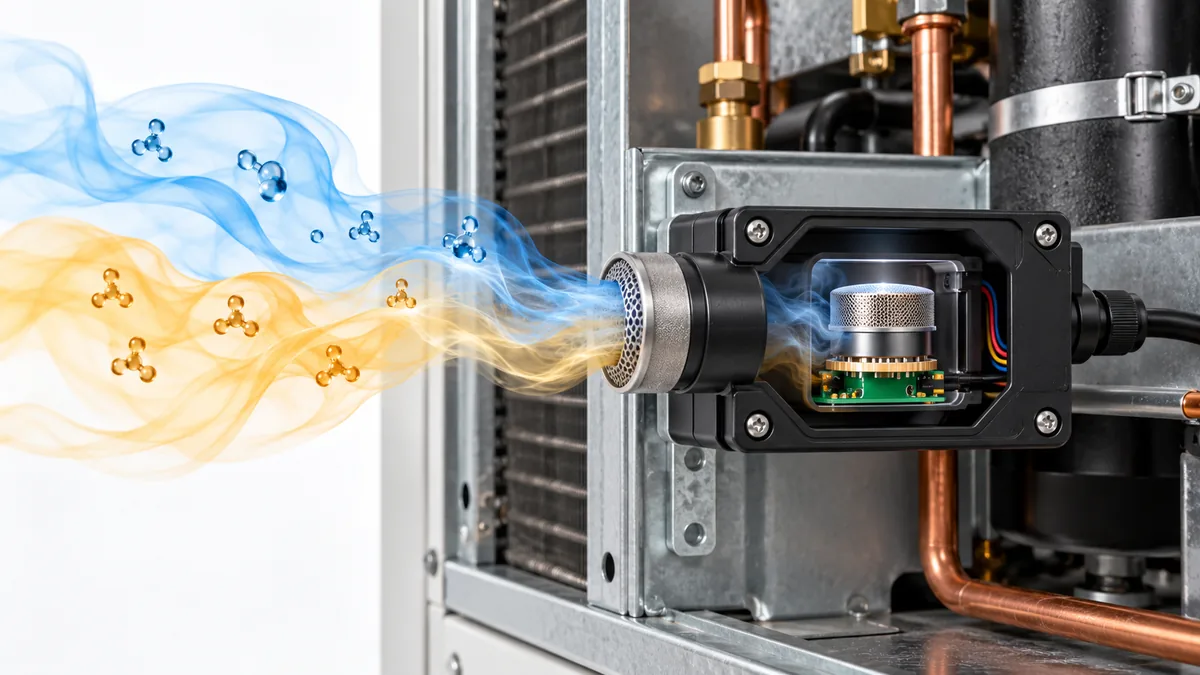
1. Introduction
Photoacoustic Spectroscopy (PAS) is a powerful analytical technique used to detect and measure the concentration of chemical substances through the generation of acoustic waves as a result of light absorption. First observed in the 1880s by Alexander Graham Bell, the photoacoustic effect remained a scientific curiosity for decades. With the advent of lasers and sensitive microphones, PAS has emerged as a vital tool in modern gas sensing, environmental monitoring, biomedical analysis, and material characterization.
In PAS, modulated light is absorbed by a sample, resulting in localized heating. This thermal expansion generates pressure waves—sound—that can be detected using a microphone or other pressure-sensitive device. Because the generated signal is directly proportional to the amount of light absorbed, PAS allows for high-sensitivity, non-destructive analysis of materials, often with detection limits down to parts per billion (ppb).
2. Fundamental Principles of PAS
2.1 The Photoacoustic Effect
The photoacoustic effect is the generation of acoustic waves following the absorption of modulated electromagnetic radiation (typically infrared, visible, or ultraviolet light) by a material.
2.2 Mechanism
- Modulated Light Source: Light, often from a laser, is modulated (pulsed or chopped) at a specific frequency.
- Absorption: The sample absorbs photons, increasing its internal energy.
- Non-Radiative Relaxation: The absorbed energy is converted to heat through molecular collisions.
- Thermal Expansion: Localized heating causes periodic thermal expansion and contraction of the sample or surrounding medium.
- Pressure Wave Generation: These thermal oscillations generate pressure (sound) waves.
- Detection: The pressure wave is detected by a microphone or piezoelectric sensor and converted into an electrical signal.
2.3 Beer–Lambert Law
PAS intensity is governed by the Beer–Lambert law, which relates the absorption of light to the properties of the material:
Where:
In PAS, stronger absorption produces a stronger acoustic signal, allowing for quantitative analysis.
3. Components of a PAS System
3.1 Light Source
- Lasers (e.g., diode, quantum cascade, CO₂ lasers): Preferred for their monochromaticity, tunability, and high intensity.
- LEDs or Broadband Lamps: Used for lower-cost or multi-wavelength applications.
3.2 Modulation System
- Optical Choppers: Mechanical devices that periodically interrupt the light beam.
- Direct Modulation: Varying the laser current or voltage to modulate intensity.
3.3 Photoacoustic Cell
A sealed chamber where light interacts with the sample. Types include:
- Open-cell: For gases with ambient conditions.
- Resonant cells: Enhance signal via acoustic resonance.
- Non-resonant cells: Offer broader frequency response.
3.4 Detection System
- Microphones: Condenser or electret microphones capture pressure variations.
- Quartz Tuning Forks (QEPAS): Ultra-sensitive sensors that detect minute acoustic signals.
- Piezoelectric Sensors: Convert mechanical pressure into voltage.
3.5 Signal Processing Unit
- Lock-in Amplifier: Extracts the signal at the modulation frequency, improving signal-to-noise ratio.
- Analog-to-Digital Converter (ADC): Converts the signal for digital analysis.
4. Types of PAS
4.1 Gas-Phase PAS
Used for trace gas detection. Capable of detecting concentrations in the ppb or ppt range.
4.2 Solid-Phase PAS
Used in the analysis of solids or powders, including thin films, semiconductors, and pigments.
4.3 Liquid-Phase PAS
Less common due to damping of acoustic waves, but used in specialized biomedical or chemical applications.
4.4 Quartz-Enhanced PAS (QEPAS)
A highly sensitive variant where the acoustic signal is detected using a quartz tuning fork, enabling detection of trace gases with compact sensor designs.
5. Advantages of PAS
| Advantage | Description |
|---|---|
| High Sensitivity | Detects extremely low concentrations of analytes. |
| No Need for Optical Path Alignment | PAS does not rely on direct transmission or reflection measurements. |
| Compact and Portable | PAS instruments can be miniaturized, especially with QEPAS. |
| Wide Dynamic Range | Capable of detecting both trace and bulk quantities. |
| Non-Destructive | Samples remain intact after testing. |
| Multi-Gas Detection | Tunable lasers can analyze multiple compounds. |
6. Limitations of PAS
- Background Noise: Vibrations or ambient acoustic noise can interfere with signals.
- Complex Calibration: Requires accurate standards for quantitative measurements.
- Thermal Effects: Variations in temperature and pressure can affect sensitivity.
- Selective Absorption: Overlapping absorption features from different gases can complicate analysis.
7. Applications of Photoacoustic Spectroscopy
7.1 Environmental Monitoring
- Air Pollution Monitoring: Detection of NOx, SO₂, CO, CH₄, and volatile organic compounds (VOCs).
- Greenhouse Gases: Measurement of CO₂, N₂O, and CH₄ for climate research.
- Particulate Matter: PAS systems with broadband light can quantify aerosol absorption.
7.2 Industrial Safety and Process Control
- Leak Detection: For combustible or toxic gases (e.g., ammonia, refrigerants).
- Process Gas Monitoring: Control of chemical reactors or semiconductor processes.
7.3 Medical and Biomedical Applications
- Breath Analysis: Non-invasive diagnosis through volatile biomarkers (e.g., acetone for diabetes).
- Tissue Characterization: Photoacoustic imaging for vascular or cancer diagnostics.
7.4 Homeland Security
- Explosives Detection: PAS systems can detect trace signatures of explosives or narcotics.
7.5 Food and Agriculture
- Spoilage Detection: Monitoring ethylene or ammonia in food storage.
- Soil Gas Analysis: Measuring CO₂ and methane fluxes from soil respiration.
7.6 Scientific Research
- Materials Science: Optical properties of thin films and nanomaterials.
- Astrophysics and Atmospheric Chemistry: Trace gas measurements in extreme environments.
8. Photoacoustic Imaging
PAS is also the basis for photoacoustic imaging (PAI), a biomedical imaging technique that combines optical contrast with ultrasonic spatial resolution.
Principle of PAI
A pulsed laser induces rapid thermoelastic expansion in tissues, producing ultrasound waves captured by transducers. This allows for high-resolution images of blood vessels, oxygenation levels, and tumors.
Advantages
- Deep Tissue Imaging: Greater penetration than pure optical methods.
- Functional Imaging: Visualizes oxygen saturation and hemoglobin concentration.
- Label-Free Detection: Exploits natural chromophores like melanin and hemoglobin.
9. Recent Advances in PAS
9.1 QEPAS (Quartz-Enhanced PAS)
QEPAS uses a quartz tuning fork as an ultra-sensitive acoustic detector, enabling:
- Lower detection limits (ppt range)
- Compact sensor heads
- Reduced background noise
9.2 PAS with Mid-Infrared Lasers
Mid-IR lasers such as Quantum Cascade Lasers (QCLs) allow detection of gases with strong fundamental absorption bands.
9.3 Multiplex PAS
Using broadband light sources and spectrometers, multiplex PAS can simultaneously detect multiple compounds in complex mixtures.
9.4 PAS with Machine Learning
Advanced signal processing and machine learning algorithms improve selectivity, especially in noisy environments or for overlapping absorption spectra.
10. Design Considerations for PAS Sensors
To develop or select a PAS sensor, consider:
- Target Analyte: Gas, liquid, or solid phase?
- Required Sensitivity: ppb, ppm, or % levels?
- Environmental Conditions: Temperature, humidity, and pressure stability.
- Size and Power Constraints: For portable or in-field deployment.
- Cross-Sensitivity: Avoiding interference from other gases.
11. Regulatory and Calibration Standards
PAS sensors used in regulated industries (e.g., emissions monitoring, healthcare) must adhere to standards such as:
- EPA and EN standards for gas emissions
- ISO/IEC for calibration procedures
- NIST traceability for reference materials
Calibration is typically achieved using certified gas mixtures and validated with periodic checks.
12. Future Prospects
PAS continues to evolve, driven by advances in photonics, acoustics, and materials science. Key trends include:
- Integration with IoT: Smart sensors for real-time monitoring.
- Wearable PAS Devices: For personal health and safety.
- Miniaturized Lasers: MEMS-based light sources for ultra-compact instruments.
- Artificial Intelligence: Enhancing pattern recognition and gas fingerprinting.
13. Conclusion
Photoacoustic Spectroscopy is a mature yet continually advancing analytical technique offering unmatched sensitivity and versatility for gas and material analysis. With applications ranging from environmental safety to clinical diagnostics, PAS is at the intersection of physics, chemistry, and engineering. As sensor technology becomes smaller, smarter, and more affordable, the role of PAS in everyday monitoring and research is expected to expand dramatically.
Can Another Gas Trigger a Refrigerant Detector? Reading Cross-Sensitivity Claims
Understand refrigerant-detector cross-sensitivity, compare NDIR and MOS evidence, and read gas-interference claims without dismissing a real alarm.
Read MoreWhat Should a Refrigeration Plant-Room Gas Monitoring Log Record?
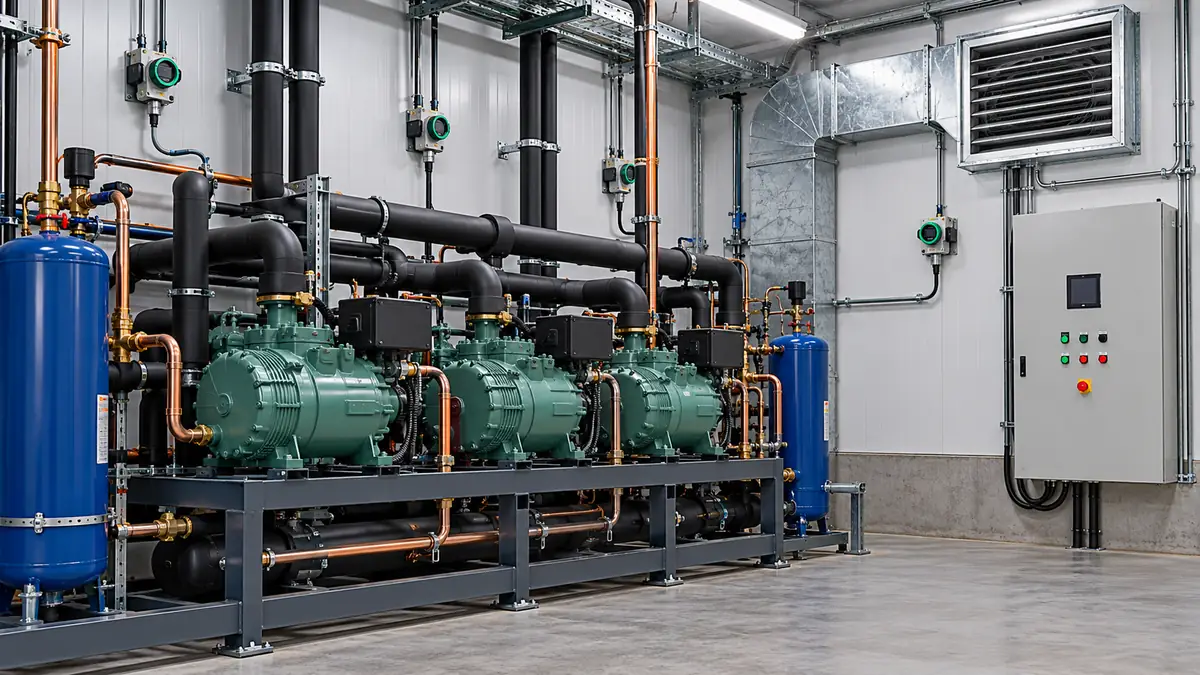
Build a useful plant-room gas log by recording detector identity, configuration, alarms, faults, ventilation response and maintenance evidence.
Read MoreWhen Does Condensation Mislead an HVAC Sensor?
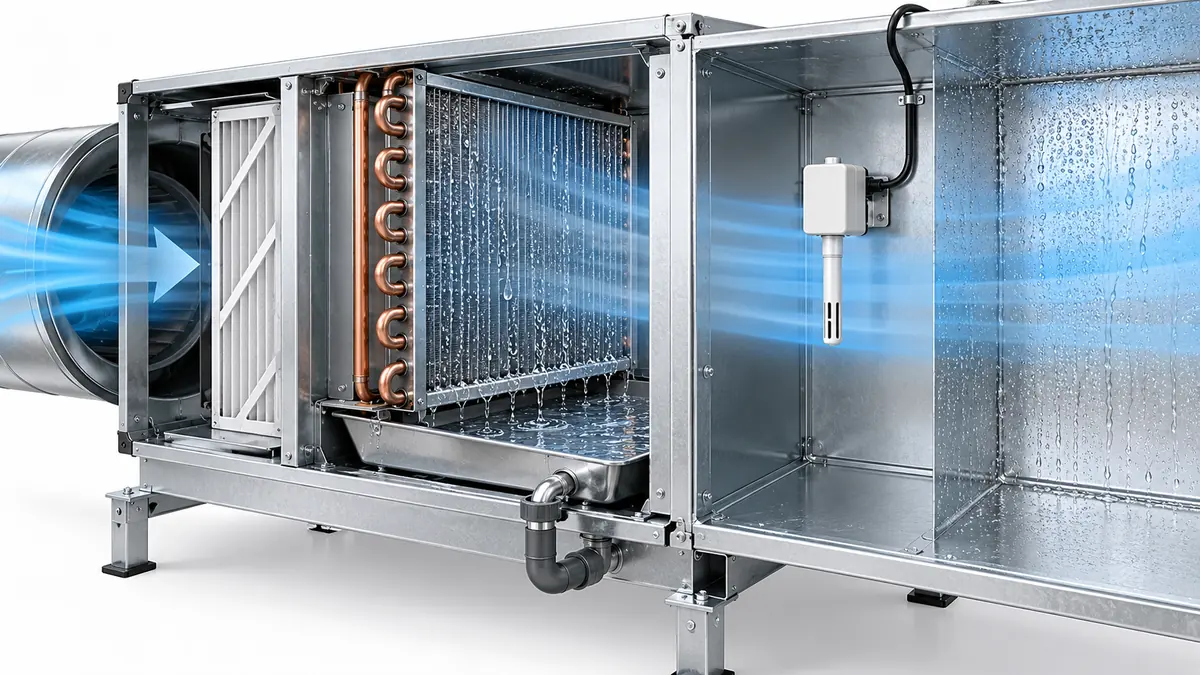
Learn when condensation at HVAC coils, probes and enclosures changes a sensor reading, and how to distinguish expected drainage from unwanted wetting.
Read MorePortable vs Fixed Refrigerant Detection: How Their Jobs Differ
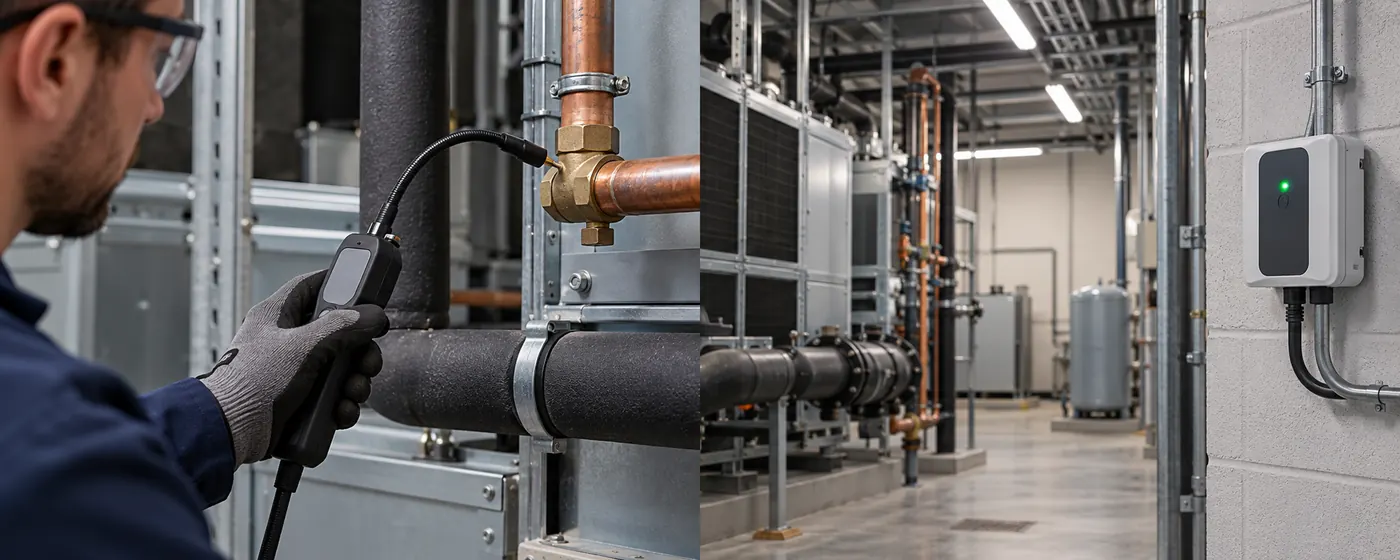
Compare handheld leak locators, fixed-point monitors and aspirating systems by sample location, response chain and commissioning needs.
Read MoreRefrigerant Identification vs Concentration Measurement: Which Test Do You Need?

Distinguish a sealed-charge identifier from ambient concentration monitoring, handheld leak location and formal refrigerant purity testing.
Read MoreHow Humidity Affects Optical PM2.5 Sensor Readings

Learn why humidity, water uptake, fog and condensation can affect optical PM2.5 estimates and how to investigate and validate a humid-air spike.
Read More


