In environments where volatile organic compounds (VOCs) and toxic gases pose a threat to human health and industrial processes, the need for sensitive, rapid, and reliable gas detection is critical. Among the various gas detection technologies available, Photoionization Detectors (PIDs) have carved out an important niche thanks to their exceptional sensitivity to low concentrations of organic and inorganic vapors.

PIDs are widely used across industries ranging from environmental monitoring to chemical manufacturing and emergency response. They offer real-time measurements, detect gases at parts-per-billion (ppb) levels, and are relatively simple to operate.

In this detailed guide, we will explore the principles of operation, components, types, applications, advantages, limitations, maintenance, and emerging trends related to PID technology.

1. What is a Photoionization Detector (PID)?

A Photoionization Detector (PID) is a type of gas sensor that uses ultraviolet (UV) light to ionize gas molecules in order to detect and measure volatile organic compounds (VOCs) and some inorganic gases at very low concentrations.

The key features of PIDs include:

  • Ultra-high sensitivity: down to ppb levels.
  • Rapid response: milliseconds to seconds.
  • Broad detection range: suitable for hundreds of different compounds.

Due to these characteristics, PIDs are extensively used for environmental monitoring, industrial hygiene, hazardous materials response, and indoor air quality assessment.

2. How Do Photoionization Detectors Work?

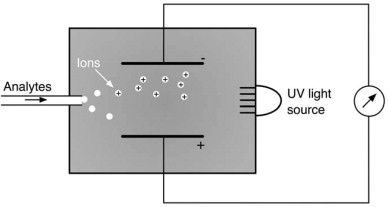
The operation of a PID is based on the photoionization process, which involves the interaction between UV photons and gas molecules.
Photoionization Detectors Work

2.1 Principle of Operation

  1. Gas Sample Introduction: The gas sample is drawn into the detector.
  2. UV Light Exposure: The gas molecules pass through a UV lamp emitting photons at specific energy levels.
  3. Ionization: If the photon’s energy is greater than the ionization potential (IP) of a gas molecule, an electron is ejected, creating positive ions.
  4. Current Generation: These ions are collected on electrodes, producing an electrical current.
  5. Signal Processing: The generated current is proportional to the concentration of ionized gas molecules and is processed to display gas concentration.

2.2 Ionization Energy

  • Ionization potential (IP) is the minimum energy required to remove an electron from a gas molecule.
  • Gases with an IP lower than the UV lamp’s photon energy can be detected.
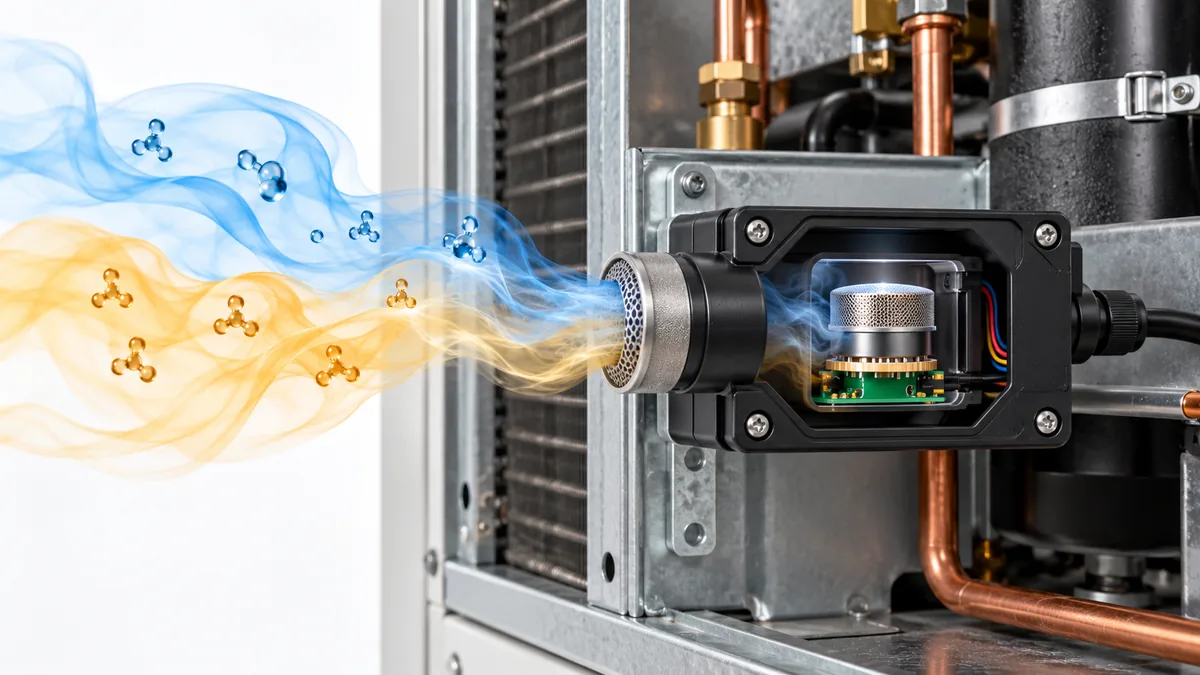
3. Components of a PID

3.1 UV Lamp

  • Emits ultraviolet photons.
  • Common energies: 10.0 eV, 10.6 eV, and 11.7 eV.
  • Lamp choice affects the range of detectable gases.

3.2 Ionization Chamber

  • Where the gas interacts with UV light and ionizes.

3.3 Electrodes

  • Collect the generated ions to produce a measurable current.

3.4 Sample Pump

  • Draws the air sample through the ionization chamber (may be passive or active).

3.5 Signal Processor

  • Converts the electrical signal into readable gas concentration values.

3.6 Housing

  • Protects the sensor components; often ruggedized for field use.

4. Gases Detected by PID

PIDs are particularly sensitive to volatile organic compounds and some inorganic gases.

CompoundExamples
HydrocarbonsBenzene, Toluene, Xylene
AlcoholsMethanol, Ethanol
KetonesAcetone
AldehydesFormaldehyde
AminesAmmonia
Inorganic GasesHydrogen sulfide (limited), Nitric oxide

Note: PIDs do not detect gases like methane (CH₄) or carbon monoxide (CO) effectively.

5. Advantages of Photoionization Detectors

5.1 High Sensitivity

  • Detects gases at ppb to ppm levels, suitable for stringent safety standards.

5.2 Fast Response Time

  • Near-instantaneous detection enables real-time monitoring.

5.3 Wide Range of Detectable Compounds

  • Able to detect hundreds of different chemical species.

5.4 Non-Destructive Testing

  • Does not chemically alter the gas sample.

5.5 Portability

  • Many PIDs are lightweight and battery-operated, ideal for field surveys.

5.6 Low Cost of Operation

  • Compared to mass spectrometers or gas chromatographs, PIDs are relatively inexpensive.

6. Limitations of Photoionization Detectors

6.1 Selectivity

  • PIDs are non-specific; they detect any ionizable gas, requiring calibration and/or a known environment to interpret results accurately.

6.2 Lamp Maintenance

  • UV lamps degrade over time and need cleaning or replacement.

6.3 Interferences

  • High humidity and background compounds can affect accuracy.

6.4 Limited Inorganic Detection

  • PIDs are not suitable for detecting gases like methane, carbon monoxide, nitrogen dioxide, and sulfur dioxide.

6.5 High Initial Cost

  • High-quality PIDs are more expensive than basic combustible gas detectors.

7. Applications of Photoionization Detectors

7.1 Industrial Hygiene

  • Monitoring worker exposure to toxic VOCs.
  • Ensuring workplace air quality compliance.

7.2 Environmental Monitoring

  • Measuring air pollution near chemical plants, refineries, and waste treatment sites.

7.3 Hazardous Materials (HAZMAT) Response

  • Quick detection of unknown chemical spills or leaks.

7.4 Indoor Air Quality

  • Monitoring VOC levels in homes, schools, and offices.

7.5 Petrochemical Industry

  • Leak detection around pipelines, storage tanks, and loading areas.

7.6 Soil and Groundwater Contamination

  • Detecting VOCs from underground leaks or spills.

8. Types of UV Lamps and Their Influence

Lamp EnergyDetectable GasesTypical Use
10.0 eVAromatic hydrocarbonsTargeted measurements
10.6 eVWide range of VOCsGeneral-purpose use
11.7 eVSmall alkanes, small alcoholsSpecialized applications

Choosing the appropriate UV lamp energy depends on the gases expected and the application requirements.

9. PID Calibration and Maintenance

9.1 Calibration

  • Regular calibration with a known gas standard, typically isobutylene, is necessary.
  • Calibration intervals vary from weekly to monthly based on usage conditions.

9.2 Lamp Maintenance

  • Lamps must be cleaned using approved procedures and replaced when they lose efficiency.
  • Regular inspections help maintain sensitivity.

9.3 Filter Replacement

  • Filters that protect the sensor should be replaced periodically to prevent contamination.

9.4 Battery and Pump Care

  • Ensure batteries are fully charged and pumps are functioning correctly for accurate sampling.

10. Safety and Regulatory Compliance

PIDs used in hazardous environments must comply with:

  • ATEX (European explosive atmosphere standards)
  • IECEx (International standards for explosive atmospheres)
  • UL (Underwriters Laboratories certifications)
  • CSA (Canadian Standards Association)

PIDs often come with intrinsically safe designs suitable for use in classified hazardous areas.

11. Emerging Trends and Future of PID Technology

11.1 Smart Sensors

  • Integration with IoT platforms allows remote data monitoring and real-time alerts.

11.2 Miniaturization

  • Advances in materials and manufacturing are leading to smaller, wearable PIDs.

11.3 Multi-Gas Detection

  • Devices now combine PID with other sensing technologies (e.g., electrochemical sensors, NDIR) for comprehensive air quality analysis.

11.4 Enhanced Lamp Technologies

  • New UV lamp designs are extending operational lifetimes and improving energy efficiency.

11.5 AI and Machine Learning

  • Intelligent algorithms are helping to correct for environmental factors like humidity and interfering gases, improving measurement reliability.

12. Comparison to Other Gas Detection Technologies

FeaturePIDElectrochemical SensorsInfrared Sensors (NDIR)
SensitivityVery High (ppb)Moderate (ppm)Moderate (ppm)
SelectivityLowHighModerate
MaintenanceMediumLowLow
Suitable for VOCsYesNoNo
Response TimeVery FastFastFast
CostModerate-HighLow-ModerateHigh

PIDs excel in detecting low concentrations of VOCs but require careful calibration and interpretation of results.

Conclusion

Photoionization Detectors (PIDs) have proven themselves indispensable tools in the field of gas detection. Their ability to detect extremely low concentrations of a wide variety of volatile compounds in real time makes them vital for protecting human health, monitoring environmental pollutants, and ensuring industrial safety.

While they are not without limitations — such as susceptibility to humidity and lack of gas-specific selectivity — advancements in sensor technology, smart integration, and maintenance protocols continue to expand their usability and reliability.

For industries and applications where VOC detection is critical, PIDs offer a unique combination of sensitivity, speed, and practicality unmatched by most other sensing technologies. As innovations continue, the role of PIDs in ensuring cleaner, safer environments is set to become even more significant.

[post-views]

Leave a Reply

Your email address will not be published. Required fields are marked *