Introduction
Alcohol sensors are devices designed to detect the presence and concentration of alcohol in various environments, including breath, blood, urine, and other substances. These sensors are crucial in a wide range of applications, from law enforcement and workplace safety to medical diagnostics and industrial processes. This comprehensive article delves into the different types of alcohol sensors, their working principles, applications, advantages, limitations, and future trends. By understanding the intricacies of alcohol sensors, we can appreciate their role in promoting safety, health, and regulatory compliance.
Types of Alcohol Sensors
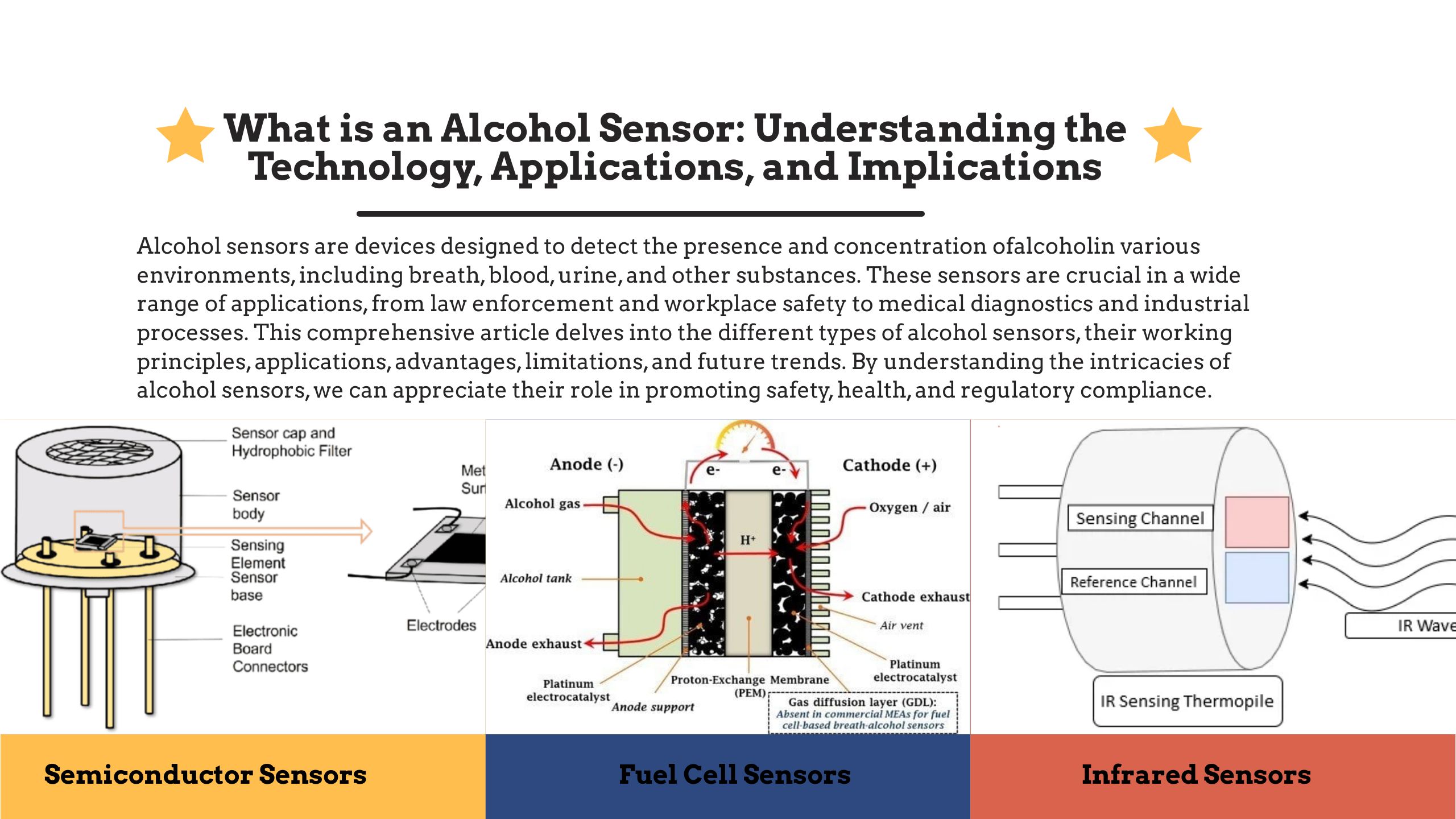
Alcohol sensors can be classified based on the technology they use to detect alcohol. The most common types include semiconductor sensors, fuel cell sensors, infrared sensors, and optical sensors. Each type has its unique working principle, advantages, and limitations.
Semiconductor C2H5OH Sensors
![]()
Semiconductor sensors, also known as metal-oxide-semiconductor (MOS) sensors, detect alcohol by measuring changes in the electrical resistance of a semiconductor material when it interacts with alcohol molecules.
- Principle: The sensor consists of a heated semiconductor element, typically made of tin dioxide (SnO2). When alcohol vapor comes into contact with the semiconductor surface, it undergoes a chemical reaction that changes the electrical resistance of the material. This change in resistance is measured and correlated to the alcohol concentration.
- Advantages: Cost-effective, compact, and relatively easy to manufacture.
- Limitations: Less accurate than other types of sensors and susceptible to interference from other gases and substances.
Fuel Cell C2H5OH Sensors

Fuel cell sensors are widely regarded as the most accurate and reliable type of alcohol sensors. They are commonly used in breathalyzers for law enforcement and personal use.
- Principle: The sensor contains a porous membrane coated with a platinum catalyst. When alcohol vapor passes through the membrane, it is oxidized on the surface of the platinum catalyst, producing electrons and generating an electrical current. The magnitude of the current is directly proportional to the alcohol concentration.
- Advantages: High accuracy, specificity to alcohol, and stability over time.
- Limitations: More expensive than semiconductor sensors and requires periodic calibration.
Infrared C2H5OH Sensors

Infrared sensors detect alcohol by measuring the absorption of infrared light by alcohol molecules.
- Principle: The sensor emits infrared light through a sample (e.g., breath or liquid). Alcohol molecules absorb specific wavelengths of infrared light. The sensor measures the amount of light absorbed, which is proportional to the alcohol concentration.
- Advantages: Non-invasive, fast response time, and high accuracy.
- Limitations: Expensive equipment and potential interference from other substances that absorb infrared light.

Optical C2H5OH Sensors
Optical sensors use the interaction of light with alcohol molecules to detect their presence and concentration.
- Principle: These sensors utilize various optical techniques, such as fluorescence, Raman spectroscopy, or surface plasmon resonance, to detect changes in the optical properties of a medium when exposed to alcohol. The detected changes are then correlated to the alcohol concentration.
- Advantages: High sensitivity and specificity, and can be used in non-invasive applications.
- Limitations: Expensive and require sophisticated instrumentation and analysis.
More About Choose Alcohol Sensor: How to Choose an Alcohol Sensor: A Comprehensive Guide
Applications of Alcohol Sensors
Alcohol sensors have a broad range of applications across different sectors, each with specific requirements and benefits.
Law Enforcement
- Roadside Testing: Law enforcement officers use breathalyzers equipped with fuel cell or semiconductor sensors to conduct roadside alcohol tests on drivers suspected of being under the influence of alcohol. These tests are crucial for maintaining road safety and enforcing DUI laws.
- Legal Evidence: Blood alcohol concentration (BAC) measurements obtained from breathalyzers or blood tests are used as legal evidence in court cases involving impaired driving or alcohol-related offenses.
Workplace Safety
- Employee Screening: Employers use alcohol sensors to conduct regular or random alcohol tests to ensure a safe working environment, especially in safety-sensitive industries like transportation, construction, and manufacturing.
- Post-Accident Testing: Alcohol sensors are used to test employees involved in workplace accidents to determine if alcohol consumption was a contributing factor.
Medical Diagnostics
- Emergency Care: In emergency departments, blood or breath alcohol tests are conducted on patients to assess their level of intoxication and provide appropriate medical treatment.
- Chronic Monitoring: Alcohol sensors are used to monitor alcohol consumption in patients undergoing treatment for alcohol use disorders. This helps healthcare providers assess treatment efficacy and make necessary adjustments.
Industrial Applications
- Process Control: In the production of alcoholic beverages, alcohol sensors are used to monitor fermentation processes and ensure product quality and consistency.
- Environmental Monitoring: Alcohol sensors detect alcohol emissions in industrial waste streams and exhausts to prevent environmental contamination and comply with regulatory standards.
Consumer Products
- Personal Breathalyzers: Portable breathalyzers equipped with fuel cell or semiconductor sensors allow individuals to monitor their alcohol consumption and make informed decisions about their ability to drive or engage in other activities.
- Smart Devices: Integration of alcohol sensors in wearable devices, such as smartwatches or fitness trackers, provides continuous monitoring of alcohol levels, helping users manage their alcohol intake and health.
Advantages and Limitations of Alcohol Sensors
Advantages
- Accuracy and Reliability: Alcohol sensors, particularly fuel cell sensors, provide accurate and reliable measurements of alcohol concentration, making them suitable for critical applications like law enforcement and medical diagnostics.
- Non-Invasive Testing: Breath, saliva, and sweat alcohol sensors offer non-invasive testing options, reducing discomfort and inconvenience for users.
- Rapid Results: Many alcohol sensors provide immediate or near-immediate results, which is essential for applications requiring quick decision-making, such as roadside testing and emergency care.
- Portability: Portable alcohol sensors, such as personal breathalyzers, are compact and easy to carry, allowing for convenient alcohol monitoring on the go.
Limitations
- Cost: High-accuracy alcohol sensors, such as fuel cell and infrared sensors, can be expensive, limiting their accessibility for some users and applications.
- Interference: Some alcohol sensors, particularly semiconductor sensors, can be affected by other substances that alter their readings, potentially leading to false positives or negatives.
- Calibration and Maintenance: Many alcohol sensors require regular calibration and maintenance to ensure their accuracy and reliability over time.
- Environmental Factors: Environmental conditions, such as temperature and humidity, can impact the performance of certain types of alcohol sensors, necessitating additional measures to mitigate these effects.
Future Trends in Alcohol Sensor Technology
Wearable Alcohol Sensors
The development of wearable alcohol sensors integrated into devices like smartwatches, fitness trackers, and clothing is a growing trend. These sensors provide continuous, real-time monitoring of alcohol levels through sweat or transdermal measurements, offering users a convenient and non-invasive way to track their alcohol consumption.
Internet of Things (IoT) Integration
IoT-enabled alcohol sensors can transmit data to centralized systems for real-time monitoring and analysis. This integration can enhance workplace safety, medical diagnostics, and personal health management by providing timely data and alerts. For example, an IoT-connected breathalyzer could automatically notify an employer if an employee’s alcohol level exceeds a predetermined threshold.
Advanced Materials and Sensor Technologies
Advancements in materials science and sensor technology are leading to the development of more sensitive, specific, and durable alcohol sensors. These improvements aim to reduce interference, enhance accuracy, and extend the lifespan of sensors, making them more effective and reliable in various applications.
Mobile Applications and Data Analytics
Mobile applications that integrate with alcohol sensors offer users detailed reports, trends, and recommendations based on their alcohol consumption patterns. These apps can also provide educational resources, support for individuals seeking to reduce their alcohol intake, and connectivity to healthcare providers or support groups.
Improved Accessibility and Affordability
Ongoing research and development efforts are focused on making high-accuracy alcohol sensors more affordable and accessible to a broader population. This includes reducing manufacturing costs, simplifying calibration processes, and developing user-friendly interfaces.
Conclusion
Alcohol sensors are essential tools for detecting and measuring alcohol concentration in various settings, from law enforcement and workplace safety to medical diagnostics and consumer products. Understanding the different types of alcohol sensors, their working principles, applications, advantages, and limitations helps us appreciate their critical role in promoting safety, health, and regulatory compliance. As technology continues to advance, we can expect even more innovative and effective solutions for alcohol detection, making it easier to monitor and manage alcohol consumption responsibly. By leveraging these advancements, we can enhance public safety, support individuals in making informed decisions, and improve overall health outcomes.