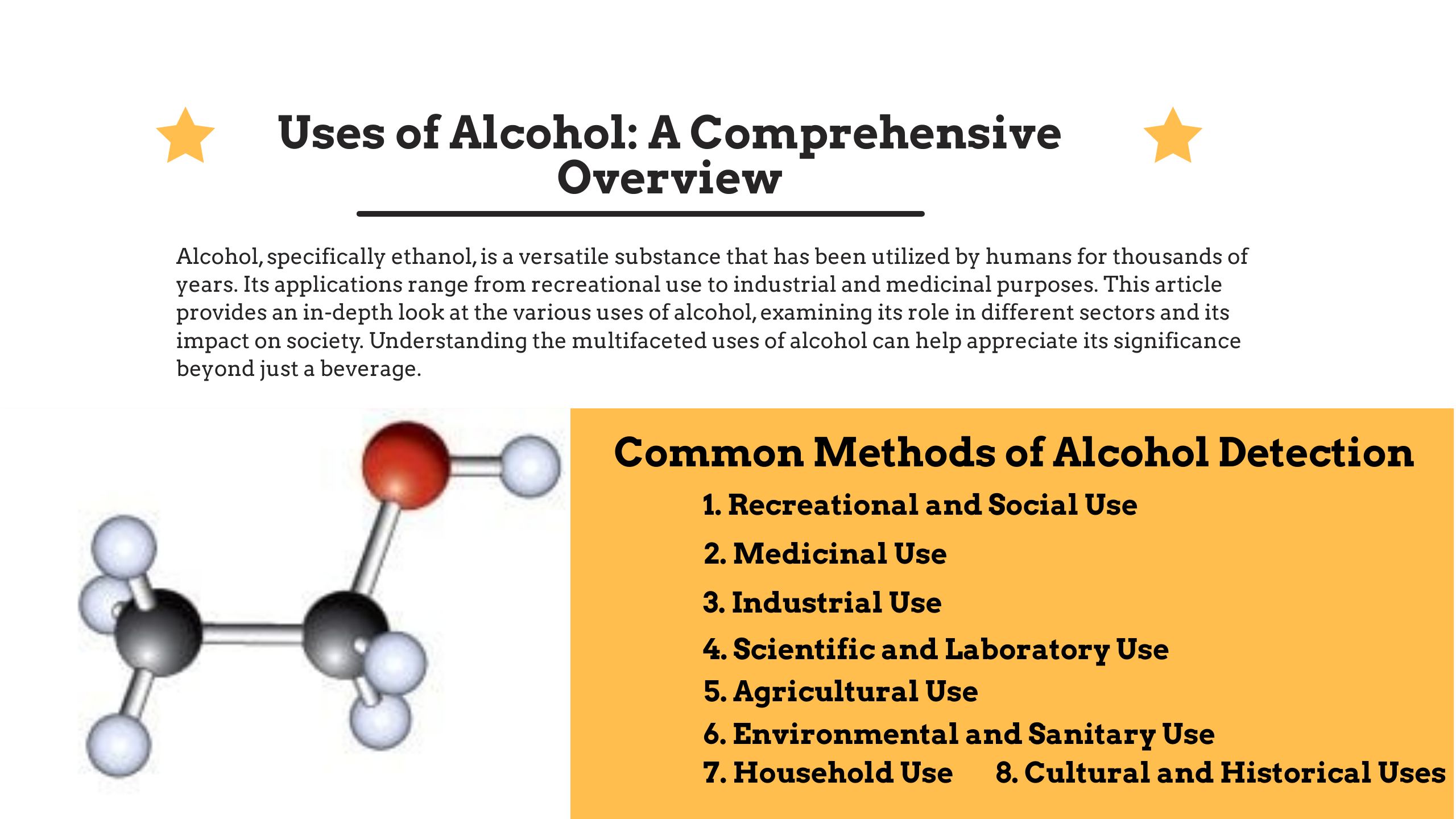
Alcohol, specifically ethanol, is a versatile substance that has been utilized by humans for thousands of years. Its applications range from recreational use to industrial and medicinal purposes. This article provides an in-depth look at the various uses of alcohol, examining its role in different sectors and its impact on society. Understanding the multifaceted uses of alcohol can help appreciate its significance beyond just a beverage.
Introduction
Ethanol, commonly referred to as alcohol, is a colorless, volatile liquid with a distinct odor. It is produced through the fermentation of sugars by yeasts and is found in alcoholic beverages. However, its utility extends far beyond consumption, encompassing a wide array of applications in medicine, industry, personal care, and scientific research.
Recreational and Social Use
Beverages
Alcoholic Drinks: The most well-known use of ethanol is in the production of alcoholic beverages such as beer, wine, and spirits. These drinks have been part of human culture and social rituals for millennia.
Cocktails and Mixed Drinks: Ethanol is a key ingredient in the creation of various cocktails and mixed drinks, enhancing flavors and providing a social lubricant in many settings.
Social and Cultural Significance
Celebrations and Rituals: Alcohol is often used in celebrations, religious ceremonies, and social gatherings. It holds cultural significance in many societies, symbolizing hospitality and festivity.
Moderation and Responsible Drinking: While recreational use is widespread, it’s important to emphasize moderation and responsible drinking to avoid the negative health impacts associated with excessive alcohol consumption.
Medicinal Use
Antiseptic and Disinfectant
Skin Disinfection: Ethanol is widely used as an antiseptic to clean wounds and disinfect skin before medical procedures.
Hand Sanitizers: Alcohol-based hand sanitizers are effective in killing germs and preventing the spread of infections, especially in healthcare settings and during pandemics.
Solvent for Medications
Tinctures and Elixirs: Ethanol acts as a solvent in the preparation of tinctures and elixirs, which are liquid forms of medication that can be easily administered and absorbed.
Preservation of Medical Samples: Ethanol is used to preserve biological samples in laboratories and medical settings due to its ability to inhibit bacterial growth and decay.
Anesthetic Use
Historical Use: In the past, ethanol was used as an anesthetic and pain reliever during surgeries and medical procedures before more advanced anesthetics were developed.
Treatment for Poisoning
Methanol and Ethylene Glycol Poisoning: Ethanol is sometimes used as an antidote for poisoning from methanol or ethylene glycol (antifreeze) because it competes with these substances for metabolism, reducing their toxic effects.
Industrial Use
Fuel and Energy
Biofuel: Ethanol is used as a renewable biofuel, often blended with gasoline to produce ethanol-blended fuels such as E10, E15, and E85. These blends help reduce greenhouse gas emissions and dependence on fossil fuels.
Industrial Solvent: Ethanol is an effective solvent used in the manufacturing of paints, coatings, and personal care products.
Manufacturing
Pharmaceutical Industry: Ethanol is a key ingredient in the production of various pharmaceuticals, acting as a solvent and preservative.
Cosmetics and Personal Care Products: Ethanol is used in the formulation of cosmetics, perfumes, and personal care products due to its solvent properties and ability to mix with both water and oils.
Chemical Industry: Ethanol serves as a feedstock in the production of other chemicals, such as ethyl acetate, acetic acid, and butadiene, which are used in various industrial processes.
Cleaning and Sanitizing
Household Cleaners: Ethanol is a common ingredient in household cleaning products due to its effectiveness in dissolving dirt and grime.
Surface Disinfectants: Ethanol-based disinfectants are widely used for cleaning surfaces in homes, offices, and public spaces to reduce the spread of pathogens.
Scientific and Laboratory Use
Research and Development
Solvent for Laboratory Reagents: Ethanol is used as a solvent in scientific research for dissolving reagents and preparing chemical solutions.
DNA and RNA Extraction: Ethanol is used in molecular biology for the precipitation and purification of DNA and RNA samples.
Preservation and Storage
Biological Specimens: Ethanol is used to preserve biological specimens in research and medical laboratories, preventing decomposition and contamination.
Histology and Pathology: Ethanol is used in the preparation and staining of tissue samples for microscopic examination in histology and pathology.
Analytical Techniques
Chromatography: Ethanol is used as a solvent in various chromatographic techniques, such as high-performance liquid chromatography (HPLC), for the separation and analysis of chemical compounds.
Spectroscopy: Ethanol is often used as a solvent in spectroscopic analyses due to its low absorption in the ultraviolet and visible light spectrums.
Agricultural Use
Pest Control
Herbicides and Insecticides: Ethanol is sometimes used as a carrier or solvent in the formulation of herbicides and insecticides, aiding in the control of weeds and pests.
Plant Growth Promotion
Seed Treatment: Ethanol can be used to treat seeds, enhancing germination and growth by breaking seed dormancy and promoting root development.
Animal Husbandry
Disinfectant: Ethanol is used in animal husbandry to disinfect equipment and facilities, reducing the spread of diseases among livestock.
Fermentation and Distillation
Alcohol Production: Ethanol is produced through the fermentation of crops such as corn, sugarcane, and barley, which are grown specifically for this purpose.
Environmental and Sanitary Use
Renewable Energy
Ethanol as a Biofuel: Ethanol produced from renewable sources is used as a cleaner alternative to fossil fuels, reducing carbon emissions and contributing to sustainable energy solutions.
Waste Treatment
Sanitizing Wastewater: Ethanol is used in wastewater treatment processes to sanitize and disinfect, ensuring safe disposal and reducing environmental contamination.
Air Quality Improvement
Emissions Reduction: Ethanol-blended fuels produce fewer air pollutants compared to pure gasoline, contributing to improved air quality and reduced smog formation.
Household Use
Cleaning and Disinfecting
Glass and Surface Cleaners: Ethanol is a common ingredient in glass cleaners and multi-surface disinfectants, providing effective cleaning and sanitization.
Laundry Products: Ethanol is used in some laundry detergents and fabric fresheners for its stain-removing and deodorizing properties.
Cooking and Food Preparation
Cooking Fuel: Ethanol-based fuels, such as gel fuels, are used in portable stoves and chafing dishes for cooking and keeping food warm.
Food Preservation: Ethanol can be used in small quantities as a preservative in certain food products to inhibit microbial growth.
Personal Care
Aftershaves and Perfumes: Ethanol is a key ingredient in aftershaves and perfumes, providing a cooling effect and serving as a carrier for fragrances.
Hand Sanitizers: Ethanol-based hand sanitizers are essential for personal hygiene, particularly in situations where soap and water are not readily available.
Cultural and Historical Uses
Religious and Ritualistic Uses
Ceremonial Uses: Ethanol has been used in various religious and cultural ceremonies throughout history, often as a symbol of purification and sanctity.
Traditional Medicine: In some cultures, ethanol has been used in traditional medicine practices for its perceived healing properties.
Historical Uses
Ancient Civilizations: Alcoholic beverages have been produced and consumed by ancient civilizations such as the Egyptians, Greeks, and Romans, playing a significant role in social and religious contexts.
Medicinal History: Historically, ethanol has been used as an anesthetic and pain reliever, as well as a solvent for medicinal herbs and compounds.
Table: Uses of Alcohol
| Sector | Use | Description |
|---|---|---|
| Recreational and Social Use | Alcoholic Beverages | Production of beer, wine, and spirits for consumption. |
| Cocktails and Mixed Drinks | Creation of various cocktails and mixed drinks. | |
| Celebrations and Rituals | Use in social gatherings, religious ceremonies, and cultural rituals. | |
| Medicinal Use | Antiseptic and Disinfectant | Cleaning wounds and disinfecting skin before medical procedures. |
| Hand Sanitizers | Killing germs and preventing infection spread. | |
| Solvent for Medications | Preparation of tinctures and elixirs. | |
| Preservation of Medical Samples | Preserving biological samples in laboratories. | |
| Anesthetic Use | Historical use as an anesthetic and pain reliever. | |
| Treatment for Poisoning | Use as an antidote for methanol and ethylene glycol poisoning. | |
| Industrial Use | Biofuel | Renewable fuel blended with gasoline to reduce emissions. |
| Industrial Solvent | Used in the manufacturing of paints, coatings, and personal care products. | |
| Pharmaceutical Production | Ingredient in pharmaceuticals as a solvent and preservative. | |
| Cosmetics and Personal Care Products | Formulation of cosmetics, perfumes, and personal care products. | |
| Chemical Industry | Feedstock in the production of chemicals like ethyl acetate and acetic acid. | |
| Household Cleaners | Ingredient in household cleaning products. | |
| Surface Disinfectants | Cleaning and sanitizing surfaces to reduce pathogen spread. | |
| Scientific and Laboratory Use | Solvent for Laboratory Reagents | Dissolving reagents and preparing chemical solutions. |
| DNA and RNA Extraction | Precipitation and purification of DNA and RNA samples. | |
| Preservation of Biological Specimens | Preventing decomposition and contamination of specimens. | |
| Histology and Pathology | Preparation and staining of tissue samples for microscopic examination. | |
| Chromatography | Solvent in chromatographic techniques for separating and analyzing compounds. | |
| Spectroscopy | Solvent in spectroscopic analyses due to its low absorption properties. | |
| Agricultural Use | Pest Control | Carrier or solvent in herbicides and insecticides. |
| Plant Growth Promotion | Seed treatment to enhance germination and root development. | |
| Animal Husbandry | Disinfection of equipment and facilities. | |
| Alcohol Production | Fermentation of crops like corn and sugarcane for ethanol production. | |
| Environmental and Sanitary Use | Renewable Energy | Use of ethanol as a biofuel to reduce carbon emissions. |
| Waste Treatment | Sanitizing and disinfecting wastewater. | |
| Air Quality Improvement | Reduction of air pollutants from ethanol-blended fuels. | |
| Household Use | Cleaning and Disinfecting | Use in glass cleaners and multi-surface disinfectants. |
| Laundry Products | Ingredient in laundry detergents and fabric fresheners. | |
| Cooking Fuel | Ethanol-based fuels for cooking and keeping food warm. | |
| Food Preservation | Use as a preservative in certain food products. | |
| Aftershaves and Perfumes | Cooling effect and carrier for fragrances. | |
| Hand Sanitizers | Essential for personal hygiene in the absence of soap and water. | |
| Cultural and Historical Uses | Ceremonial Uses | Use in religious and cultural ceremonies. |
| Traditional Medicine | Use in traditional medicine practices. | |
| Ancient Civilizations | Production and consumption by ancient civilizations. | |
| Medicinal History | Historical use as an anesthetic and pain reliever, and solvent for medicinal herbs and compounds. |
Conclusion
Alcohol, primarily in the form of ethanol, plays a significant role in various aspects of human life, from social and recreational activities to industrial and medicinal applications. Its versatility and effectiveness make it an indispensable substance across multiple sectors. However, it is essential to balance its beneficial uses with an understanding of the potential risks associated with its consumption, ensuring responsible and informed utilization. By recognizing the diverse uses of alcohol, society can better appreciate its value while mitigating its adverse effects.
Realted Read:
What is an Alcohol Sensor: Understanding the Technology, Applications, and Implications
How to Choose an Alcohol Sensor: A Comprehensive Guide
Health Impacts of Alcohol: A Comprehensive Analysis
How to Detecting Alcohol: Methods, Technologies, and Applications