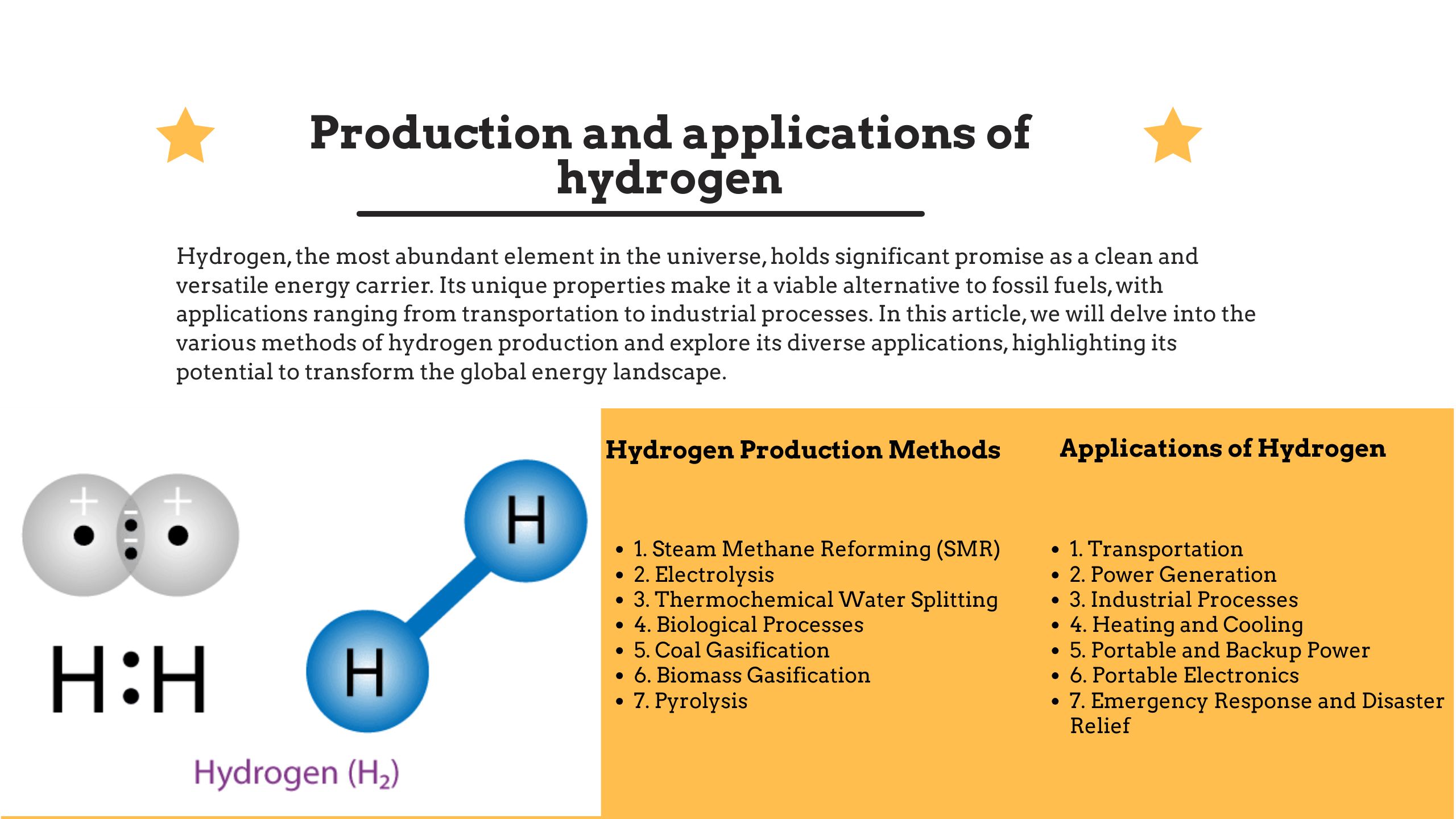
Hydrogen, the most abundant element in the universe, holds significant promise as a clean and versatile energy carrier. Its unique properties make it a viable alternative to fossil fuels, with applications ranging from transportation to industrial processes. In this article, we will delve into the various methods of hydrogen production and explore its diverse applications, highlighting its potential to transform the global energy landscape.
Hydrogen Production Methods
Hydrogen can be produced from a variety of resources through several different processes. Each method has its own advantages, challenges, and environmental impacts. The primary methods of hydrogen production are:
1. Steam Methane Reforming (SMR)

(Source: mvsengg.com)
Steam Methane Reforming (SMR) is the most widely used method for producing hydrogen. It involves reacting natural gas (primarily methane) with steam at high temperatures to produce hydrogen, carbon monoxide, and a small amount of carbon dioxide. The reaction can be represented as follows:
CH4+H2O→CO+3H2
Subsequently, the carbon monoxide reacts with steam in a secondary process known as the water-gas shift reaction, producing additional hydrogen and carbon dioxide:
CO+H2O→CO2+H2
While SMR is currently the most economically viable method for hydrogen production, it has a significant environmental impact due to the release of carbon dioxide. Efforts are ongoing to capture and store the carbon dioxide produced during SMR to mitigate its environmental footprint.
2. Electrolysis
(Source: ptx-hub.org)
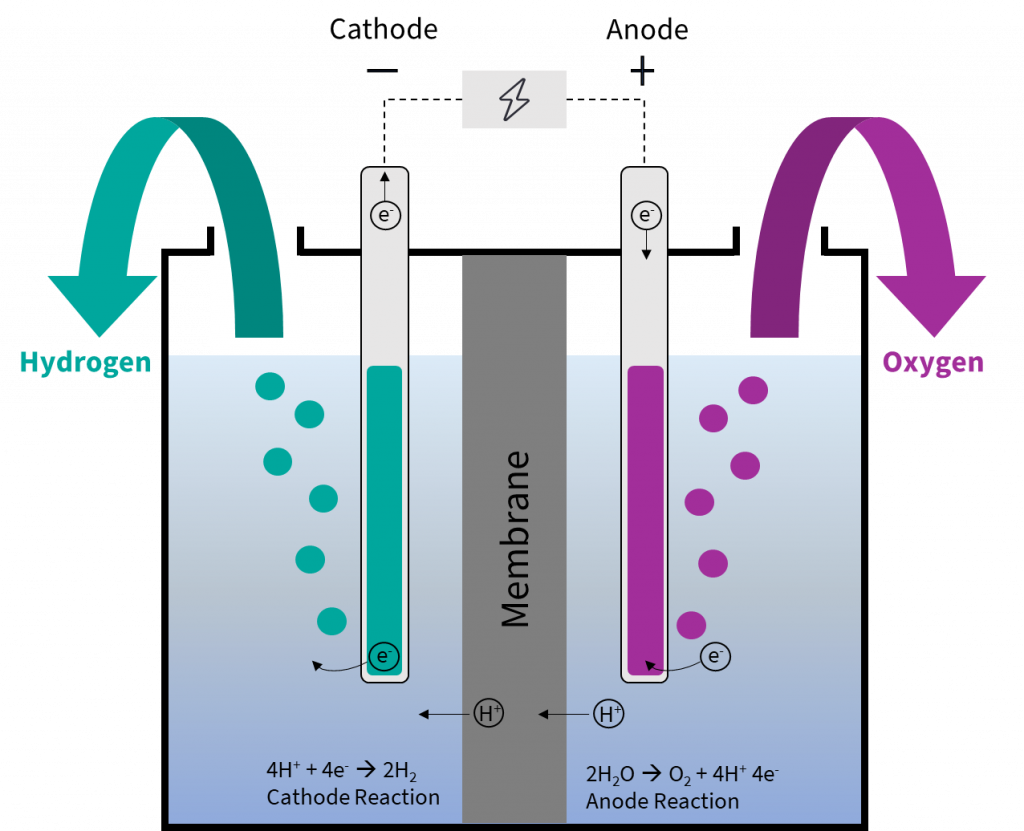
Electrolysis is a process that uses electricity to split water into hydrogen and oxygen. This method can produce hydrogen with zero emissions if the electricity used comes from renewable sources such as wind, solar, or hydroelectric power. The electrolysis reaction is straightforward:
2H2O→2H2+O2
There are three main types of electrolyzers:
- Alkaline Electrolyzers: These use an alkaline electrolyte such as potassium hydroxide to conduct electricity.
- Proton Exchange Membrane (PEM) Electrolyzers: These use a solid polymer electrolyte that conducts protons from the anode to the cathode.
- Solid Oxide Electrolyzers: These operate at high temperatures and use a solid ceramic electrolyte.
Electrolysis is seen as a key technology for producing green hydrogen, although it is currently more expensive than SMR. Research and development efforts are focused on improving the efficiency and reducing the cost of electrolyzers.
3. Thermochemical Water Splitting

(Source: netzsch.com)
Thermochemical Water Splitting involves using high temperatures, often generated by solar or nuclear energy, to drive chemical reactions that produce hydrogen. This method includes processes such as the sulfur-iodine cycle and the copper-chlorine cycle. While thermochemical water splitting is still in the research and development phase, it holds promise for efficient, large-scale hydrogen production.
4. Biological Processes
(Source: sciencedirect.com)
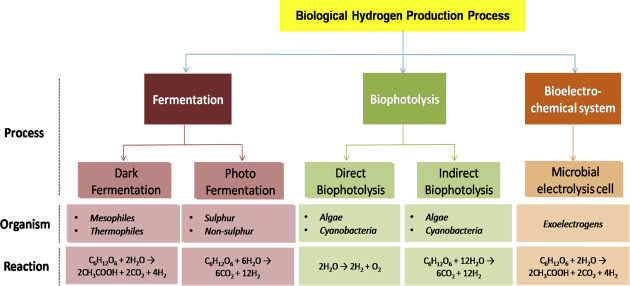
Certain microorganisms can produce hydrogen through biological reactions. These processes include:
- Biophotolysis: Using algae to split water into hydrogen and oxygen using sunlight.
- Dark Fermentation: Using bacteria to break down organic matter (such as biomass or waste) to produce hydrogen in the absence of light.
- Photofermentation: Using photosynthetic bacteria to convert organic substrates into hydrogen in the presence of light.
Biological methods are environmentally friendly and have the potential to utilize waste streams for hydrogen production. However, they are not yet commercially viable and require further development to improve their efficiency and scalability.

5. Coal Gasification
Coal Gasification involves reacting coal with oxygen and steam to produce a mixture of hydrogen, carbon monoxide, and carbon dioxide. The hydrogen can be separated from the other gases and used as a fuel. While this method can produce hydrogen on a large scale, it has a significant environmental impact due to the associated CO2 emissions. Technologies for carbon capture and storage (CCS) are being developed to mitigate these emissions.
6. Biomass Gasification
Biomass Gasification converts organic materials, such as agricultural residues, wood chips, or municipal solid waste, into hydrogen, carbon monoxide, and carbon dioxide through high-temperature reactions with oxygen or steam. This method offers a renewable pathway for hydrogen production, although it also requires carbon capture technologies to manage CO2 emissions effectively.
7. Pyrolysis
Pyrolysis is a thermal decomposition process that breaks down organic materials in the absence of oxygen to produce hydrogen, along with solid, liquid, and gaseous byproducts. This method can be used to process biomass or plastic waste, providing an additional renewable source of hydrogen while addressing waste management issues.
Applications of Hydrogen
Hydrogen’s versatility makes it suitable for a wide range of applications across various sectors, from transportation to industrial processes. Here are some of the most significant applications of hydrogen:
1. Transportation
Hydrogen is playing a growing role in the transportation sector, where it can be used to power different types of vehicles, offering a clean alternative to fossil fuels.
a. Fuel Cell Electric Vehicles (FCEVs)
Fuel Cell Electric Vehicles (FCEVs) use hydrogen to generate electricity through a fuel cell, which then powers an electric motor. FCEVs emit only water vapor and heat, making them an environmentally friendly option. Major automotive manufacturers, including Toyota, Hyundai, and Honda, have developed FCEVs like the Toyota Mirai, Hyundai NEXO, and Honda Clarity.
b. Buses and Trucks
Hydrogen-powered buses and trucks are being deployed to reduce emissions from heavy-duty transportation. These vehicles offer longer driving ranges and shorter refueling times compared to battery electric vehicles (BEVs), making them suitable for long-haul and high-demand routes.
c. Trains
Hydrogen fuel cell trains are being tested and deployed in several countries as a clean alternative to diesel-powered trains, especially on non-electrified railways. Alstom’s Coradia iLint is one of the first hydrogen-powered trains in commercial service.
d. Aviation
Hydrogen is being explored as a potential fuel for aviation, with the goal of reducing greenhouse gas emissions from the aviation industry. Companies like ZeroAvia and Airbus are developing hydrogen-powered aircraft, with plans for commercial flights in the coming decades.
e. Maritime
The maritime industry is also investigating hydrogen as a fuel for ships, aiming to reduce emissions from maritime transportation. Hydrogen fuel cells and hydrogen-based synthetic fuels (such as ammonia) are being considered for powering ships.
2. Power Generation
Hydrogen can be used to generate electricity in various ways, providing a clean and reliable energy source.
a. Fuel Cells
Stationary fuel cells can provide clean, reliable power for buildings, data centers, and grid support. These systems are scalable and can be used in both large-scale power plants and small-scale distributed energy systems.
b. Combustion
Hydrogen can be burned in turbines or engines to generate electricity. This can be done either alone or blended with natural gas. Hydrogen combustion produces no carbon emissions, making it a promising option for decarbonizing power generation.
c. Energy Storage
Hydrogen can be used to store excess renewable energy generated by wind, solar, and other sources. This stored hydrogen can then be converted back into electricity when needed, helping to balance supply and demand on the grid and providing a stable and reliable energy supply.
3. Industrial Processes
Hydrogen is already used in various industrial processes and has the potential to further reduce emissions and improve efficiency.
a. Ammonia Production
Hydrogen is a key feedstock for producing ammonia (NH3), which is used in fertilizers and industrial chemicals. The Haber-Bosch process, which synthesizes ammonia from hydrogen and nitrogen, is one of the largest consumers of hydrogen globally.
b. Petroleum Refining
Hydrogen is used in petroleum refining to remove sulfur and other impurities from crude oil, producing cleaner fuels. This process, known as hydrotreating, helps meet stringent environmental regulations and improve fuel quality.
c. Metal Production
Hydrogen can be used as a reducing agent in steelmaking and other metal production processes, replacing carbon-based reductants like coke and reducing carbon emissions. The Direct Reduced Iron (DRI) process, which uses hydrogen to produce steel, is being developed and tested by companies like SSAB and Thyssenkrupp.
d. Chemical Manufacturing
Hydrogen is used in various chemical manufacturing processes, including the production of methanol, plastics, and other chemicals. It can also be used to produce synthetic fuels and feedstocks for the chemical industry.
4. Heating and Cooling
Hydrogen can be used for residential and commercial heating and cooling, offering a clean alternative to natural gas and other fossil fuels.
a. Hydrogen Boilers
Hydrogen can be burned in boilers to provide heat for buildings, potentially replacing natural gas. Hydrogen boilers are similar in design to conventional gas boilers but produce only water vapor as a byproduct.
b. Combined Heat and Power (CHP)
Fuel cells can provide both electricity and heat for buildings, improving energy efficiency. Combined heat and power (CHP) systems using hydrogen fuel cells can offer a reliable and clean energy solution for residential, commercial, and industrial applications.
5. Portable and Backup Power
Hydrogen fuel cells can provide portable and backup power for various applications, offering a reliable and clean energy source.
a. Backup Power
Fuel cells can provide reliable backup power for critical infrastructure, such as hospitals, data centers, and telecommunications. These systems can ensure continuous operation during power outages and emergencies.
b. Remote Power
Fuel cells can power remote locations, such as off-grid homes, research stations, and military bases, where other power sources are impractical. Hydrogen fuel cells offer a reliable and efficient solution for providing power in remote and challenging environments.
6. Portable Electronics
Hydrogen fuel
cells can be used to power portable electronics, such as laptops, smartphones, and cameras. These fuel cells offer longer operating times and quicker refueling compared to traditional batteries, making them an attractive option for portable power applications.
7. Emergency Response and Disaster Relief
Hydrogen fuel cells can provide power for emergency response and disaster relief operations, offering a reliable and portable energy source in critical situations. Fuel cells can power communication equipment, medical devices, and other essential tools during emergencies.
The Future of Hydrogen
The future of hydrogen looks promising, with numerous advancements and initiatives underway to overcome current challenges and unlock its full potential. Here are some key factors shaping the future of hydrogen:
1. Technological Advancements
Ongoing research and development efforts are focused on improving the efficiency and reducing the costs of hydrogen production, storage, and fuel cell technologies. Innovations in electrolysis, materials science, and systems integration are key to making hydrogen more competitive with conventional energy sources.
2. Policy and Regulatory Support
Governments and international organizations are increasingly recognizing the potential of hydrogen and supporting its development through policies, subsidies, and research funding. National hydrogen strategies and roadmaps are being developed to coordinate efforts and investments, creating a favorable environment for hydrogen adoption.
3. Renewable Energy Integration
Hydrogen can play a crucial role in integrating variable renewable energy sources, such as wind and solar, by providing a means to store and transport excess energy. As the share of renewables in the energy mix grows, hydrogen will become increasingly important in ensuring a stable and reliable energy supply.
4. Market Development
The development of hydrogen markets and supply chains will drive economies of scale and reduce costs. Collaboration between industries, governments, and research institutions is essential to build a robust hydrogen economy and create new business opportunities.
5. Decarbonization Goals
As countries around the world commit to reducing greenhouse gas emissions and achieving net-zero targets, hydrogen offers a pathway to decarbonize sectors that are difficult to electrify, such as heavy industry and long-haul transportation. Hydrogen’s versatility and zero-emission profile make it a key component of the transition to a low-carbon economy.
6. Public Awareness and Acceptance
Building public awareness and acceptance of hydrogen technologies is crucial for their widespread adoption. Education and outreach efforts are needed to inform the public about the benefits of hydrogen and address concerns related to safety and environmental impact.
Conclusion
Hydrogen holds significant potential as a clean and versatile energy carrier that can transform the global energy landscape. Its production from various sources, coupled with its wide range of applications, makes it a promising solution for reducing greenhouse gas emissions, enhancing energy security, and supporting the transition to a sustainable energy future. While challenges remain, ongoing advancements in technology, policy support, and market development are paving the way for hydrogen to play a central role in the world’s energy systems. As research and innovation continue to drive progress, hydrogen is poised to become a key enabler of a cleaner, more efficient, and resilient energy future.