Battery leakage is a common yet often overlooked issue that can cause significant damage to electronic devices and pose health and environmental risks. Understanding the causes of battery leakage, recognizing the signs, and knowing how to prevent and address it are essential for both individuals and organizations that rely on battery-powered equipment. This article delves into the science behind battery leakage, explores the types of batteries prone to leaking, outlines preventive measures, and discusses safe handling practices.
What is Battery Leakage?
Battery leakage occurs when the electrolyte inside a battery escapes from its casing. This can happen due to various factors, including physical damage, chemical reactions, or manufacturing defects. The leaked substance can be corrosive, leading to damage of the battery compartment, electronic components, and potentially the entire device. Moreover, battery leakage can pose health hazards if it comes into contact with skin or eyes, or if inhaled.
Types of Batteries and Leakage
Different types of batteries are more prone to leakage than others. The most common types of batteries that can leak include:
1. Alkaline Batteries
Alkaline batteries are widely used in household devices such as remote controls, clocks, and flashlights. They contain an alkaline electrolyte, typically potassium hydroxide, which can leak when the battery is damaged or reaches the end of its lifespan.
2. Zinc-Carbon Batteries
Zinc-carbon batteries, also known as heavy-duty batteries, are an older type of disposable battery. They are less expensive than alkaline batteries but are more prone to leakage due to their construction and chemistry.
3. Lithium Batteries
Lithium batteries, including both primary (non-rechargeable) and secondary (rechargeable) types, are used in high-performance applications such as cameras, laptops, and medical devices. While less prone to leakage than alkaline or zinc-carbon batteries, they can still leak if damaged or improperly handled.
4. Nickel-Cadmium (NiCd) and Nickel-Metal Hydride (NiMH) Batteries
These rechargeable batteries are used in a variety of applications, from power tools to portable electronics. NiCd batteries are particularly prone to leakage due to the chemical nature of cadmium, while NiMH batteries are generally more stable but can still leak under certain conditions.
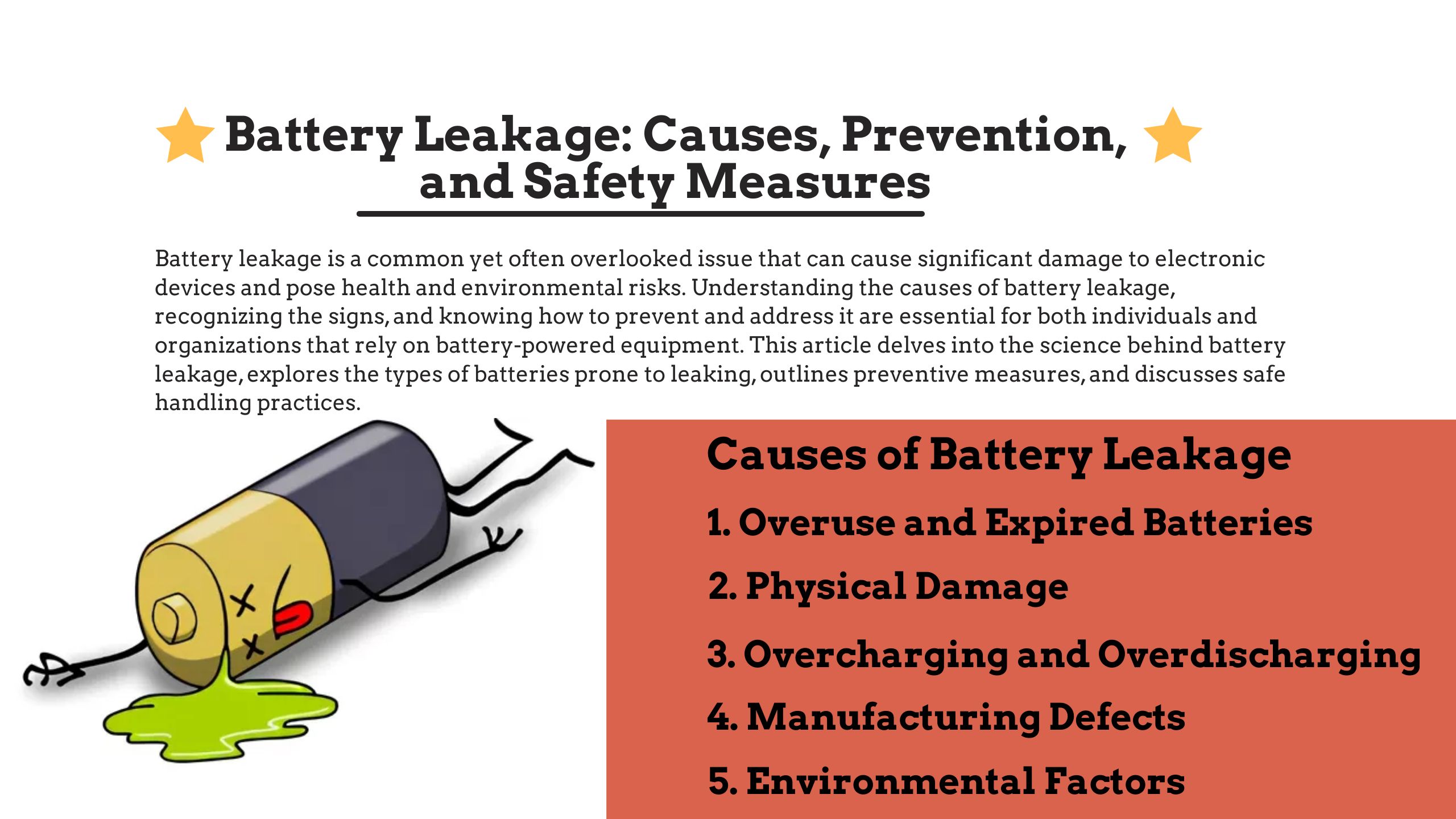
Causes of Battery Leakage
Battery leakage can result from a variety of factors, including:
1. Overuse and Expired Batteries
Using batteries beyond their recommended lifespan or expiration date increases the likelihood of leakage. As batteries age, the materials inside degrade, leading to potential breaches in the casing.
2. Physical Damage
Dropping, crushing, or otherwise physically damaging a battery can compromise its casing, allowing the electrolyte to leak out. This is a common issue with devices that experience frequent movement or impact.
3. Overcharging and Overdischarging
For rechargeable batteries, overcharging (charging beyond full capacity) and overdischarging (discharging beyond safe limits) can cause internal pressure build-up, leading to leakage. Proper use of chargers and monitoring of battery levels are crucial to prevent this.
4. Manufacturing Defects
Occasionally, batteries may have manufacturing defects that lead to leakage. These defects can include improper sealing, impurities in the materials, or design flaws that compromise the integrity of the battery.
5. Environmental Factors
Extreme temperatures, both hot and cold, can affect battery performance and integrity. High temperatures can cause the electrolyte to expand and breach the casing, while low temperatures can lead to cracking and subsequent leakage.
6. Chemical Reactions
Internal chemical reactions within the battery can sometimes lead to the formation of gas, which increases pressure inside the battery and can cause it to leak. This is particularly common in older or heavily used batteries.
Signs of Battery Leakage
Recognizing the signs of battery leakage is important for early intervention and damage control. Common signs include:
- Corrosion: White or crusty residue around the battery terminals or on the battery itself.
- Discoloration: Yellowish or brownish stains inside the battery compartment.
- Swelling: Bulging or swelling of the battery casing.
- Odor: A chemical smell, which can be pungent and unpleasant.
- Malfunctioning Devices: Devices that stop working or exhibit erratic behavior may have leaking batteries.
Prevention of Battery Leakage
Preventing battery leakage involves proper handling, storage, and maintenance practices. Here are some key preventive measures:
1. Proper Storage
Store batteries in a cool, dry place away from direct sunlight and extreme temperatures. Avoid storing batteries in humid environments, as moisture can accelerate corrosion.
2. Use of Appropriate Batteries
Always use the correct type and size of batteries recommended by the device manufacturer. Using incompatible batteries can lead to improper fit and increased risk of leakage.
3. Timely Replacement
Replace batteries as soon as they show signs of depletion or reach their expiration date. Avoid mixing old and new batteries or different types of batteries in the same device.
4. Regular Inspection
Periodically inspect batteries and battery compartments for signs of leakage or corrosion. Clean the contacts with a dry cloth and replace any leaking batteries immediately.
5. Proper Charging Practices
For rechargeable batteries, use the charger provided by the manufacturer and follow recommended charging practices. Avoid overcharging or leaving batteries on the charger for extended periods.
6. Avoiding Physical Damage
Handle batteries with care to avoid dropping or crushing them. Ensure that batteries are securely installed in devices to prevent movement and damage.
7. Safe Disposal
Dispose of used batteries properly according to local regulations. Many communities have recycling programs for batteries to prevent environmental contamination and reduce the risk of leakage.
Dealing with Battery Leakage
If you encounter a leaking battery, it is important to take immediate action to minimize damage and protect yourself from harm. Follow these steps to safely deal with a leaking battery:
1. Safety First
Wear protective gloves and safety goggles to prevent contact with the leaking electrolyte. Ensure the area is well-ventilated.
2. Remove the Battery
Carefully remove the leaking battery from the device. Avoid using metal tools that can cause short circuits. Place the battery in a plastic bag or non-metallic container for disposal.
3. Clean the Device
Clean the battery compartment and affected areas with a cotton swab or cloth dampened with a mild solution of vinegar or lemon juice. This helps neutralize the alkaline electrolyte. Wipe the area with a dry cloth afterward.
4. Inspect for Damage
Inspect the device for any signs of corrosion or damage to the electronic components. If corrosion is extensive, professional repair or replacement of the device may be necessary.
5. Dispose of the Battery
Dispose of the leaking battery according to local regulations. Do not throw it in the regular trash. Many communities have designated collection sites for hazardous waste, including batteries.
6. Prevent Future Leakage
Review and implement the preventive measures outlined earlier to avoid future battery leakage issues.
Health and Environmental Risks of Battery Leakage
Battery leakage poses several health and environmental risks that need to be addressed to ensure safety and sustainability.
Health Risks
The electrolyte inside batteries can be corrosive and toxic. Contact with leaking electrolyte can cause skin irritation, chemical burns, and eye damage. Inhalation of fumes from leaking batteries can also cause respiratory irritation. It is important to handle leaking batteries with care and seek medical attention if exposure occurs.
Environmental Risks
Improper disposal of batteries can lead to environmental contamination. The chemicals inside batteries, including heavy metals like lead, cadmium, and mercury, can leach into soil and water, posing risks to ecosystems and human health. Recycling programs help mitigate these risks by safely processing used batteries and recovering valuable materials.
Conclusion
Battery leakage is a common issue that can cause significant damage to electronic devices and pose health and environmental risks. Understanding the causes of battery leakage, recognizing the signs, and knowing how to prevent and address it are essential for both individuals and organizations that rely on battery-powered equipment. By implementing proper handling, storage, and maintenance practices, we can reduce the incidence of battery leakage and ensure the safe and sustainable use of batteries.