Methane (CH₄) is a potent greenhouse gas with significant implications for climate change and environmental health. Detecting methane leaks quickly and accurately is crucial for mitigating its impact. Laser-based sensors have emerged as an advanced technology for methane detection, offering high precision and rapid response. This guide explores the principles, advantages, applications, and future prospects of laser-based methane sensors.

Principles of Laser-based Methane Detection

How Laser-based Sensors Work
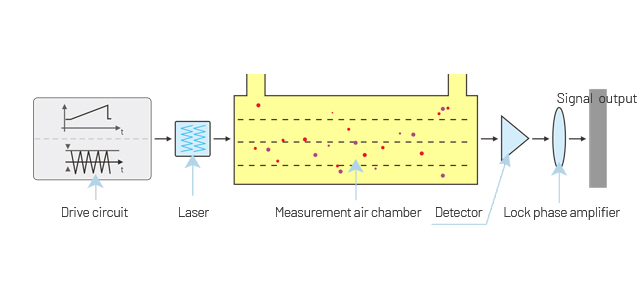
spectroscopy TDLAS

Laser-based sensors detect methane using the principle of absorption spectroscopy. Here’s a step-by-step breakdown of the process:

  1. Laser Emission: A laser diode emits a specific wavelength of light that corresponds to the absorption characteristics of methane molecules.
  2. Absorption: When the laser light passes through a gas sample, methane molecules absorb light at specific wavelengths.
  3. Detection: The sensor measures the amount of light absorbed by the methane molecules. The absorption intensity is proportional to the methane concentration.
  4. Analysis: The sensor’s electronics analyze the absorption data to determine the methane concentration in the sampled air.

Types of Laser-based Sensors

  1. Tunable Diode Laser Absorption Spectroscopy (TDLAS): Uses a tunable diode laser to scan across the absorption spectrum of methane, providing high sensitivity and specificity.
  2. Cavity Ring-Down Spectroscopy (CRDS): Measures the time it takes for laser light to decay within a cavity containing the gas sample, offering extremely high sensitivity.

Advantages of Laser-based Methane Sensors

  1. High Sensitivity and Precision: Laser-based sensors can detect methane concentrations at very low levels, often in parts per billion (ppb).
  2. Rapid Response Time: These sensors provide real-time monitoring, allowing for immediate detection of methane leaks.
  3. Non-contact Measurement: Laser-based sensors can detect methane from a distance, making them ideal for monitoring hard-to-reach areas.
  4. Selective Detection: The specific wavelength absorption of methane minimizes interference from other gases, ensuring accurate readings.
  5. Long-term Stability: Laser-based sensors offer consistent performance over time with minimal calibration needs.

Applications of Laser-based Methane Sensors

Industrial Applications

  1. Oil and Gas Industry: Monitoring methane leaks in pipelines, storage tanks, and processing facilities to ensure safety and regulatory compliance.
  2. Mining: Detecting methane in coal mines to prevent explosive hazards.
  3. Chemical Manufacturing: Monitoring methane emissions in chemical production processes.

Environmental Monitoring

  1. Landfill Sites: Measuring methane emissions from waste decomposition to manage and mitigate environmental impact.
  2. Agriculture: Monitoring methane from livestock and manure management to improve farming practices and reduce greenhouse gas emissions.
  3. Climate Research: Providing precise data on methane concentrations in the atmosphere for climate modeling and research.

Public Safety

  1. Urban Areas: Detecting methane leaks from natural gas distribution networks to prevent accidents and ensure public safety.
  2. Residential Areas: Monitoring methane levels in homes with natural gas appliances to prevent exposure to hazardous concentrations.

Future Prospects of Laser-based Methane Sensors

Technological Advancements

  1. Miniaturization: Development of smaller, portable laser-based sensors for widespread use in various applications, including personal safety devices and portable environmental monitors.
  2. Integration with IoT: Combining laser-based sensors with Internet of Things (IoT) technology for real-time data transmission, remote monitoring, and automated leak detection systems.
  3. Enhanced Sensitivity: Ongoing research aims to improve the sensitivity and selectivity of laser-based sensors, making them even more effective for detecting trace levels of methane.

Regulatory and Policy Implications

  1. Stricter Emission Standards: As governments implement stricter methane emission regulations, the demand for accurate and reliable detection technologies like laser-based sensors is expected to grow.
  2. Incentives for Adoption: Policies that incentivize the adoption of advanced methane detection technologies can drive market growth and innovation in the sector.

Conclusion

Laser-based methane sensors represent a significant advancement in gas detection technology. Their high sensitivity, rapid response, and precise measurements make them an invaluable tool for various industries, environmental monitoring, and public safety. As technological advancements continue and regulatory frameworks evolve, laser-based sensors will play an increasingly critical role in mitigating methane emissions and protecting the environment. Investing in and adopting these advanced detection systems is essential for addressing the challenges posed by methane and ensuring a sustainable future.

Leave a Reply

Your email address will not be published. Required fields are marked *