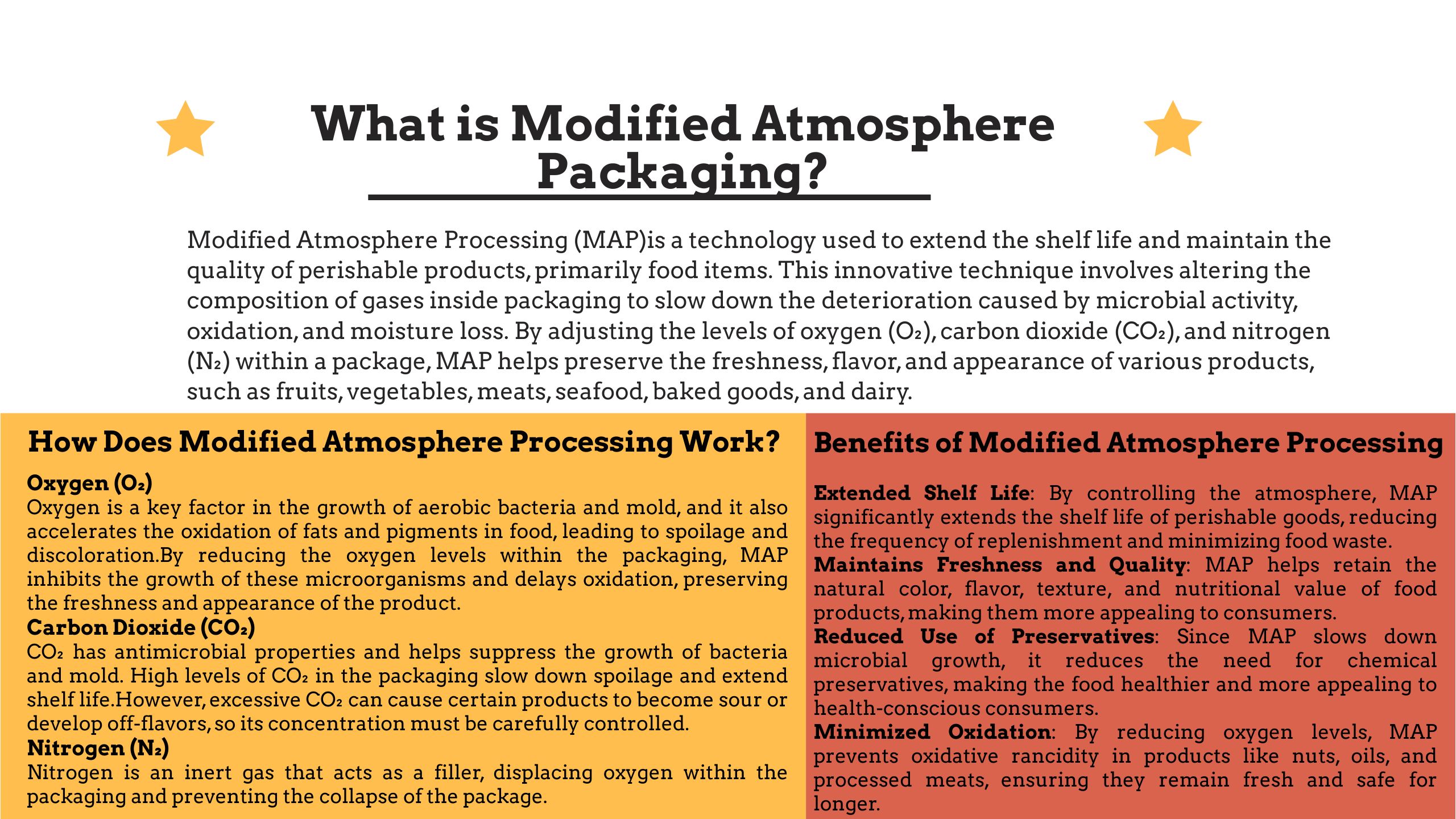
Modified Atmosphere Packaging (MAP) is a technology used to extend the shelf life and maintain the quality of perishable products, primarily food items. This innovative technique involves altering the composition of gases inside packaging to slow down the deterioration caused by microbial activity, oxidation, and moisture loss. By adjusting the levels of oxygen (O₂), carbon dioxide (CO₂), and nitrogen (N₂) within a package, MAP helps preserve the freshness, flavor, and appearance of various products, such as fruits, vegetables, meats, seafood, baked goods, and dairy.
MAP has revolutionized the food packaging industry, enabling manufacturers, retailers, and consumers to enjoy fresher and safer products for more extended periods. It is commonly used in combination with other preservation methods, such as refrigeration, to achieve optimal results.
Early Controlled Atmosphere Research
The concept of controlled atmospheric conditions dates back to the early 20th century when scientists began studying the effects of gas mixtures on food preservation. Researchers discovered that modifying the levels of oxygen and carbon dioxide could slow down the respiration rate of fruits and vegetables, thereby delaying ripening and spoilage.
Over time, these studies led to the development of Modified Atmospheric Packaging (MAP) as a commercial technique. Advances in technology allowed for precise control over gas compositions, and MAP quickly became a standard practice in the food industry, providing a more effective way to extend the shelf life of fresh and minimally processed products.
How Does Modified Atmosphere Processing Work?
The core principle of Modified Atmosphere Processing involves replacing the air inside a food package with a carefully controlled mixture of gases. By reducing oxygen levels, microbial growth and oxidation are slowed, which helps to preserve the product’s quality, color, and flavor. Carbon dioxide and nitrogen can be added to inhibit the growth of aerobic bacteria and molds, while nitrogen acts as an inert filler gas that prevents package collapse. Here’s a breakdown of the gases typically involved and their roles:
Oxygen (O₂)
Oxygen is a key factor in the growth of aerobic bacteria and mold, and it also accelerates the oxidation of fats and pigments in food, leading to spoilage and discoloration.
By reducing the oxygen levels within the packaging, MAP inhibits the growth of these microorganisms and delays oxidation, preserving the freshness and appearance of the product.
Carbon Dioxide (CO₂)
CO₂ has antimicrobial properties and helps suppress the growth of bacteria and mold. High levels of CO₂ in the packaging slow down spoilage and extend shelf life.
However, excessive CO₂ can cause certain products to become sour or develop off-flavors, so its concentration must be carefully controlled.
Nitrogen (N₂)
Nitrogen is an inert gas that acts as a filler, displacing oxygen within the packaging and preventing the collapse of the package.
It helps maintain the shape and integrity of the packaging and is especially useful for products that are sensitive to crushing, such as chips or salads.
The exact gas composition used in MAP depends on the type of product being packaged, its respiration rate, and the desired shelf life. The packaging process involves removing or reducing the natural air inside the package and replacing it with a carefully controlled gas mixture. The packaging is then sealed to maintain this modified atmosphere.
Recommended Gas Mixtures for Modified Atmosphere Processing
Here is a table outlining the typical gas mixtures used for different food products:
| Food Product | Oxygen (O2) | Carbon Dioxide (CO2) | Nitrogen (N2) |
|---|---|---|---|
| Fresh Meat | 60-80% | 20-40% | – |
| Poultry | 30-50% | 50-70% | – |
| Fish and Seafood | 30-40% | 60-70% | – |
| Fresh Fruits & Vegetables | 3-5% | 3-10% | Balance |
| Bakery Products | 0% | 20-60% | Balance |
| Dairy Products | – | 20-40% | Balance |
More About Recommended Gas Mixtures for MAP: https://www.sorbentsystems.com/map-gas-guide.html
Types of Modified Atmosphere Processing
Modified Atmosphere Processing can be categorized into two main types based on how the gas mixture is controlled:
Active Modified Atmosphere Packaging (Active MAP)
In active MAP, gases are actively injected into or removed from the packaging to achieve the desired composition. This process is more precise and allows for better control over the gas mixture, making it ideal for products with high respiration rates, such as fresh fruits and vegetables.
Passive Modified Atmosphere Packaging (Passive MAP)
In passive MAP, the gas composition is achieved naturally by the product’s respiration within the sealed package. As the product consumes oxygen and produces carbon dioxide, the atmosphere inside the package changes over time.
Passive MAP is commonly used for products with low respiration rates or those that do not require immediate gas composition adjustment.
Benefits of Modified Atmosphere Processing
Modified Atmosphere Processing offers several advantages, making it an essential technology in the food packaging industry:
Extended Shelf Life
One of the primary benefits of MAP is its ability to significantly extend the shelf life of perishable products. By slowing down spoilage and microbial growth, MAP reduces food waste and ensures that products remain fresh for longer periods.
Preservation of Quality
MAP helps maintain the appearance, texture, flavor, and nutritional value of products, ensuring that consumers receive high-quality items that are as close to their original state as possible.
Reduced Use of Preservatives
By controlling the atmosphere inside the packaging, MAP reduces the need for chemical preservatives, making it a preferred choice for consumers seeking natural and additive-free products.
Improved Food Safety
MAP helps inhibit the growth of harmful microorganisms, reducing the risk of foodborne illnesses and enhancing overall food safety.
Versatility
Modified Atmosphere Processing is suitable for a wide range of products, including fresh produce, meat, poultry, seafood, dairy, baked goods, and ready-to-eat meals.
Environmentally Friendly
By extending shelf life and reducing food waste, MAP contributes to more sustainable food production and distribution practices, benefiting both the environment and the economy.
Utilizing Modified Atmosphere Packaging
Modified Atmosphere Packaging is suitable for a wide range of food products. Its application depends on the type of product and its specific requirements. The MAP process involves the following steps:
1. Product Preparation:
The product is prepared and placed inside the packaging. This step may involve washing, cutting, or portioning the product, depending on its type.
2. Gas Composition Adjustment:
The atmosphere inside the packaging is modified by either actively introducing a gas mixture (Active MAP) or allowing the product’s respiration to change the gas levels naturally (Passive MAP).
3. Sealing:
Once the desired atmosphere is achieved, the packaging is sealed to maintain the modified atmosphere throughout the product’s shelf life.
4. Storage and Distribution:
MAP products are stored and transported under controlled conditions to maintain the integrity of the packaging and gas composition.
Applications of Modified Atmosphere Processing
MAP is widely used in various sectors of the food industry to preserve different types of products. Here are some common applications:
1. Fruits and Vegetables:
Fresh produce is highly perishable, but MAP helps slow down the ripening process and reduces spoilage. For example, bagged salads and cut fruits are often packaged using MAP to maintain freshness.
2. Meat and Poultry
Reducing oxygen levels in MAP packaging prevents the growth of spoilage bacteria and maintains the color and flavor of meat and poultry products.
3. Seafood
Fish and shellfish are particularly susceptible to spoilage. MAP helps extend their shelf life by inhibiting bacterial growth and preserving their texture and taste.
4. Dairy Products
Cheese, yogurt, and other dairy products benefit from MAP by slowing down mold growth and maintaining quality.
5. Bakery Items
Breads, cakes, and pastries can become stale or moldy quickly. MAP helps retain their moisture and freshness for longer periods.
6. Ready-to-Eat Meals
Pre-packaged meals, sandwiches, and salads are often stored using MAP to ensure they remain safe and appetizing.
Industries That Benefit from Modified Atmosphere Processing
MAP is widely used across various industries, including:
- Food Manufacturing: The most common application, where MAP ensures products like fresh meat, dairy, and baked goods remain fresh.
- Pharmaceuticals: MAP can be used to preserve the stability and efficacy of pharmaceutical products.
- Agriculture: The technology helps maintain the freshness of harvested fruits and vegetables during transportation and storage.
Challenges and Considerations in Modified Atmosphere Processing
While Modified Atmosphere Processing offers numerous benefits, it also comes with certain challenges that need to be addressed:
Cost:
MAP requires specialized equipment and materials, which can increase packaging costs. However, the extended shelf life and reduced waste often offset these expenses.
Gas Permeability:
The packaging material must be carefully selected to control gas permeability and ensure the desired atmosphere is maintained. This requires a thorough understanding of the product’s respiration rate and gas exchange needs.
Temperature Control:
Maintaining the modified atmosphere is more effective when combined with proper temperature control. Improper storage temperatures can compromise the effectiveness of MAP and lead to spoilage.
Consumer Perception:
Some consumers may be unfamiliar with MAP and may question its safety or effectiveness. Clear labeling and education can help build trust in this preservation method.
How Modified Atmosphere Processing Differs from Other Preservation Methods
MAP is one of many methods used to preserve food, but it differs from others in several ways:
Vacuum Packaging
Unlike MAP, which alters the gas composition, vacuum packaging removes all air from the package, creating a vacuum. While effective for some products, vacuum packaging can cause the collapse of delicate items, making MAP a more suitable option.
Canning
Canning involves heat treatment and sealing food in airtight containers. MAP, on the other hand, doesn’t require heat, allowing it to preserve the natural flavor and texture of products.
Freezing
Freezing extends shelf life by lowering temperatures to prevent microbial growth. MAP can be used in conjunction with refrigeration to provide an even longer shelf life without freezing the product.
Modified Atmosphere Processing vs. Traditional Packaging
MAP differs significantly from traditional packaging methods. Conventional packaging often allows oxygen exposure, leading to quicker spoilage and reduced shelf life. In contrast, MAP carefully controls the gaseous environment, ensuring optimal conditions for preserving food quality.
Sensors Used in Modified Atmosphere Packaging
Ensuring the correct gas composition is critical to the effectiveness of MAP. Therefore, sensors play a vital role in monitoring and maintaining the modified atmosphere. Here are some common types of sensors used:
Oxygen Sensors
These sensors measure the level of oxygen inside the packaging, ensuring that it remains within the desired range. They are essential for products that require low oxygen levels to prevent spoilage.
Carbon Dioxide Sensors
CO₂ sensors monitor the concentration of carbon dioxide within the packaging, ensuring that the antimicrobial effects are maintained without compromising product quality.
Gas Analyzers
Gas analyzers can measure multiple gases simultaneously, providing real-time data on the gas composition. This ensures that the packaging environment remains optimal throughout the product’s shelf life.
Temperature and Humidity Sensors
While not directly related to gas composition, temperature and humidity sensors are often used in conjunction with MAP to monitor storage conditions. Maintaining the right temperature and humidity levels is essential for preventing spoilage and maintaining the modified atmosphere.
Frequently Asked Questions About Modified Atmosphere Processing
Is MAP suitable for all food products?
MAP is not suitable for all foods, particularly those that are highly perishable without refrigeration or those with unique respiration rates. Careful consideration is needed to determine if MAP is appropriate.
How long can MAP extend a product’s shelf life?
The shelf life extension varies by product, but MAP can typically increase shelf life by 2 to 5 times compared to traditional packaging.
Is MAP environmentally friendly?
While MAP helps reduce food waste, the plastic packaging used can have environmental implications. Sustainable packaging alternatives are being explored.

Conclusion
Modified Atmosphere Processing (MAP) is a cutting-edge technology that has transformed the way we preserve and package food. By carefully adjusting the levels of oxygen, carbon dioxide, and nitrogen within packaging, MAP helps extend the shelf life, maintain quality, and reduce waste for a wide range of perishable products. Its versatility and effectiveness have made it an essential tool in the food industry, offering benefits to manufacturers, retailers, and consumers alike.
As consumer demand for fresh, natural, and preservative-free products continues to grow, MAP provides a solution that aligns with these preferences while ensuring food safety and sustainability. Whether you’re enjoying a bagged salad, a package of fresh berries, or a ready-to-eat meal, chances are that Modified Atmosphere Processing has played a role in delivering that product to you in its freshest, most delicious state.