Dissolved Oxygen (DO) is a crucial parameter in determining the health and quality of aquatic environments. It refers to the amount of oxygen gas (O2) dissolved in water, which is essential for the survival of fish, aquatic plants, and other organisms. This article explores the significance of dissolved oxygen, the factors that affect its levels, how it’s measured, and why maintaining proper DO levels is critical for sustaining life in water bodies.
What is Dissolved Oxygen (DO)?
Dissolved Oxygen (DO) is the amount of gaseous oxygen (O2) present in water. Unlike oxygen found in the atmosphere, DO is oxygen molecules that are dissolved in water and can be directly used by aquatic organisms for respiration. It plays a vital role in maintaining the balance of ecosystems, as it supports the life processes of fish, invertebrates, and microorganisms.
How Does Oxygen Get into the Water?
Oxygen gets into water through several natural processes, and maintaining adequate dissolved oxygen (DO) levels is essential for the health of aquatic ecosystems. Here’s how oxygen typically enters water:
1. Diffusion from the Atmosphere
- Primary Source: Oxygen naturally diffuses from the atmosphere into the water. This process is more effective when the water surface is in direct contact with the air.
- Agitation and Movement: Factors like wind, waves, and waterfalls increase the water’s surface area and promote oxygen diffusion. Turbulent water, such as that found in fast-moving rivers or streams, absorbs more oxygen than still water.
2. Photosynthesis by Aquatic Plants and Algae
- Photosynthesis: Aquatic plants, algae, and phytoplankton produce oxygen through photosynthesis. Using sunlight, they convert carbon dioxide and water into glucose and release oxygen as a byproduct.
- Daytime Production: During the day, photosynthesis increases DO levels in the water, especially in areas with abundant plant life. However, at night, these organisms consume oxygen for respiration, which can reduce DO levels.
3. Water Mixing and Temperature Changes
- Water Mixing: When different layers of water mix due to temperature changes, oxygen is transported from the surface to deeper layers. This mixing process, known as “turnover,” is more common in lakes and ponds during spring and autumn.
- Temperature Influence: Colder water can hold more dissolved oxygen than warmer water. Therefore, in colder climates or seasons, water tends to have higher oxygen concentrations.
4. Artificial Aeration
- Human Intervention: In aquaculture, wastewater treatment, and some industrial processes, artificial aeration devices (such as air pumps, fountains, or diffusers) introduce oxygen into the water. These systems help maintain optimal DO levels, especially in environments where natural oxygenation is insufficient.
Why is Dissolved Oxygen Important?
Supporting Aquatic Life
Fish, crustaceans, and other aquatic animals rely on dissolved oxygen to breathe. Insufficient DO levels can lead to stress, disease, and even death in these organisms.
Maintaining Water Quality
DO is an indicator of water quality. High levels of dissolved oxygen typically suggest a healthy ecosystem, while low levels can signal pollution, contamination, or the presence of decomposing organic matter.
Breaking Down Waste
Aerobic bacteria (oxygen-dependent bacteria) use DO to break down organic waste and pollutants in water, helping maintain cleanliness and reduce harmful compounds.
How much dissolved oxygen do animals need?
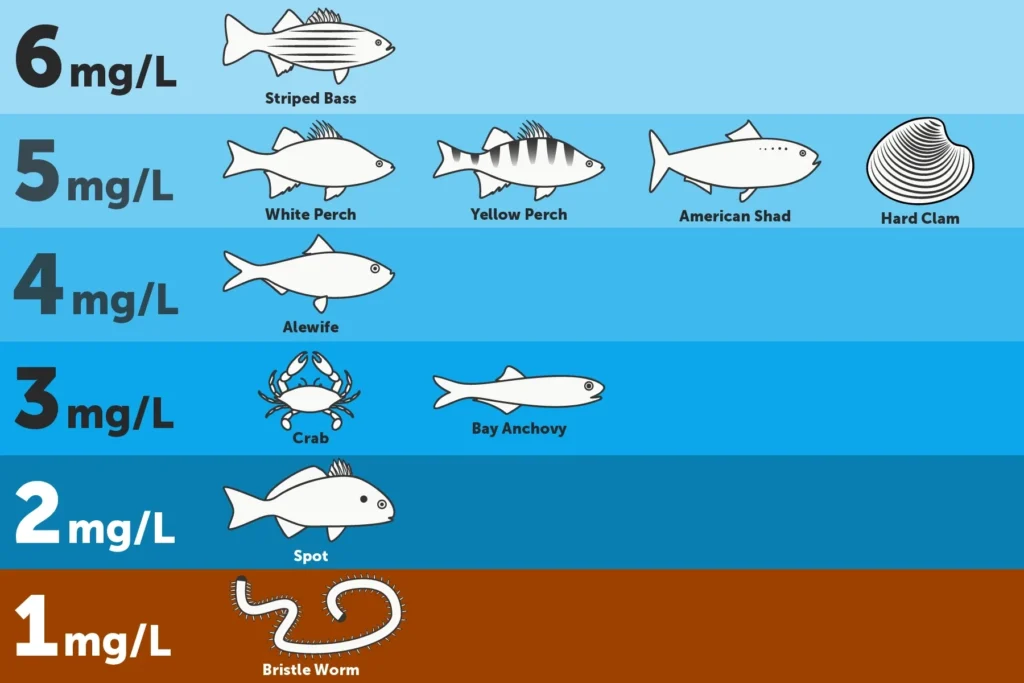
(chesapeakebay.net)
The amount of dissolved oxygen (DO) required by aquatic animals varies depending on the species, life stage, and environmental conditions. However, there are general guidelines for dissolved oxygen levels that are considered adequate for different groups of aquatic organisms. Here’s a breakdown:General Guidelines for Dissolved Oxygen Levels
| Dissolved Oxygen Level (mg/L) | Aquatic Life Suitability |
|---|---|
| 5.0 – 14.0 | Optimal range for most fish and aquatic life |
| 3.0 – 5.0 | Stressful, many species struggle to survive, especially over prolonged periods |
| 1.0 – 3.0 | Severe stress, only very hardy species may survive |
| <1.0 | Lethal for most fish and invertebrates; only a few tolerant organisms can survive |
Dissolved Oxygen Requirements by Species
Fish:
- Coldwater Fish (e.g., Trout, Salmon): These species require high DO levels, typically around 6.5–9.0 mg/L, as they thrive in cooler, oxygen-rich waters. Coldwater fish are especially sensitive to low DO and may experience stress or die if levels drop below 5.0 mg/L.
- Warmwater Fish (e.g., Bass, Catfish, Bluegill): Warmwater fish can tolerate lower DO levels, usually needing 5.0–8.0 mg/L. However, prolonged exposure to DO levels below 3.0 mg/L can be harmful or fatal.
- Juvenile Fish: Young fish are more vulnerable to low oxygen levels and typically require DO concentrations above 5.0 mg/L to support growth and development.
Invertebrates (e.g., Crustaceans, Mollusks, Insects):
- Invertebrates generally have lower oxygen requirements than fish but still need at least 3.0–5.0 mg/L for optimal health. Some species, like certain types of freshwater shrimp or mayfly larvae, prefer higher DO levels (6.0–9.0 mg/L) and are often found in well-oxygenated streams.
- Bottom-dwelling invertebrates may tolerate lower DO levels, especially if they are adapted to environments with periodic oxygen depletion.
Amphibians (e.g., Frogs, Salamanders):
- Amphibians require DO levels similar to fish, often ranging from 4.0–8.0 mg/L. Tadpoles and larvae of amphibians need higher DO concentrations (6.0–8.0 mg/L) to ensure proper development.
Aquatic Plants and Algae:
- Although not animals, aquatic plants and algae contribute to oxygen levels in water through photosynthesis during the day. At night, they consume oxygen, which can affect the DO levels available to animals. Therefore, maintaining sufficient DO levels (above 5.0 mg/L) is essential to prevent fluctuations that could harm other organisms.
Factors Affecting Dissolved Oxygen Levels
Several factors influence the amount of dissolved oxygen in water:
- Temperature: Colder water holds more dissolved oxygen than warmer water. As the temperature rises, the solubility of oxygen decreases, resulting in lower DO levels.
- Salinity: Salinity, or the concentration of dissolved salts in water, also affects DO levels. Freshwater generally holds more oxygen than saltwater due to its lower salinity.
- Altitude: Water at higher altitudes tends to have lower dissolved oxygen levels because the atmospheric pressure is lower, reducing the amount of oxygen that can dissolve in water.
- Water Movement: Flowing or turbulent water, such as rivers or streams, typically has higher DO levels due to increased aeration, whereas stagnant or still water has lower levels.
- Presence of Plants and Algae: Photosynthesis by aquatic plants and algae contributes to dissolved oxygen levels during the day. However, at night, plants consume oxygen, potentially reducing DO levels.
- Decomposition: The decomposition of organic matter by bacteria consumes oxygen. High levels of decaying organic material can deplete DO levels, leading to hypoxic (low oxygen) or anoxic (no oxygen) conditions.
Related Read: Understanding Water Quality: A Comprehensive Guide
How Do Low-Oxygen Areas Form?
Low-oxygen areas, also known as “hypoxic zones” or “dead zones,” occur when dissolved oxygen levels drop to a point where most aquatic organisms struggle to survive. Here are the main causes of low-oxygen areas:
1. Eutrophication
- Nutrient Overload: Eutrophication happens when excess nutrients (mainly nitrogen and phosphorus) from agricultural runoff, sewage discharge, or industrial waste enter water bodies. These nutrients fuel excessive growth of algae, resulting in “algal blooms.”
- Algal Blooms: When algae die and decompose, the decomposition process consumes large amounts of oxygen, leading to decreased DO levels. This rapid decline in oxygen creates hypoxic conditions, which can be deadly for fish and other aquatic organisms.
2. Stratification and Lack of Mixing
- Thermal Stratification: In warmer months, water bodies often experience thermal stratification, where warmer, less dense water forms a layer over cooler, denser water. This layering prevents oxygen from mixing throughout the water column.
- Limited Oxygen Supply: As the oxygen-rich surface layer is separated from the bottom layer, deeper waters receive little to no oxygen replenishment. Over time, this can create hypoxic or even anoxic (completely oxygen-depleted) conditions.
3. Water Pollution
- Organic Matter: Discharge of organic matter (such as untreated sewage, agricultural runoff, or decaying plant material) into water bodies increases the activity of aerobic bacteria. As these bacteria decompose the organic material, they consume large quantities of dissolved oxygen, leading to hypoxia.
- Chemical Pollutants: Certain chemicals, like oil or pesticides, can reduce oxygen diffusion into the water, contributing to lower DO levels.
4. High Water Temperatures
- Reduced Solubility: Warmer water holds less dissolved oxygen than cooler water. During hot weather or in warmer climates, DO levels naturally decline.
- Thermal Pollution: Discharge of warm water from industrial processes, power plants, or cooling systems can elevate water temperatures, reducing DO levels and contributing to hypoxia.
5. Overpopulation of Aquatic Life
- Excessive Respiration: An overabundance of fish, plants, or other aquatic organisms in a confined area can lead to increased oxygen consumption. As a result, DO levels may drop, especially at night when photosynthesis ceases, and respiration continues.
How is Dissolved Oxygen Measured?
Measuring dissolved oxygen is essential for monitoring water quality and ensuring the health of aquatic environments. The most common methods of measuring DO include:
- DO Meters: Electronic dissolved oxygen meters are widely used for accurate and instant measurements. These meters use a probe that is submerged in water, and they provide readings in milligrams per liter (mg/L) or as a percentage of saturation.
- Winkler Titration: This is a chemical method where water samples are treated with reagents, and the amount of oxygen is determined through titration. Although accurate, it’s a time-consuming process and is typically used in laboratory settings.
- Optical DO Sensors: These sensors use light-based technology to measure the concentration of dissolved oxygen. They are highly accurate, require less maintenance, and are increasingly popular for monitoring DO levels in real-time.
Ideal Dissolved Oxygen Levels in Different Water Bodies
Rivers and Streams
Ideally, rivers and streams should have dissolved oxygen levels between 6-8 mg/L to support aquatic life. Levels below 5 mg/L can stress fish, while levels below 2 mg/L can be fatal.
Lakes and Ponds
Lakes and ponds typically have lower DO levels compared to rivers. A minimum of 4-5 mg/L is considered necessary for the survival of most fish species.
Marine Environments
Ocean waters generally have dissolved oxygen levels ranging from 5-8 mg/L. However, coastal areas with high nutrient inputs may experience “dead zones,” where DO levels drop to near zero, making them uninhabitable for most marine life.
The Effects of Low Dissolved Oxygen
Low dissolved oxygen levels, often referred to as hypoxia, can have severe consequences on aquatic ecosystems:
- Fish Kills: Fish and other aquatic organisms can suffocate and die if DO levels drop below the threshold needed for survival. Hypoxic conditions are a leading cause of fish kills in lakes, rivers, and estuaries.
- Reduced Growth and Reproduction: Insufficient DO can hinder the growth and reproduction of fish and other aquatic organisms, affecting the overall population and biodiversity.
- Increased Susceptibility to Disease: Low DO levels weaken the immune systems of aquatic animals, making them more susceptible to diseases and infections.
- Algal Blooms and Eutrophication: When excess nutrients like nitrogen and phosphorus enter water bodies, they promote the growth of algae. As these algae decompose, they consume large amounts of oxygen, leading to hypoxic conditions and further threatening aquatic life.
Dissolved Oxygen and Aquaculture
Maintaining adequate dissolved oxygen levels is crucial for the aquaculture industry, as fish and other cultured species need sufficient oxygen to thrive. Farmers use various aeration techniques, such as air stones, diffusers, and paddlewheels, to maintain optimal DO levels in fish ponds and tanks. Proper management of dissolved oxygen helps ensure healthy fish growth, reducing stress and improving resistance to diseases.
Dissolved Oxygen and Wastewater Treatment
In wastewater treatment plants, dissolved oxygen is vital for the breakdown of organic waste by aerobic bacteria. Aeration is commonly used to introduce oxygen into wastewater, promoting the growth of these bacteria and facilitating the treatment process. Adequate DO levels are essential for the efficient operation of activated sludge systems, which are widely used in wastewater treatment.
Human Activities That Impact Dissolved Oxygen Levels
Human activities significantly affect dissolved oxygen levels in water bodies. Some of these activities include:
- Nutrient Pollution: Runoff from agricultural fields, sewage, and industrial discharge introduces excess nutrients into water bodies, leading to eutrophication and oxygen depletion.
- Thermal Pollution: Discharging warm water from industrial processes into rivers or lakes can increase water temperatures, reducing DO levels and harming aquatic life.
- Damming and Water Diversion: Dams and water diversion projects can alter water flow, reducing aeration and contributing to lower dissolved oxygen levels in certain areas.
How to Maintain Healthy Dissolved Oxygen Levels
To ensure the health and sustainability of aquatic ecosystems, it’s crucial to maintain optimal dissolved oxygen levels. Some strategies include:
Reducing Nutrient Runoff
Implementing best practices in agriculture, such as buffer strips, cover crops, and responsible fertilizer use, can help reduce nutrient runoff and prevent eutrophication.
Restoring Wetlands
Wetlands act as natural filters, removing pollutants and excess nutrients from water, which helps maintain healthy DO levels.
Promoting Aeration
Installing aeration devices in ponds, lakes, and aquaculture systems can help increase DO levels and prevent hypoxia.
Frequently Asked Questions About Dissolved Oxygen
What is considered a good dissolved oxygen level for fish?
A good dissolved oxygen level for most fish species is 6-8 mg/L. Levels below 5 mg/L can cause stress, and levels below 2 mg/L can be fatal.
Can dissolved oxygen levels be too high?
While high DO levels are generally beneficial, excessively high levels (supersaturation) can cause gas bubble disease in fish, which can be harmful or even fatal.
How does temperature affect dissolved oxygen?
Colder water holds more dissolved oxygen, while warmer water holds less. As water temperatures rise, the solubility of oxygen decreases.
What can dissolved oxygen tell us about the condition of water?
DO is considered an important measure of water quality as it is a direct indicator of an aquatic resource’s ability to support aquatic life. For the National Aquatic Resource Surveys (NARS), levels of DO are measured with a calibrated water quality probe meter, usually in conjunction with measurements for temperature and pH. While each organism has its own DO tolerance range, generally, DO levels less than 5mg/L are considered stressful for fish and levels less than 3mg/L are too low to support fish. DO levels below 1mg/L are considered hypoxic and usually devoid of life.
Conclusion
Dissolved oxygen is a critical factor in maintaining the health and sustainability of aquatic ecosystems. It plays a vital role in supporting aquatic life, breaking down organic waste, and indicating water quality. Understanding the factors that influence DO levels, such as temperature, salinity, and human activities, is essential for protecting our water resources and ensuring the survival of fish, plants, and other aquatic organisms. By implementing measures to monitor and maintain optimal DO levels, we can help safeguard the health of our rivers, lakes, oceans, and aquaculture systems.
References