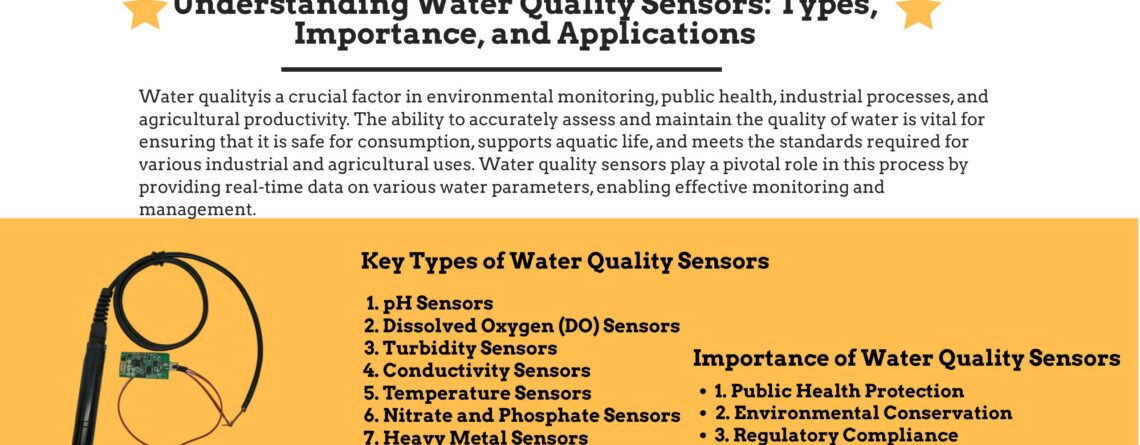
Water quality is a crucial factor in environmental monitoring, public health, industrial processes, and agricultural productivity. The ability to accurately assess and maintain the quality of water is vital for ensuring that it is safe for consumption, supports aquatic life, and meets the standards required for various industrial and agricultural uses. Water quality sensors play a pivotal role in this process by providing real-time data on various water parameters, enabling effective monitoring and management.
This article will delve into what water quality sensors are, their types, how they work, and their importance and applications. By the end, you will have a comprehensive understanding of these essential tools in water quality management.
What Are Water Quality Sensors?
Water quality sensors are devices used to measure and monitor various parameters that determine the condition of water. These parameters can include physical, chemical, and biological characteristics, such as temperature, pH, dissolved oxygen, turbidity, conductivity, and the presence of specific contaminants like heavy metals, nitrates, and pathogens.
Water quality sensors can be deployed in various environments, including rivers, lakes, oceans, groundwater, drinking water systems, wastewater treatment plants, and industrial processes. They can operate in situ (directly in the water body) or in laboratories after water samples are collected.
Key Types of Water Quality Sensors
There are numerous types of water quality sensors, each designed to measure specific parameters. Here’s an overview of the most common types:
1. pH Sensors
- Purpose: Measure the acidity or alkalinity of water.
- Working Principle: pH sensors typically use a glass electrode that measures the hydrogen ion activity in the water. The sensor produces a voltage that is proportional to the pH level, which is then displayed on a meter.
- Applications: Used in drinking water treatment, aquaculture, agriculture, and wastewater treatment.
2. Dissolved Oxygen (DO) Sensors
- Purpose: Measure the amount of oxygen dissolved in water, which is crucial for the survival of aquatic organisms.
- Working Principle: These sensors often use electrochemical or optical methods. In electrochemical sensors, oxygen diffuses through a membrane and reacts at an electrode, generating a current proportional to the oxygen concentration. Optical sensors measure the quenching of a luminescent dye by oxygen.
- Applications: Environmental monitoring, aquaculture, and wastewater treatment.
3. Turbidity Sensors
- Purpose: Measure the cloudiness or haziness of water, which indicates the presence of suspended solids.
- Working Principle: Turbidity sensors work by shining a light through the water and measuring the amount of light scattered by particles. The higher the turbidity, the more light is scattered.
- Applications: Drinking water treatment, environmental monitoring, and industrial processes.
4. Conductivity Sensors
- Purpose: Measure the ability of water to conduct electricity, which is related to the concentration of dissolved salts and other ionic substances.
- Working Principle: Conductivity sensors use electrodes to pass a small electrical current through the water. The conductivity is determined by measuring the voltage drop across the electrodes.
- Applications: Water treatment, environmental monitoring, and industrial processes.
5. Temperature Sensors
- Purpose: Measure the temperature of water, which affects its chemical and biological processes.
- Working Principle: Temperature sensors often use thermistors or resistance temperature detectors (RTDs) that change resistance with temperature. The change in resistance is converted into a temperature reading.
- Applications: Environmental monitoring, aquaculture, and industrial processes.
6. Nitrate and Phosphate Sensors
- Purpose: Measure the concentration of nitrates and phosphates, which are key nutrients that can cause eutrophication in water bodies.
- Working Principle: These sensors often use ion-selective electrodes (ISE) or optical methods to detect specific ions in the water.
- Applications: Agricultural runoff monitoring, environmental protection, and wastewater treatment.
7. Heavy Metal Sensors
- Purpose: Detect the presence of heavy metals like lead, mercury, and arsenic, which are toxic to humans and wildlife.
- Working Principle: Heavy metal sensors can use electrochemical, colorimetric, or biosensing methods to detect and quantify the concentration of metals.
- Applications: Drinking water safety, industrial effluent monitoring, and environmental protection.
8. Biological Sensors
- Purpose: Detect the presence of microorganisms, pathogens, or other biological contaminants in water.
- Working Principle: Biological sensors may use biosensors that detect specific DNA sequences, enzymes, or antigens associated with pathogens. They can also include microbial sensors that detect changes in the metabolic activity of microbes in response to pollutants.
- Applications: Drinking water safety, wastewater treatment, and public health monitoring.
How Do Water Quality Sensors Work?
Water quality sensors operate based on various principles depending on the parameter being measured. Here’s a closer look at the common mechanisms:
1. Electrochemical Water Quality Sensors
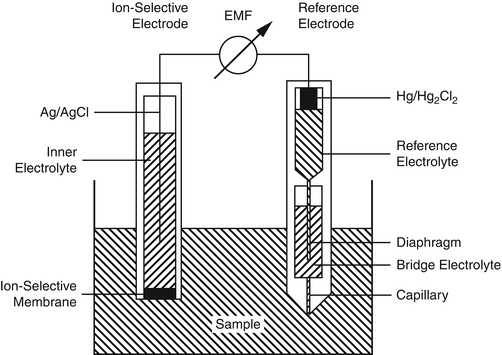
Electrochemical sensors are widely used for measuring parameters like pH, dissolved oxygen, and specific ions (e.g., nitrates, heavy metals). They typically consist of an electrode that interacts with the target substance in water. For instance, in pH sensors, a glass electrode sensitive to hydrogen ions generates a voltage that corresponds to the pH level. In dissolved oxygen sensors, oxygen diffuses through a membrane and undergoes a redox reaction at an electrode, producing a current proportional to the oxygen concentration.
2. Optical Water Quality Sensors
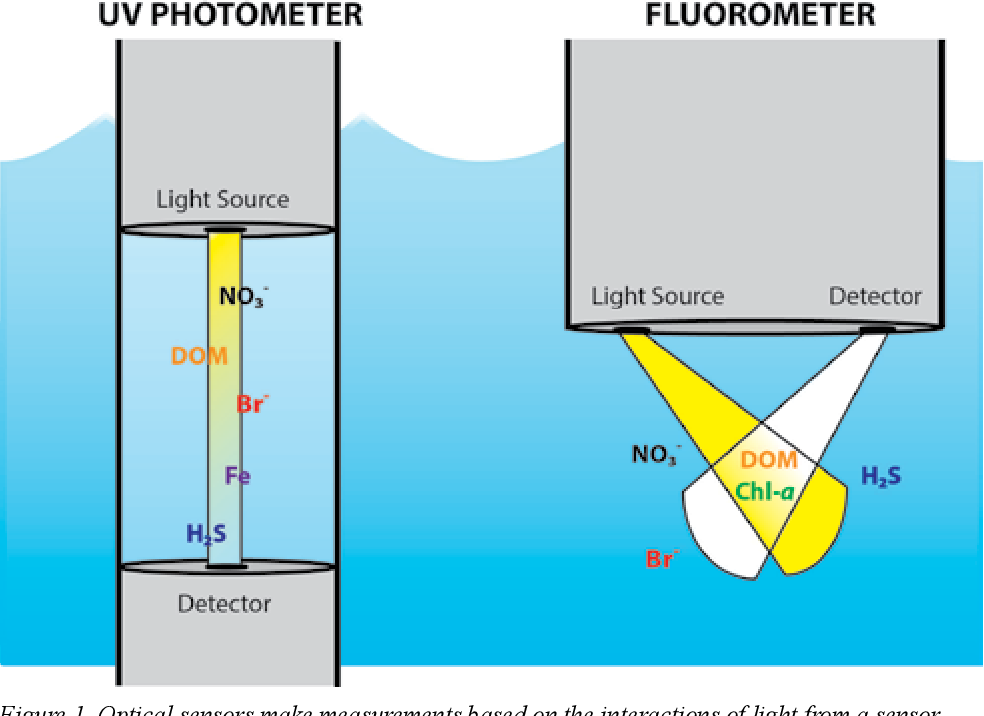
Optical sensors are used in applications such as turbidity measurement, dissolved oxygen monitoring, and detecting specific chemicals or biological agents. These sensors rely on the interaction of light with the water sample. For example, turbidity sensors measure the scattering of light caused by suspended particles, while optical dissolved oxygen sensors detect the quenching of luminescence by oxygen molecules.
3. Thermal Conductivity Sensors
These sensors measure the conductivity of water, which varies with temperature and the concentration of dissolved solids. The sensor passes an electrical current through the water and measures the voltage drop, which is influenced by the water’s ionic content. This method is commonly used in conductivity sensors.
4. Colorimetric Sensors
Colorimetric sensors are used to detect specific chemicals or metals by producing a color change when the target substance reacts with a reagent. The intensity of the color change is proportional to the concentration of the substance. This method is often used for testing water for contaminants like chlorine, nitrates, and heavy metals.
5. Biosensors
Biosensors are designed to detect biological contaminants, such as bacteria, viruses, or toxins. They use biological recognition elements, like enzymes or antibodies, that interact with the target contaminant. The interaction is then converted into a measurable signal, often through electrochemical or optical methods.

Importance of Water Quality Sensors
Water quality sensors are indispensable tools in various fields due to their ability to provide real-time, accurate data on water conditions. Their importance is highlighted in several key areas:
1. Public Health Protection
Safe drinking water is a fundamental human right, and water quality sensors are essential for ensuring that water supplies are free from harmful contaminants. By continuously monitoring parameters like pH, turbidity, dissolved oxygen, and the presence of pathogens, these sensors help prevent waterborne diseases and other health risks.
2. Environmental Conservation
Water quality sensors play a crucial role in protecting aquatic ecosystems. They help detect pollution, monitor the effects of runoff from agriculture and urban areas, and assess the health of rivers, lakes, and oceans. By providing early warnings of environmental degradation, these sensors support efforts to conserve biodiversity and maintain healthy ecosystems.
3. Regulatory Compliance
Industries and municipalities are often required to meet specific water quality standards set by government agencies. Water quality sensors enable continuous monitoring to ensure compliance with these regulations, helping to avoid fines, legal action, and environmental harm.
4. Industrial Efficiency
In industries that rely on water for processes such as cooling, manufacturing, and power generation, maintaining water quality is essential for efficiency and equipment longevity. Sensors help monitor water conditions, enabling timely interventions that prevent scaling, corrosion, and contamination, ultimately reducing operational costs.
5. Agricultural Productivity
Water quality is critical for irrigation in agriculture. Sensors that monitor nutrients, salinity, and contaminants in water help farmers optimize irrigation practices, ensuring that crops receive the right amount of water and nutrients while avoiding the negative impacts of poor water quality, such as soil degradation and reduced yields.
6. Research and Data Collection
Scientists and researchers use water quality sensors to collect data for studying environmental changes, climate impacts, and the effectiveness of pollution control measures. The data obtained from these sensors is invaluable for developing strategies to protect water resources and understand ecological dynamics.
Applications of Water Quality Sensors
Water quality sensors are employed across a wide range of applications, each critical to different sectors of society. Some of the most common applications include:
1. Drinking Water Treatment
In drinking water treatment plants, sensors monitor various parameters to ensure that water is safe for consumption. pH, turbidity, and chlorine levels are continuously measured to adjust treatment processes and prevent contamination. Real-time monitoring helps maintain compliance with health standards and provides early warnings of potential issues.
2. Wastewater Treatment
Wastewater treatment plants use water quality sensors to monitor the effectiveness of treatment processes. Parameters such as biochemical oxygen demand (BOD), chemical oxygen demand (COD), pH, and nutrient levels are measured to ensure that treated water meets regulatory standards before being discharged into the environment.
3. Environmental Monitoring
Government agencies, environmental organizations, and research institutions deploy water quality sensors in natural water bodies to monitor pollution, assess the impact of human activities, and study ecological health. Sensors are used to track changes in water quality over time and provide data for managing natural resources.
4. Aquaculture
In aquaculture, maintaining optimal water quality is essential for the health and growth of aquatic species. Sensors monitor parameters like dissolved oxygen, pH, temperature, and ammonia levels, enabling farmers to make informed decisions to ensure a healthy environment for fish, shrimp, and other aquatic organisms.
5. Industrial Processes
Industries that use water in manufacturing, power generation, and cooling processes rely on water quality sensors to monitor and maintain water conditions. Sensors help prevent issues such as scaling, corrosion, and fouling, which can reduce efficiency and increase maintenance costs. Real-time monitoring allows for rapid adjustments to maintain optimal water quality.
6. Agricultural Irrigation
In agriculture, water quality sensors help manage irrigation systems by monitoring parameters like salinity, nutrient levels, and pH. This ensures that crops receive the right quality of water, preventing soil degradation and optimizing crop yields. Sensors also help detect contaminants that could harm crops or enter the food chain.
7. Research and Education
Water quality sensors are widely used in scientific research to study aquatic environments, pollution dynamics, and the effects of climate change. They provide critical data for understanding complex environmental processes and developing strategies for water resource management. Educational institutions also use these sensors to teach students about environmental science and water quality monitoring.
Conclusion
Water quality sensors are essential tools for monitoring and maintaining the health of our water resources. They provide real-time data on various water parameters, enabling effective management of drinking water, wastewater, natural water bodies, and industrial processes. By ensuring that water quality meets required standards, these sensors play a critical role in protecting public health, preserving the environment, and supporting economic activities.
As technology advances, water quality sensors continue to evolve, offering greater accuracy, sensitivity, and versatility. Their applications are expanding, making them indispensable in addressing the global challenges of water scarcity, pollution, and environmental degradation.
In a world where water quality is increasingly under threat, the role of water quality sensors cannot be overstated. They are vital tools in the quest to ensure that clean, safe water is available to all, now and in the future.
Leave a Reply