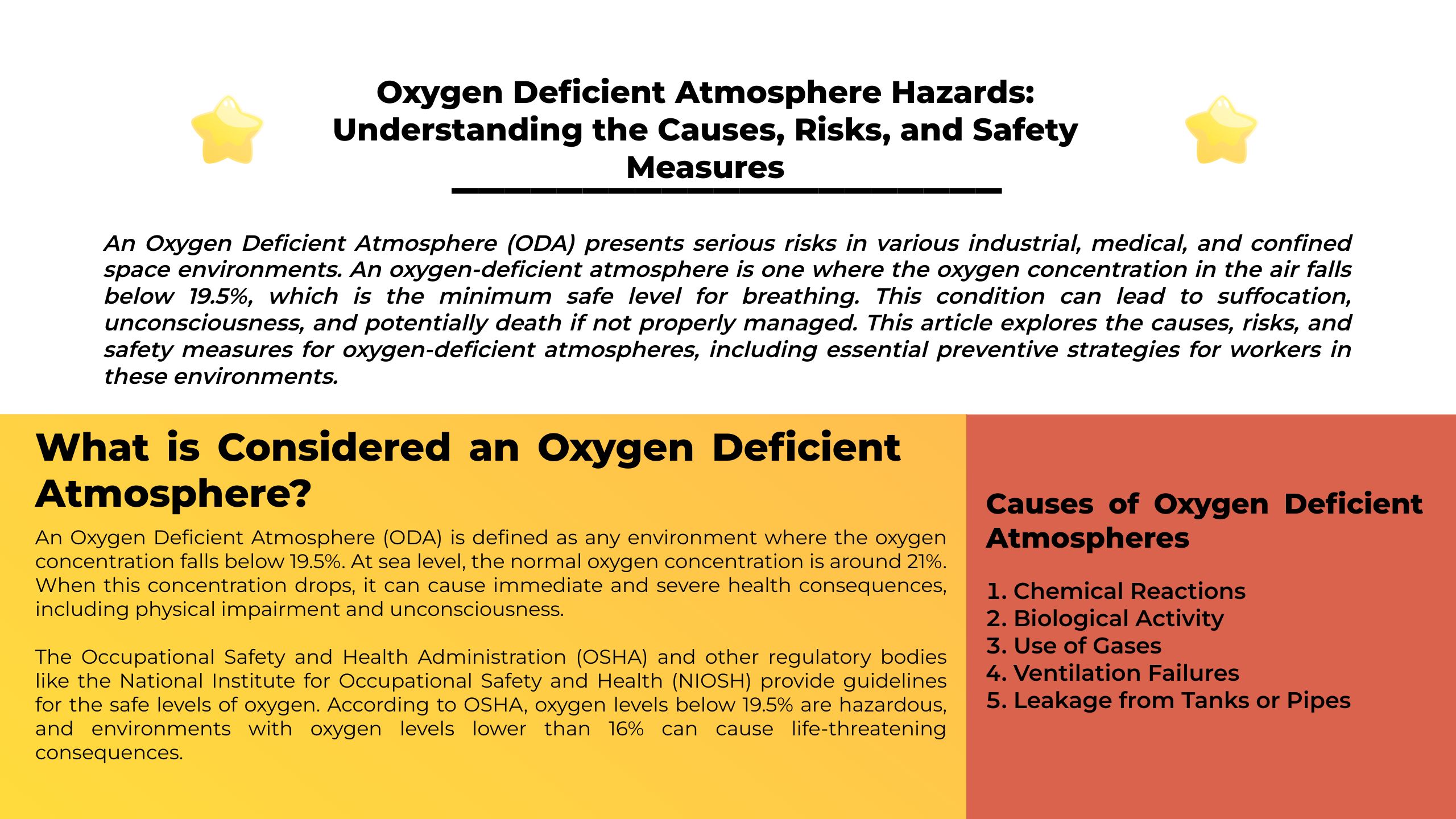
An Oxygen Deficient Atmosphere (ODA) presents serious risks in various industrial, medical, and confined space environments. An oxygen-deficient atmosphere is one where the oxygen concentration in the air falls below 19.5%, which is the minimum safe level for breathing. This condition can lead to suffocation, unconsciousness, and potentially death if not properly managed. This article explores the causes, risks, and safety measures for oxygen-deficient atmospheres, including essential preventive strategies for workers in these environments.
What is Considered an Oxygen Deficient Atmosphere?
An Oxygen Deficient Atmosphere (ODA) is defined as any environment where the oxygen concentration falls below 19.5%. At sea level, the normal oxygen concentration is around 21%. When this concentration drops, it can cause immediate and severe health consequences, including physical impairment and unconsciousness.
The Occupational Safety and Health Administration (OSHA) and other regulatory bodies like the National Institute for Occupational Safety and Health (NIOSH) provide guidelines for the safe levels of oxygen. According to OSHA, oxygen levels below 19.5% are hazardous, and environments with oxygen levels lower than 16% can cause life-threatening consequences.
Here’s a table outlining the oxygen concentration levels and the associated health effects:
| Oxygen Concentration (%) | Effects on Health |
|---|---|
| 21.0% | Normal, no effects |
| 19.5% – 20.9% | Safe for most people, no immediate symptoms |
| 16.0% – 19.4% | Symptoms of oxygen deficiency begin (e.g., impaired judgment, fatigue) |
| 10.0% – 15.9% | Significant impairment, unconsciousness possible |
| Below 10.0% | Immediate danger, unconsciousness or death without intervention |
Understanding Oxygen (O2): The Essential Element for Life and Industry
Causes of Oxygen Deficient Atmospheres
Oxygen deficiency can occur for several reasons, including but not limited to:
Chemical Reactions
Certain chemical reactions, such as the combustion of materials or chemical processes, can consume oxygen and create an oxygen-deficient environment. For example, in industries like manufacturing and chemical production, the use of chemicals like nitrogen or carbon dioxide can displace oxygen.
Biological Activity
Biological activities, such as the decomposition of organic matter in tanks or wastewater treatment facilities, can consume oxygen. Microbial activity in these settings, such as the breakdown of waste, can reduce the available oxygen.
Use of Gases
Gases like nitrogen, helium, and carbon dioxide are often used in industrial applications for cooling, packaging, or inerting purposes. When these gases displace oxygen in an enclosed space, the air can become oxygen-deficient.
Ventilation Failures
Poor ventilation or faulty air circulation systems can also contribute to oxygen deficiency in confined spaces. If the ventilation system fails to replace the air in a space, oxygen levels may fall.
Leakage from Tanks or Pipes
Oxygen-deficient atmospheres can also arise when hazardous gases leak from storage tanks, pipes, or containers. These leaks can deplete the available oxygen in the surrounding environment.
Risks and Hazards of Oxygen Deficient Atmospheres
Oxygen deficiency is a serious hazard that can lead to severe health consequences or fatalities. The risks associated with oxygen-deficient environments include:
Suffocation
The most significant danger of an oxygen-deficient atmosphere is suffocation. When the oxygen level drops below 16%, it becomes difficult for individuals to breathe, causing dizziness, confusion, and loss of consciousness. If the oxygen level falls below 10%, suffocation may occur, leading to death within minutes.
Physical and Mental Impairment
Even slight reductions in oxygen levels can cause physical and mental impairment. Symptoms of oxygen deficiency include:
- Shortness of breath
- Fatigue
- Impaired judgment and coordination
- Dizziness
- Confusion
- Nausea and vomiting
As oxygen levels drop further, unconsciousness and loss of motor functions can occur, making it difficult for individuals to escape hazardous areas.
Increased Risk of Accidents
In an oxygen-deficient atmosphere, workers may become disoriented or lose the ability to think clearly. This can lead to accidents, falls, and other workplace injuries.
Explosion or Fire Hazards
In some cases, an oxygen-deficient atmosphere can also lead to an increased risk of explosions or fires. Certain chemical processes may generate flammable gases that can ignite in the presence of limited oxygen, causing a hazardous situation.
Long-Term Health Effects
Prolonged exposure to low oxygen levels can cause long-term health effects, including organ damage and impaired lung function. Chronic exposure to oxygen-deficient environments can result in long-term respiratory issues and cognitive impairments.
Comprehensive Guide to OSHA Confined Space Monitoring and Safety
Oxygen Deficiency from Stored Gases
Stored gases, including nitrogen, carbon dioxide, helium, and others, can be hazardous when they displace oxygen in the surrounding environment. These gases are commonly used in industrial, scientific, and medical settings, and if they leak or are improperly handled, they can create an oxygen-deficient atmosphere.
Where Are Stored Gases Used?
Stored gases are used in many industries, such as:
- Medical: Oxygen is used in hospitals and clinics for patient care, while nitrogen and carbon dioxide are used in cryogenic applications and as anesthetics.
- Manufacturing: Gases like nitrogen and helium are used in metal fabrication, welding, and as inert gases in chemical reactions.
- Food & Beverage: Gases like nitrogen are used for food preservation and packaging to displace oxygen and prolong freshness.
- Laboratories: Many gases are used for research purposes, often in tightly controlled environments where oxygen levels must be monitored closely.
While these gases are essential for various processes, they can displace oxygen and lead to dangerous conditions if released into confined spaces without proper ventilation.
Stored Gas Tanks Are Safe, But Only If Properly Managed
Stored gas tanks themselves are generally safe when handled and maintained correctly. However, a small leak or failure in equipment can lead to the gradual displacement of oxygen in the environment, particularly in poorly ventilated areas. It’s essential to monitor oxygen levels regularly and ensure proper gas storage and handling procedures are in place to avoid any safety risks.
OSHA Oxygen Deficient Atmosphere Guidelines
The Occupational Safety and Health Administration (OSHA) sets standards for oxygen levels in the workplace to help prevent accidents related to oxygen deficiency. According to OSHA, employers must ensure that the oxygen concentration in any workplace does not fall below 19.5% at any time.
In addition to this, OSHA also mandates the use of oxygen sensors and alarms in high-risk areas, such as confined spaces, storage tanks, and areas where gases are used. The OSHA guidelines also emphasize regular air quality checks and the use of personal protective equipment (PPE) such as self-contained breathing apparatus (SCBA) in emergency situations.
Oxygen Deficiency Alarms: A Critical Safety Measure
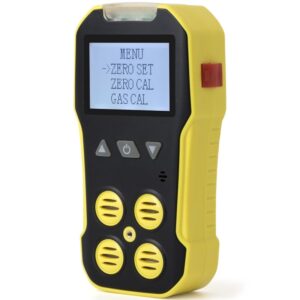
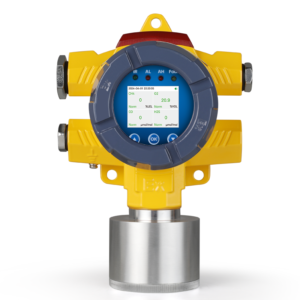
Oxygen deficiency alarms are essential for maintaining a safe environment in workplaces where there is a risk of oxygen depletion. These alarms are typically connected to oxygen sensors placed throughout the work area. When the oxygen concentration drops below a certain threshold (usually 19.5%), the alarm activates, alerting workers to evacuate or take appropriate action.
These alarms play a crucial role in preventing accidents by giving workers time to exit the area before the oxygen levels fall too low. Some alarms may also be integrated into ventilation systems to trigger automatic corrective actions, such as the activation of fans or ventilation equipment to restore safe oxygen levels.
Preventing Oxygen Deficiency: Essential Safety Measures
Preventing oxygen deficiency requires a multi-faceted approach, including the use of monitoring equipment, proper ventilation, worker training, and emergency preparedness. Here are the key steps to mitigate the risks of oxygen-deficient environments:
1. Continuous Monitoring of Oxygen Levels
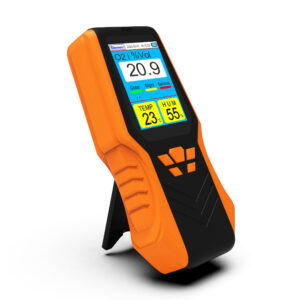
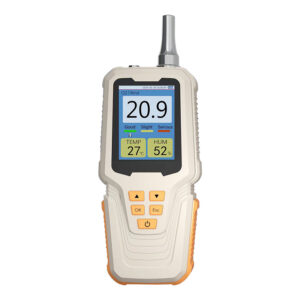
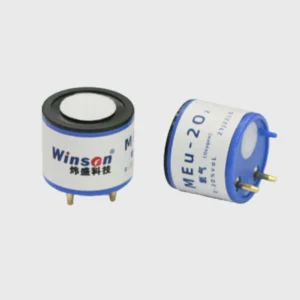
The most effective way to ensure that oxygen levels remain safe is through continuous monitoring using oxygen sensors. These sensors provide real-time data on the oxygen concentration in the air, ensuring that workers are alerted immediately when oxygen levels fall below acceptable levels. Regular calibration and maintenance of these sensors are essential to ensure their accuracy.
2. Ensure Proper Ventilation
Proper ventilation is one of the most important safety measures in areas prone to oxygen deficiency. Mechanical or natural ventilation systems should be used to ensure a continuous supply of fresh air. Regular maintenance and checks on ventilation systems are critical to prevent failures, especially in confined spaces.
3. Worker Training and Awareness
Training workers to recognize the dangers of oxygen deficiency and how to respond in an emergency is crucial. Workers should be trained on how to use oxygen monitoring equipment, how to evacuate safely, and how to wear and operate personal protective equipment such as self-contained breathing apparatus (SCBA).
4. Implementation of Confined Space Entry Programs
Confined spaces, such as tanks, silos, and pipelines, present a high risk for oxygen deficiency. Employers should implement strict confined space entry programs that include:
- Air quality testing before entry
- Continuous oxygen monitoring during entry
- Emergency response plans, including evacuation procedures
5. Personal Protective Equipment (PPE)
In environments where oxygen deficiency is a risk, workers should be provided with appropriate PPE, including respiratory protection such as SCBA or supplied-air respirators. These devices provide breathable air in oxygen-deficient environments, allowing workers to perform their duties safely.
6. Regular Maintenance of Equipment
All equipment that could contribute to oxygen deficiency, such as gas storage tanks, ventilation systems, and oxygen sensors, should be regularly maintained. Any leaks, blockages, or failures should be addressed immediately to prevent oxygen depletion.
7. Emergency Response Planning
In case of an oxygen deficiency emergency, having an emergency response plan is crucial. Workers should be trained in emergency evacuation procedures, and emergency services should be on standby for serious incidents. A well-prepared emergency team can make the difference in preventing fatalities and injuries.

Conclusion
Oxygen Deficient Atmosphere hazards are a serious threat in various industrial, medical, and confined space environments. With proper safety measures, including continuous monitoring of oxygen levels, proper ventilation, and employee training, the risks associated with oxygen deficiency can be effectively managed.
By following OSHA guidelines, implementing oxygen deficiency alarms, and providing workers with the necessary protective equipment, businesses can ensure a safer working environment. Awareness of the risks and preparedness to respond promptly are essential in mitigating the dangers of oxygen-deficient atmospheres and safeguarding the health and well-being of workers.