Carbon dioxide (CO2) is a colorless, odorless gas that is a natural part of the Earth’s atmosphere. It is produced by the respiration of animals and humans, the decay of organic matter, and the burning of fossil fuels. While CO2 is essential for plant life and is used in various industrial processes, elevated levels can pose health risks to humans. Therefore, monitoring CO2 levels in various environments is crucial. A CO2 gas detector is an instrument designed to measure the concentration of carbon dioxide in the air and provide warnings when levels become hazardous. This article explores the workings of CO2 gas detectors, their applications, types, and benefits.

You May Like: What CO2 Level is Dangerous
Carbon Dioxide vs Carbon Monoxide Understanding the Differences

What is a CO2 Gas Detector?

A CO2 gas detector is a device designed to measure the concentration of carbon dioxide in the air. These detectors are used in various applications, including indoor air quality monitoring, industrial safety, environmental monitoring, and HVAC systems. By providing real-time data on CO2 levels, these devices help to ensure that environments remain safe and within acceptable limits.

How Does a CO2 Gas Detector Work?

CO2 gas detectors function based on different detection principles, each with its unique mechanisms and applications. The most common types of CO2 gas detectors are:

1. Non-Dispersive Infrared (NDIR) Sensors
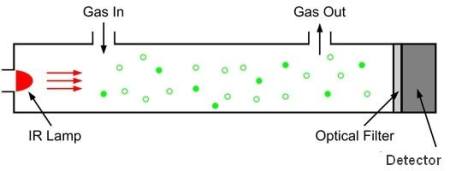
ndir sensor principle

NDIR sensors are the most widely used technology for detecting CO2. They operate on the principle that CO2 molecules absorb specific wavelengths of infrared (IR) light.

  • Principle: The sensor contains an IR light source, a sample chamber, a wavelength filter, and an IR detector. The IR light passes through the sample chamber containing air. A specific wavelength of light, corresponding to the absorption characteristics of CO2, is filtered and directed to the detector. The presence of CO2 in the air sample absorbs some of the IR light, reducing the intensity reaching the detector. The reduction in light intensity is proportional to the concentration of CO2 in the air.
  • Advantages: NDIR sensors are highly accurate, stable, and selective for CO2. They are suitable for continuous monitoring in various applications.
  • Applications: Used in HVAC systems, indoor air quality monitoring, industrial safety, and environmental monitoring.

2. Electrochemical Sensors

The structure and basic principle of electrochemical sensor

Electrochemical sensors detect CO2 through a chemical reaction that generates an electrical signal proportional to the gas concentration.

  • Principle: The sensor consists of an electrolyte, electrodes, and a gas-permeable membrane. When CO2 diffuses through the membrane, it reacts with the electrolyte, producing a current between the electrodes. The magnitude of this current is directly proportional to the CO2 concentration.
  • Advantages: Electrochemical sensors are sensitive and can detect low concentrations of CO2. They are often used in portable detectors and personal safety devices.
  • Applications: Commonly used in confined spaces, personal safety monitors, and industrial safety applications.

3. Metal-Oxide Semiconductor (MOS) Sensors
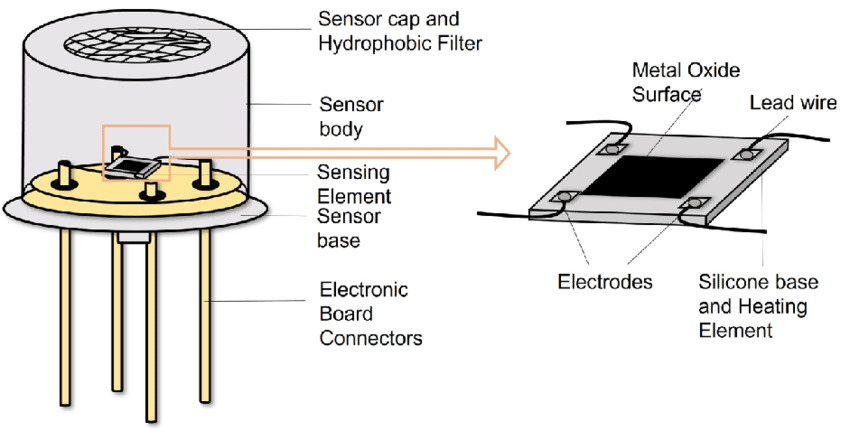
The working principle of metal oxide semiconductor MOS sensors

MOS sensors detect CO2 based on changes in the electrical resistance of a metal-oxide layer when exposed to the gas.

  • Principle: The sensor comprises a metal-oxide semiconductor material whose resistance changes when it reacts with CO2. This change in resistance is measured and correlated to the CO2 concentration.
  • Advantages: MOS sensors are durable, cost-effective, and have a fast response time. However, they are less selective and can be influenced by other gases and environmental conditions.
  • Applications: Used in residential safety devices, industrial safety, and environmental monitoring.

4. Photoacoustic Sensors
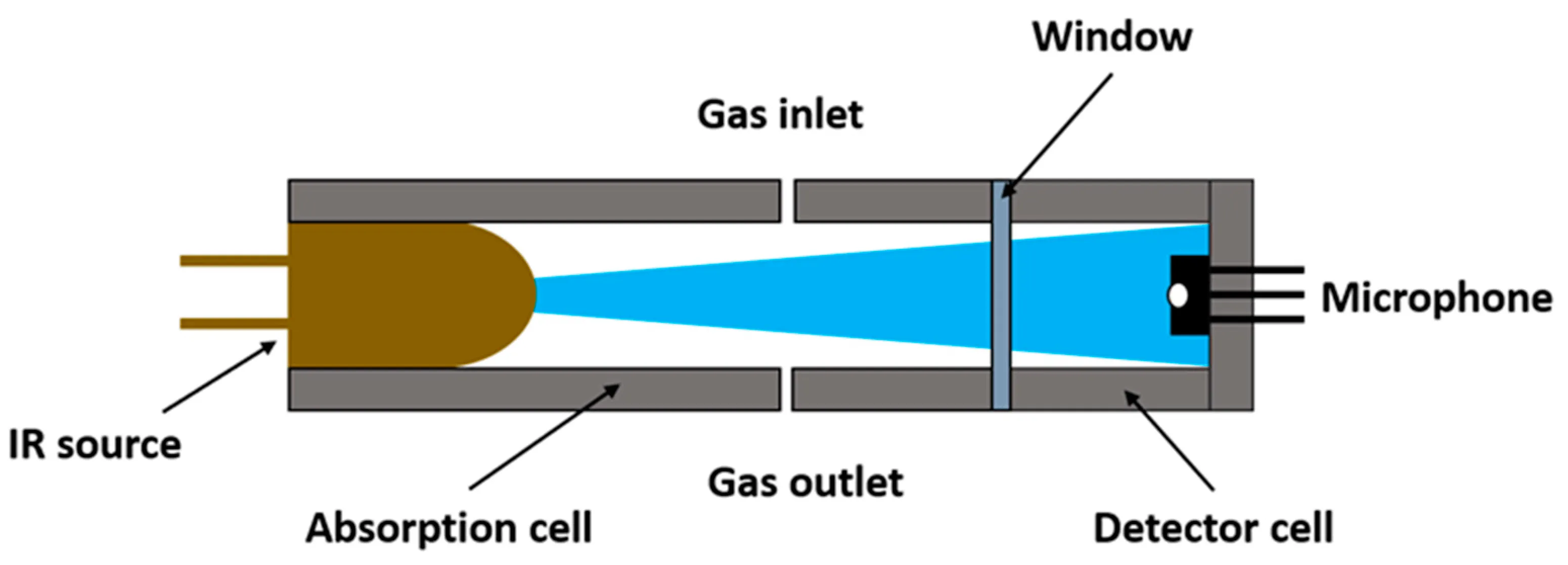
Photoacoustic Refrigerant sensor principle

Photoacoustic sensors measure CO2 based on the photoacoustic effect, where absorbed light energy is converted into sound waves.

  • Principle: The sensor uses a modulated light source that illuminates the air sample. CO2 molecules absorb the light, causing localized heating and pressure variations, which generate sound waves. A microphone detects these sound waves, and the signal is proportional to the CO2 concentration.
  • Advantages: Photoacoustic sensors are highly sensitive and can provide precise measurements. They are suitable for laboratory and high-precision industrial applications.
  • Applications: Used in research laboratories, high-precision industrial processes, and environmental monitoring.

More About CO2 Sensor: Winsen Co2 Sensor Solution

Applications of CO2 Gas Detectors

CO2 gas detectors are used in a wide range of applications to ensure safety, maintain air quality, and monitor industrial processes. Some key applications include:

1. Indoor Air Quality Monitoring

Maintaining optimal indoor air quality is crucial for health and comfort in homes, offices, schools, and other public buildings. CO2 levels are an important indicator of ventilation efficiency. High levels of CO2 can cause fatigue, headaches, and reduced cognitive performance. CO2 gas detectors help monitor and control ventilation systems to maintain safe and comfortable indoor environments.

2. Industrial Safety

In industries such as food and beverage, agriculture, and chemical manufacturing, CO2 is used in various processes. Accidental leaks or high concentrations of CO2 can pose serious risks to workers. CO2 gas detectors provide early warning of hazardous conditions, allowing prompt evacuation and corrective actions.

3. Greenhouses and Agriculture

CO2 enrichment is used in greenhouses to enhance plant growth. However, it is essential to monitor CO2 levels to prevent concentrations from reaching harmful levels for workers. CO2 gas detectors ensure optimal conditions for plant growth while maintaining worker safety.

4. Confined Spaces

Confined spaces such as storage tanks, silos, and underground facilities can accumulate high levels of CO2 due to poor ventilation. Workers entering these spaces face significant health risks. Portable CO2 gas detectors are used to assess air quality before entry and continuously monitor conditions during occupancy.

5. HVAC Systems

Heating, ventilation, and air conditioning (HVAC) systems in commercial and residential buildings use CO2 gas detectors to regulate ventilation based on occupancy levels. By monitoring CO2 concentrations, HVAC systems can optimize airflow, improving energy efficiency and indoor air quality.

6. Fire Suppression Systems

CO2 is used as an extinguishing agent in fire suppression systems for industrial applications. Monitoring CO2 levels ensures the effectiveness of these systems and prevents accidental overexposure to CO2.

Advantages of Using CO2 Gas Detectors

CO2 gas detectors offer several benefits across various applications:

1. Health and Safety

Monitoring CO2 levels is crucial for preventing health issues associated with high concentrations, such as respiratory problems, cognitive impairment, and unconsciousness. CO2 gas detectors provide early warnings, allowing timely interventions to protect health and safety.

2. Compliance with Regulations

Many industries are subject to regulations and standards for indoor air quality and occupational safety. CO2 gas detectors help ensure compliance with these regulations, avoiding fines and legal liabilities.

3. Energy Efficiency

By using CO2 gas detectors to optimize ventilation systems, buildings can reduce energy consumption and lower utility costs. Efficient ventilation based on real-time CO2 levels minimizes unnecessary heating, cooling, and air circulation.

4. Enhanced Productivity

Maintaining optimal CO2 levels in work environments can improve productivity and cognitive function. Proper ventilation prevents symptoms such as fatigue, headaches, and drowsiness, enhancing overall performance.

5. Environmental Monitoring

CO2 gas detectors play a vital role in monitoring environmental conditions, contributing to climate research and the management of greenhouse gas emissions. Accurate measurement of CO2 levels helps track environmental changes and develop mitigation strategies.

Choosing the Right CO2 Gas Detector

When selecting a CO2 gas detector, several factors should be considered to ensure that the device meets the specific needs of the application:

Sensor Technology

The choice of sensor technology—IR, chemical, or MOS—will depend on the accuracy, response time, and environmental conditions required for the application.

Measurement Range

Different applications require different measurement ranges for CO2 detection. For example, indoor air quality monitoring may require a range of 0-5000 ppm, while industrial safety applications may require a broader range to detect higher concentrations of CO2.

Calibration and Maintenance

Regular calibration and maintenance are essential to ensure the accuracy and reliability of CO2 gas detectors. Choose a detector that offers easy calibration procedures and long-term stability.

Portability and Size

For applications that require mobile or handheld monitoring, the size and portability of the CO2 detector are important considerations.

Integration with Building Management Systems

In commercial buildings, it is often necessary to integrate CO2 detectors with existing building management systems (BMS) for automated ventilation control. Ensure that the CO2 detector is compatible with the BMS.

Conclusion

CO2 gas detectors are essential tools for monitoring and maintaining air quality in various environments. By detecting and measuring CO2 concentrations, these devices help ensure the health and safety of occupants, optimize industrial processes, and contribute to environmental protection. Understanding the different types of CO2 gas detectors and their applications allows for informed decision-making in selecting the most appropriate technology for specific needs. Whether for indoor air quality monitoring, industrial safety, or environmental research, CO2 gas detectors are indispensable in creating safer, healthier, and more efficient spaces.

[post-views]

Leave a Reply

Your email address will not be published. Required fields are marked *