Flow sensors, also known as flow meters, are devices used to measure the flow rate of liquids or gases in various applications. They play a crucial role in numerous industries, including manufacturing, chemical processing, water treatment, and HVAC systems. Understanding the different types of flow sensors and their respective advantages and disadvantages is essential for selecting the right sensor for a specific application. This article provides a comprehensive overview of the most common types of flow sensors, their operating principles, advantages, disadvantages, and typical applications.
Introduction to Flow Sensors
Flow sensors measure the quantity of fluid (liquid or gas) passing through a pipe or conduit over a specific period. The measurement can be in terms of volume flow rate (e.g., liters per minute) or mass flow rate (e.g., kilograms per hour). Flow sensors are critical in ensuring process efficiency, safety, and regulatory compliance in various industrial and commercial applications.
Common Types of Flow Sensors
1. Differential Pressure Flow Sensors
Principle of Operation
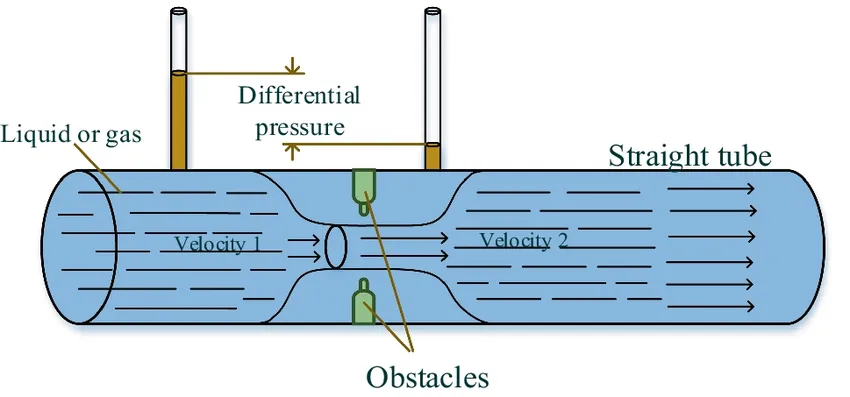
Differential pressure flow sensors measure the pressure drop across an obstruction in the flow path, such as an orifice plate, Venturi tube, or flow nozzle. The pressure difference is proportional to the flow rate, which can be calculated using Bernoulli’s equation.
Advantages
- Widely used and well-understood technology.
- Suitable for various fluids (liquids, gases, and steam).
- Relatively simple and cost-effective.
Disadvantages
- Pressure loss due to the obstruction.
- Requires regular calibration.
- Can be affected by changes in fluid density and viscosity.
Applications
- Industrial processes.
- HVAC systems.
- Water and wastewater management.
2. Positive Displacement Flow Sensors
Principle of Operation
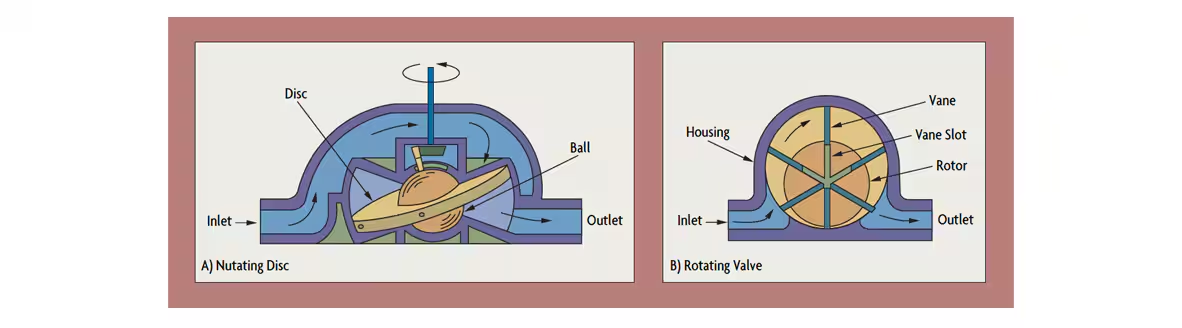
Positive displacement flow sensors capture and measure discrete volumes of fluid, using mechanisms such as pistons, gears, or diaphragms. The number of volumes counted over time is proportional to the flow rate.
Advantages
- High accuracy for viscous fluids.
- Suitable for measuring small flow rates.
- Independent of fluid density and viscosity.
Disadvantages
- Can be bulky and heavy.
- Mechanical parts can wear out over time.
- Limited to clean fluids without particulates.
Applications
- Chemical processing.
- Oil and fuel measurement.
- Hydraulic systems.
3. Turbine Flow Sensors
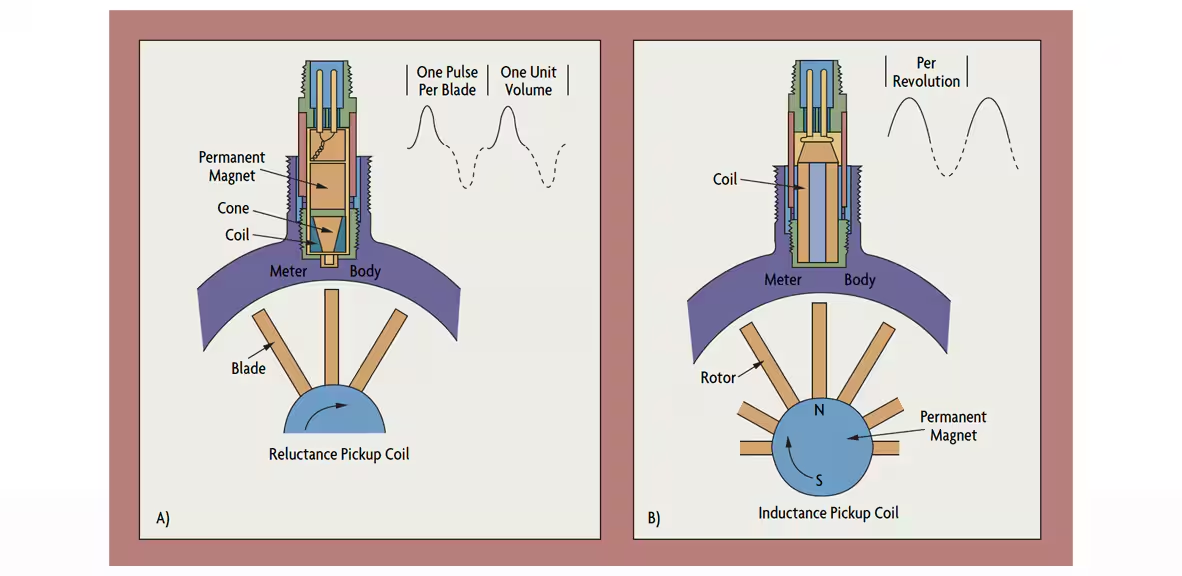
Principle of Operation
Turbine flow sensors use a turbine wheel that rotates in response to fluid flow. The rotational speed of the turbine is proportional to the flow rate, and this speed is measured using magnetic or optical sensors.
Advantages
- High accuracy and repeatability.
- Suitable for clean fluids.
- Wide flow range.
Disadvantages
- Can be affected by changes in fluid properties.
- Requires clean fluids to avoid turbine damage.
- Calibration may be needed for different fluids.
Applications
- Water distribution.
- Fuel measurement.
- HVAC applications.
4. Electromagnetic Flow Sensors
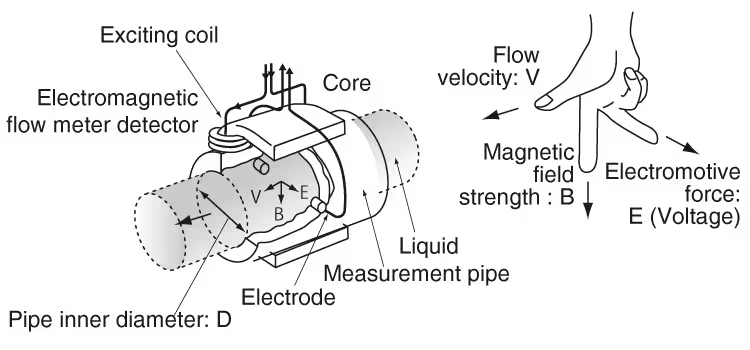
Principle of Operation
Electromagnetic flow sensors measure the flow of conductive fluids by detecting the voltage generated when the fluid flows through a magnetic field. According to Faraday’s law of electromagnetic induction, the voltage is proportional to the flow rate.
Advantages
- No pressure loss.
- Suitable for dirty and corrosive fluids.
- High accuracy for conductive fluids.
Disadvantages
- Only works with conductive fluids.
- Can be expensive.
- Requires calibration for different fluid conductivities.
Applications
- Water and wastewater management.
- Chemical processing.
- Food and beverage industries.
5. Ultrasonic Flow Sensors
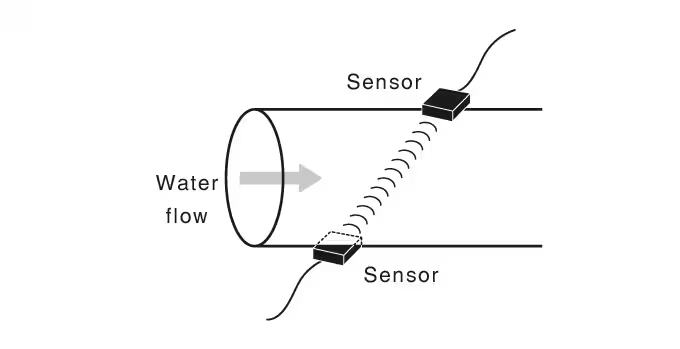
Principle of Operation
Ultrasonic flow sensors use sound waves to measure the flow rate. There are two main types: transit-time sensors measure the time difference between upstream and downstream sound waves, while Doppler sensors measure the frequency shift of sound waves reflected by particles in the fluid.
Advantages
- Non-invasive measurement.
- Suitable for dirty and corrosive fluids.
- High accuracy for clean fluids.
Disadvantages
- Can be expensive.
- Requires clean conditions for transit-time sensors.
- Doppler sensors need particulates in the fluid.
Applications
- Water and wastewater management.
- Medical devices.
- Non-invasive flow measurement.
6. Thermal Mass Flow Sensors

Principle of Operation
Thermal mass flow sensors measure the mass flow rate of gases by detecting the temperature change of a heated element as the gas flows over it. The heat loss is proportional to the mass flow rate.
Advantages
- Accurate for gas flow measurement.
- Wide flow range.
- Independent of pressure and temperature changes.
Disadvantages
- Can be affected by changes in gas composition.
- Requires clean gases to avoid sensor contamination.
- Calibration may be needed for different gases.
Applications
- HVAC systems.
- Process gas monitoring.
- Semiconductor manufacturing.
7. Coriolis Flow Sensors
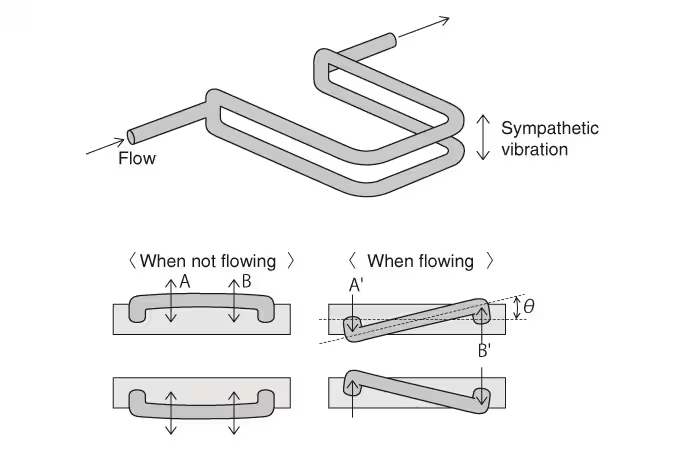
Principle of Operation
Coriolis flow sensors measure the mass flow rate by detecting the Coriolis force exerted on a vibrating tube through which the fluid flows. The force causes a phase shift in the vibration, which is proportional to the mass flow rate.
Advantages
- High precision and accuracy.
- Measures mass flow directly.
- Independent of fluid properties.
Disadvantages
- Expensive and complex design.
- Can be bulky and heavy.
- Requires careful installation to avoid vibration interference.
Applications
- Oil and gas industry.
- Pharmaceutical manufacturing.
- Chemical processing.
8. Vortex Flow Sensors
Principle of Operation
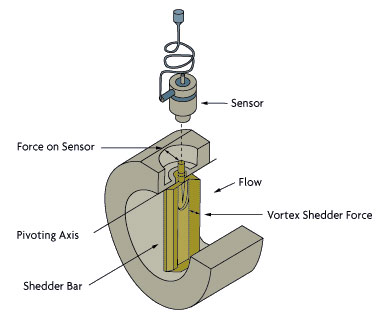
Vortex flow sensors measure the flow rate by detecting the frequency of vortices shed by a bluff body placed in the flow path. The vortex frequency is proportional to the flow rate.
Advantages
- No moving parts, durable.
- Suitable for a variety of fluids.
- Wide flow range.
Disadvantages
- Can be affected by changes in fluid properties.
- Requires a minimum flow rate to generate vortices.
- Can be sensitive to installation conditions.
Applications
- Steam systems.
- Air and gas measurement.
- Water systems.
Comparison of Common Flow Sensors
To aid in the selection process, here is a detailed comparison table of the common types of flow sensors, highlighting their key features, advantages, disadvantages, and typical applications.
| Type of Flow Sensor | Principle of Operation | Advantages | Disadvantages | Typical Applications |
|---|---|---|---|---|
| Differential Pressure | Measures pressure drop across an obstruction | Widely used, accurate for certain conditions | Pressure loss, requires calibration | Industrial processes, HVAC systems |
| Positive Displacement | Captures and measures discrete volumes of fluid | High accuracy for viscous fluids | Can be bulky, mechanical parts wear out | Chemical processing, oil, and fuel measurement |
| Turbine | Rotational speed of a turbine is proportional to flow rate | High accuracy, suitable for clean fluids | Can be affected by fluid properties | Water distribution, fuel measurement |
| Electromagnetic | Voltage induced by fluid in a magnetic field | No pressure loss, suitable for conductive fluids | Only works with conductive fluids | Water and wastewater management |
| Ultrasonic | Sound waves measure flow rate | Non-invasive, works with dirty fluids | Can be expensive, requires clean conditions | Water and wastewater, medical devices |
| Thermal Mass | Heat loss from a heated element is proportional to flow rate | Accurate for gas flow, wide range | Affected by temperature changes | HVAC systems, process gas monitoring |
| Coriolis | Coriolis force on a vibrating tube is proportional to mass flow | High precision, measures mass flow directly | Expensive, complex design | Oil and gas, pharmaceuticals, chemical processing |
| Vortex | Frequency of vortices shed by a bluff body is proportional to flow | No moving parts, durable | Affected by fluid properties and conditions | Steam, air, and water systems |
Detailed Descriptions and Applications
Differential Pressure Flow Sensors
Differential pressure flow sensors are among the most widely used flow measurement devices. They operate based on the principle that a pressure drop occurs across an obstruction in the flow path, and this pressure difference is related to the flow rate. These sensors can be used for both liquid and gas flow measurement.
Applications:
- Industrial processes where robust and reliable flow measurement is needed.
- HVAC systems to monitor airflow and ensure efficient operation.
- Water and wastewater management to measure flow rates and control processes.
Positive Displacement Flow Sensors
Positive displacement flow sensors are known for their high accuracy and reliability, especially for viscous and low-flow-rate applications. They measure flow by trapping and releasing known volumes of fluid.
Applications:
- Chemical processing where precise measurement of reactive or viscous chemicals is required.
- Oil and fuel measurement for custody transfer and accurate billing.
- Hydraulic systems to ensure proper flow rates and system efficiency.
Turbine Flow Sensors
Turbine flow sensors are valued for their accuracy and wide measurement range. They are suitable for clean, low-viscosity fluids and can provide fast response times.
Applications:
- Water distribution systems to monitor and manage water usage.
- Fuel measurement in transportation and storage facilities to ensure accurate delivery.
- HVAC applications for monitoring chilled and hot water flow rates.
Electromagnetic Flow Sensors
Electromagnetic flow sensors are ideal for measuring the flow of conductive liquids. They offer high accuracy and do not introduce pressure drops, making them suitable for a variety of applications.
Applications:
- Water and wastewater management to monitor and control flow rates in treatment plants.
- Chemical processing where corrosive or dirty fluids are common.
- Food and beverage industries for accurate measurement of conductive liquids like juices and sauces.
Ultrasonic Flow Sensors
Ultrasonic flow sensors use sound waves to measure flow and are available in two main types: transit-time and Doppler. They are suitable for both clean and dirty fluids and provide non-invasive
measurement options.
Applications:
- Water and wastewater management for non-invasive flow measurement.
- Medical devices to measure blood flow and other physiological fluids.
- Industrial processes where non-invasive and accurate flow measurement is required.
Thermal Mass Flow Sensors
Thermal mass flow sensors are primarily used for gas flow measurement. They measure the heat loss from a heated element as gas flows over it, providing accurate and reliable flow measurement.
Applications:
- HVAC systems to monitor air and gas flow rates.
- Process gas monitoring in chemical and pharmaceutical industries.
- Semiconductor manufacturing where precise gas flow control is critical.
Coriolis Flow Sensors
Coriolis flow sensors offer high precision and direct mass flow measurement, making them suitable for a variety of industrial applications. They measure the Coriolis force exerted on a vibrating tube by the flowing fluid.
Applications:
- Oil and gas industry for accurate measurement of hydrocarbons and other fluids.
- Pharmaceutical manufacturing where precise dosing and flow control are essential.
- Chemical processing to measure and control the flow of aggressive or corrosive fluids.
Vortex Flow Sensors
Vortex flow sensors measure flow by detecting the frequency of vortices shed by a bluff body placed in the flow path. They are durable and suitable for a variety of fluids, including steam, air, and water.
Applications:
- Steam systems to monitor and control steam flow rates.
- Air and gas measurement in industrial processes.
- Water systems for accurate and reliable flow measurement.
Conclusion
Understanding the different types of flow sensors and their respective advantages and disadvantages is essential for selecting the right sensor for your specific application. Whether you need to measure the flow of liquids, gases, or steam, there is a suitable flow sensor available. By considering factors such as fluid type, flow rate range, accuracy requirements, installation conditions, and budget, you can choose the most appropriate flow sensor for your needs. Flow sensors are critical for ensuring process efficiency, safety, and regulatory compliance in various industries, making the right choice crucial for successful operations.
Realted Read:
Pressure vs. Flow Sensors: A Comprehensive Comparison
How to Choose the Right Flow Sensor
Comprehensive Guide to Flow Sensors and Flow Meters