
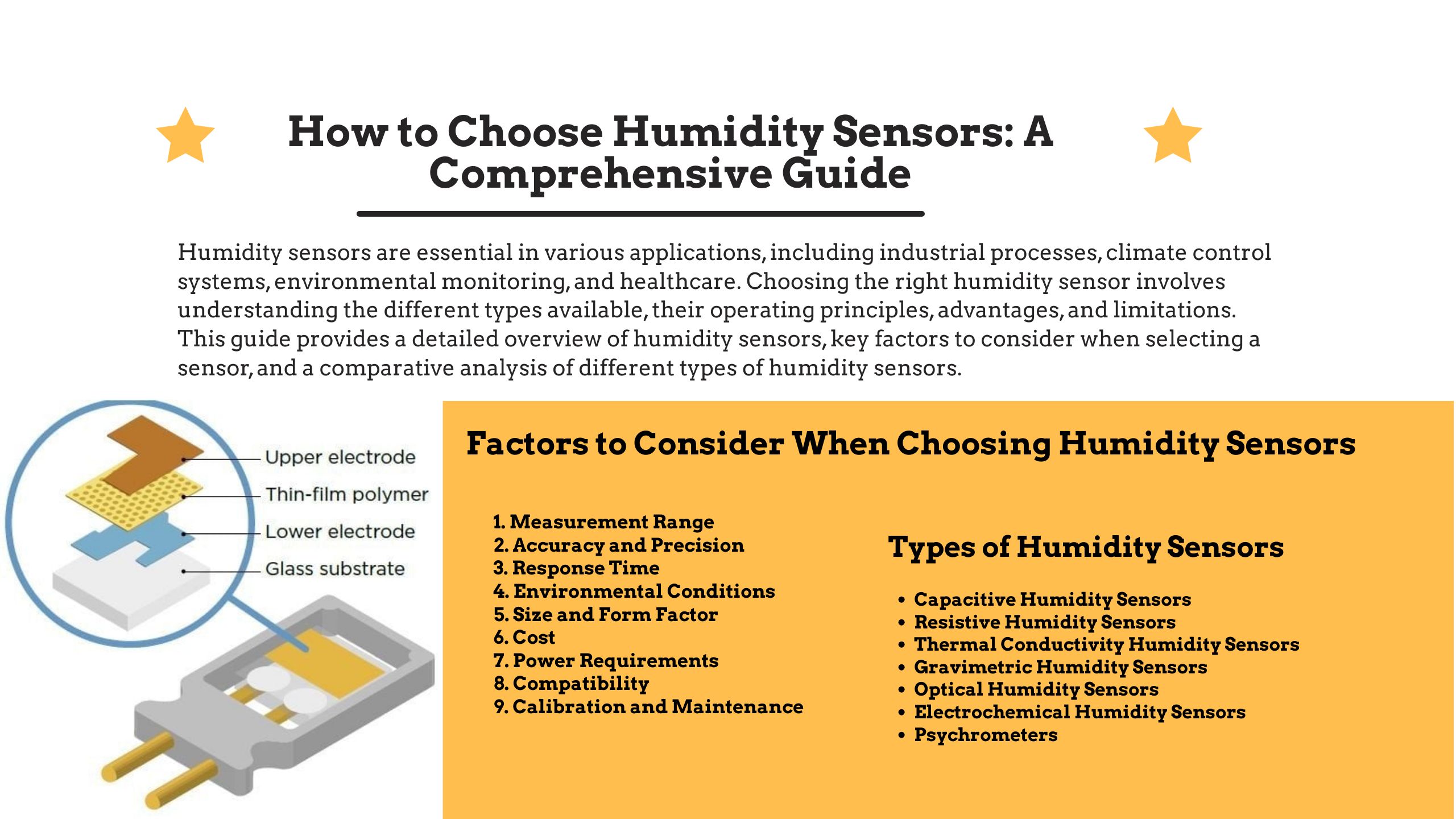
Humidity sensors are essential in various applications, including industrial processes, climate control systems, environmental monitoring, and healthcare. Choosing the right humidity sensor involves understanding the different types available, their operating principles, advantages, and limitations. This guide provides a detailed overview of humidity sensors, key factors to consider when selecting a sensor, and a comparative analysis of different types of humidity sensors.
Understanding Humidity Sensors
Humidity sensors, also known as hygrometers, measure the moisture content in the air. They are critical for maintaining optimal conditions, ensuring product quality, enhancing comfort, and protecting sensitive equipment.
More About Humidity Sensors: Humidity Sensors: Essential Tools for Monitoring and Control
Types of Humidity Sensors
There are several types of humidity sensors, each with unique characteristics. The main types are:
- Capacitive Humidity Sensors
- Resistive Humidity Sensors
- Thermal Conductivity Humidity Sensors
- Gravimetric Humidity Sensors
- Optical Humidity Sensors
- Electrochemical Humidity Sensors
- Psychrometers
Advantages and Disadvantages of Different Humidity Sensors
Each type of humidity sensor has its own set of advantages and disadvantages, influencing their suitability for specific applications.
Capacitive Humidity Sensors
Advantages:
- High accuracy and long-term stability
- Wide humidity range
- Relatively low power consumption
Disadvantages:
- Sensitive to contamination
- Moderate response time
Resistive Humidity Sensors
Advantages:
- Simple design and low cost
- Wide humidity range
- Robust and durable
Disadvantages:
- Limited accuracy compared to capacitive sensors
- Affected by temperature variations
Thermal Conductivity Humidity Sensors
Advantages:
- Fast response time
- Durable and less sensitive to contamination
- Suitable for harsh environments
Disadvantages:
- Limited accuracy
- Higher power consumption
Gravimetric Humidity Sensors
Advantages:
- High accuracy and precision
- Unaffected by temperature changes
- Long-term stability
Disadvantages:
- Slow response time
- Bulky and requires maintenance
Optical Humidity Sensors
Advantages:
- Non-contact measurement
- High accuracy and fast response
- Suitable for various conditions
Disadvantages:
- Expensive
- Sensitive to dust and particles
Electrochemical Humidity Sensors
Advantages:
- High sensitivity
- Suitable for trace moisture detection
- High accuracy
Disadvantages:
- Limited range
- Requires regular calibration
Psychrometers
Advantages:
- Simple design
- No calibration required
- Wide humidity range
Disadvantages:
- Requires manual operation
- Slow response time
Comparative Analysis of Humidity Sensors
| Sensor Type | Operating Principle | Advantages | Limitations | Applications |
|---|---|---|---|---|
| Capacitive Humidity Sensors | Changes in capacitance of a hygroscopic material | High accuracy, wide humidity range, long-term stability | Sensitive to contamination, moderate response time | HVAC systems, industrial processes, meteorological stations |
| Resistive Humidity Sensors | Changes in electrical resistance of a hygroscopic material | Simple design, low cost, wide humidity range | Limited accuracy, affected by temperature variations | Consumer electronics, automotive applications, HVAC systems |
| Thermal Conductivity Humidity Sensors | Changes in thermal conductivity of air due to humidity | Fast response time, durable, insensitive to contamination | Limited accuracy, high power consumption | Industrial drying processes, HVAC systems, environmental monitoring |
| Gravimetric Humidity Sensors | Absorption of water vapor by a desiccant | High accuracy, unaffected by temperature changes | Slow response time, bulky, requires maintenance | Calibration standards, laboratory applications |
| Optical Humidity Sensors | Changes in light properties due to humidity | Non-contact measurement, high accuracy, fast response | Expensive, sensitive to dust and particles | Environmental monitoring, industrial processes, meteorological stations |
| Electrochemical Humidity Sensors | Electrochemical reaction with water vapor | High sensitivity, suitable for trace moisture detection | Limited range, requires regular calibration | Gas analysis, industrial processes, environmental monitoring |
| Psychrometers | Temperature difference between wet and dry bulbs | Simple design, no calibration required, wide humidity range | Requires manual operation, slow response | Meteorological stations, laboratory applications, HVAC systems |
Factors to Consider When Choosing Humidity Sensors
Selecting the right humidity sensor involves evaluating several factors based on the specific application requirements.
1. Measurement Range
The humidity range that the sensor can accurately measure is a critical factor. Capacitive and resistive sensors typically offer a wide range, suitable for most applications. However, specific applications, such as trace moisture detection, may require electrochemical sensors with a more limited range.
2. Accuracy and Precision
Different applications require different levels of accuracy. Capacitive sensors provide high accuracy and long-term stability, making them ideal for HVAC systems and industrial processes. Optical sensors also offer high accuracy but at a higher cost, suitable for precision applications.
3. Response Time
The response time is crucial in applications where rapid changes in humidity need to be detected and addressed. Thermal conductivity and optical sensors have fast response times, making them suitable for dynamic environments.
4. Environmental Conditions
Consider the environmental conditions where the sensor will be used. For harsh environments with dust and particles, resistive and thermal conductivity sensors are durable and less sensitive to contamination. Capacitive sensors, while accurate, may require protection from contaminants.
5. Size and Form Factor
The size and form factor of the sensor can influence its suitability for an application. Capacitive and resistive sensors are typically compact and can be easily integrated into various systems. Gravimetric sensors, while highly accurate, are bulkier and more suited for laboratory use.
6. Cost
The budget for the sensor and the overall system cost are important considerations. Resistive sensors provide a cost-effective solution for many applications without compromising essential performance. Optical and gravimetric sensors, though more expensive, offer high precision for specialized applications.
7. Power Requirements
Power consumption is a key factor, especially in battery-operated or portable devices. Capacitive and resistive sensors generally have low power requirements, making them suitable for such applications. Thermal conductivity sensors, on the other hand, may consume more power.
8. Compatibility
Ensure the sensor is compatible with existing systems, including data acquisition and control systems. Consider the communication protocols and interfaces supported by the sensor to ensure seamless integration.
9. Calibration and Maintenance
Regular calibration and maintenance are necessary to ensure accuracy. Capacitive and resistive sensors are generally easier to calibrate and maintain, while optical and electrochemical sensors may require specialized equipment and expertise.
Applications of Humidity Sensors
Humidity sensors are used in a wide range of applications, each with unique requirements.
Industrial Processes
Humidity sensors are vital in industrial processes to monitor and control manufacturing conditions, ensuring product quality and operational efficiency. Capacitive and thermal conductivity sensors are commonly used due to their accuracy and durability.
HVAC Systems
In HVAC systems, humidity sensors maintain optimal indoor climate conditions. Capacitive and resistive sensors are used for their sensitivity, accuracy, and cost-effectiveness.
Environmental Monitoring
Humidity sensors play a key role in environmental monitoring, providing data for weather forecasting and climate studies. Optical and capacitive sensors are used for their precision and ability to operate in various conditions.
Healthcare
In healthcare, humidity sensors are used in medical devices, patient monitoring systems, and maintaining controlled environments for sensitive equipment. High accuracy and reliability are critical, making capacitive and optical sensors popular choices.
Consumer Electronics
In consumer electronics, humidity sensors prevent damage from moisture and ensure device performance. Capacitive and resistive sensors are commonly used due to their compact size and cost-effectiveness.
Automotive Industry
Humidity sensors in the automotive industry ensure passenger comfort and vehicle safety. Resistive and capacitive sensors are often used due to their reliability and durability.
Research and Development
Humidity sensors are essential in research and development for precise measurements and control. Gravimetric and capacitive sensors are preferred for their accuracy and stability.
Future Trends in Humidity Sensors
As technology advances, humidity sensors are becoming more sophisticated and versatile. Key trends shaping the future of humidity sensors include:
Integration with IoT
The integration of humidity sensors with the Internet of Things (IoT) is enabling more comprehensive and real-time monitoring and control. IoT-enabled sensors can communicate with other devices, providing valuable data for optimizing processes and improving efficiency.
Miniaturization
Advancements in sensor technology are leading to the development of smaller and more compact humidity sensors. Miniaturized sensors can be integrated into a wider range of devices, from wearable technology to implantable medical devices.
Wireless Connectivity
Wireless humidity sensors offer greater flexibility and ease of installation compared to wired sensors. They can be deployed in remote or hard-to-reach locations, providing real-time data without the need for extensive wiring.
Advanced Materials
The use of advanced materials in humidity sensors can improve their performance and durability. For example, graphene-based sensors offer high sensitivity and fast response times, while ceramic materials can withstand harsh environments.
Enhanced Data Analytics
The combination of humidity sensors with advanced data analytics and machine learning techniques can provide deeper insights into humidity patterns and their impacts. Predictive analytics can help identify potential issues before they occur, enabling proactive maintenance and optimization.
Conclusion
Humidity sensors are indispensable tools in modern society, playing a crucial role in various fields, from industrial processes and HVAC systems to healthcare and environmental monitoring. Their ability to provide accurate and real-time data enables effective monitoring, control, and optimization of humidity conditions, leading to improved processes, enhanced comfort, and significant cost savings.
Choosing the right humidity sensor involves understanding the specific requirements of the application and evaluating the advantages and limitations of each sensor type. By considering factors such as measurement range, accuracy, response time, environmental conditions, size, cost, power requirements, compatibility, and maintenance needs, you can select the most suitable humidity sensor for your needs.
As technology continues to evolve, the development of more sophisticated and reliable humidity sensors will further expand their applications and benefits. Whether ensuring product quality in industrial processes, maintaining comfort in HVAC systems, protecting sensitive equipment, or conducting environmental monitoring, humidity sensors are essential for achieving optimal humidity conditions and improving overall quality of life.
Realted Read: The Importance of Temperature and Humidity Sensors
Understanding Humidity: A Comprehensive Guide
The Interplay Between Temperature and Humidity: A Comprehensive Analysis
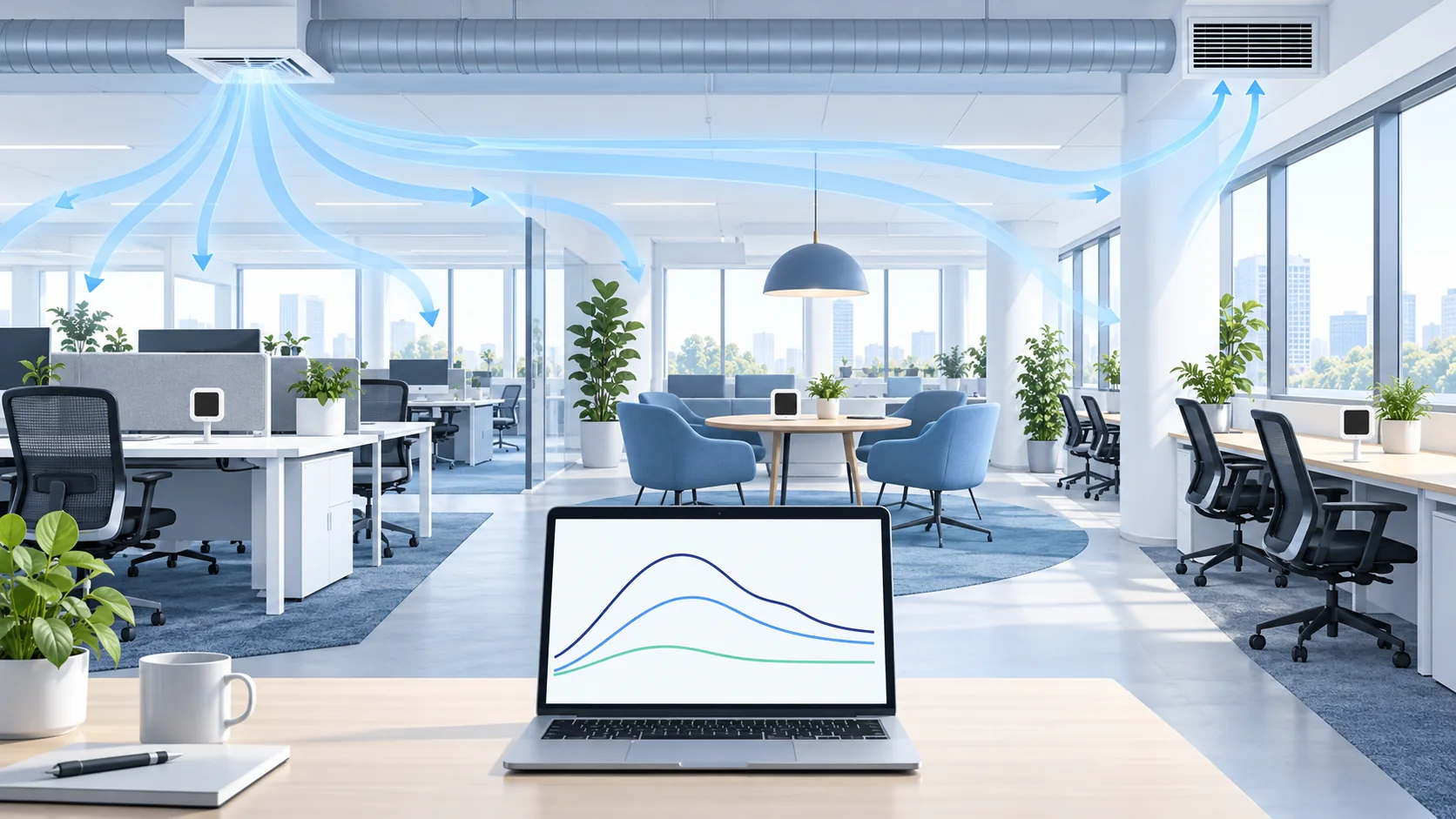
How to Compare CO2 Readings Across Open-Plan Office Zones
Compare synchronized office-zone CO2 logs after checking monitor agreement, location, occupancy and air-system events; learn when a zone difference warrants investigation.
Read More
How to Read a Meeting Room CO2 Trend Against Occupancy
Read meeting-room CO2 trends with occupancy and ventilation events, distinguishing starting level, occupied rise, intervention and post-meeting decline.
Read More
How to Plan CO2 Monitor Placement in an Office
Plan representative office CO2 monitor locations by measurement purpose, occupancy and air paths, then verify positions and log context before using the data.
Read More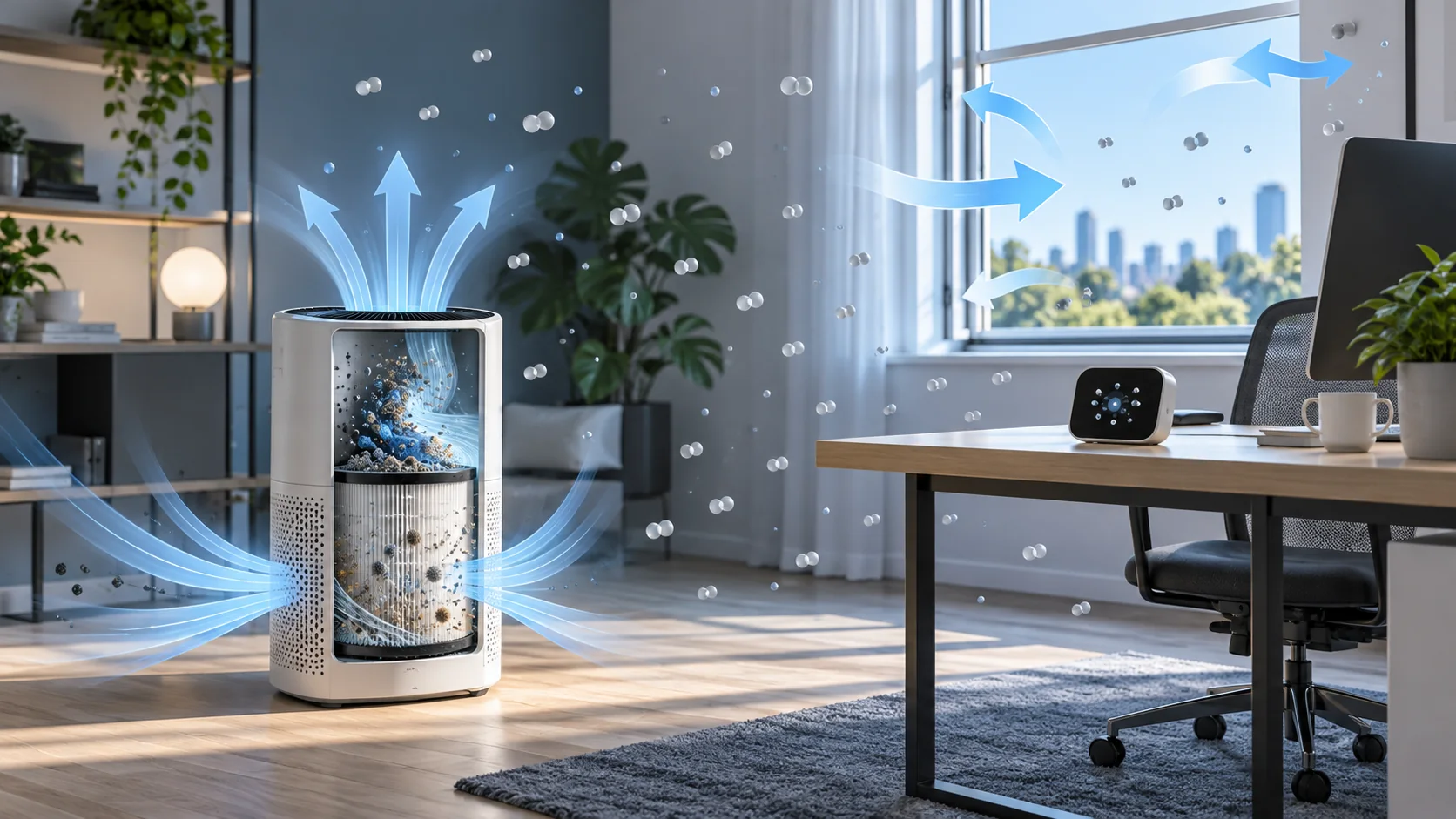
Do Air Purifiers Lower CO2? Separate Filtration from Outdoor-Air Exchange
Ordinary HEPA purifiers capture particles but do not meaningfully remove occupant-generated CO2. Learn to separate recirculation, outdoor-air ventilation and monitor mixing effects.
Read More
How to Read an Overnight Bedroom CO2 Log
Interpret an overnight bedroom CO2 trace using its starting level, rise, plateau and morning response while checking logger quality, air paths and comparable nights.
Read More
How to Interpret CO2 Trends at Home: Read the Pattern, Not One Number
Learn how occupancy, outdoor air, room mixing and monitor placement shape a home CO2 trace, and use a repeatable log to test ventilation changes.
Read More