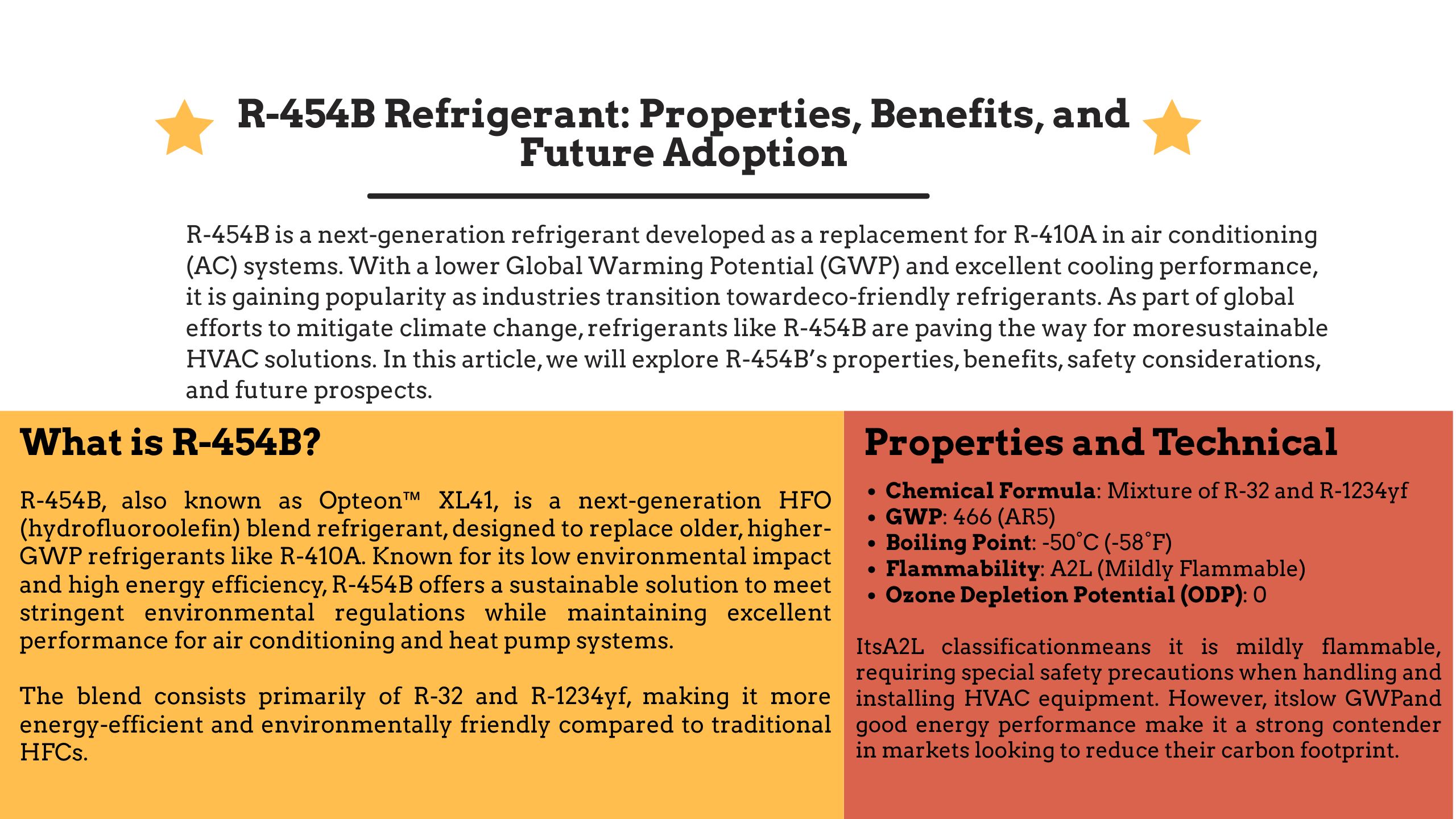


R-454B is a next-generation refrigerant developed as a replacement for R-410A in air conditioning (AC) systems. With a lower Global Warming Potential (GWP) and excellent cooling performance, it is gaining popularity as industries transition toward eco-friendly refrigerants. As part of global efforts to mitigate climate change, refrigerants like R-454B are paving the way for more sustainable HVAC solutions. In this article, we will explore R-454B’s properties, benefits, safety considerations, and future prospects.

What is R-454B?

R-454B, also known as Opteon™ XL41, is a next-generation HFO (hydrofluoroolefin) blend refrigerant, designed to replace older, higher-GWP refrigerants like R-410A. Known for its low environmental impact and high energy efficiency, R-454B offers a sustainable solution to meet stringent environmental regulations while maintaining excellent performance for air conditioning and heat pump systems.

The blend consists primarily of R-32 and R-1234yf, making it more energy-efficient and environmentally friendly compared to traditional HFCs.

Properties and Technical Characteristics of R-454B

  • Chemical Formula: Mixture of R-32 and R-1234yf
  • GWP: 466 (AR5)
  • Boiling Point: -50°C (-58°F)
  • Flammability: A2L (Mildly Flammable)
  • Ozone Depletion Potential (ODP): 0

Its A2L classification means it is mildly flammable, requiring special safety precautions when handling and installing HVAC equipment. However, its low GWP and good energy performance make it a strong contender in markets looking to reduce their carbon footprint.

Why Are We Transitioning to R-454B?

The global shift toward low-GWP refrigerants is driven by efforts to combat climate change. Refrigerants like R-410A, which have a high GWP, are being phased out in favor of alternatives like R-454B, which meets environmental targets without compromising system efficiency. Manufacturers and HVAC professionals are adopting R-454B to ensure compliance with international regulations, including the Kigali Amendment and F-Gas regulations in Europe.

1. Environmental Regulations

  • Kigali Amendment to the Montreal Protocol mandates a phasedown of high-GWP refrigerants to combat global warming.
  • Many regions, including the EU and the US, have introduced bans or limitations on R-410A, accelerating the switch to low-GWP refrigerants like R-454B.

2. Improved Efficiency

  • R-454B has been shown to offer similar or better energy efficiency than R-410A in cooling applications, reducing energy consumption.
  • Systems using R-454B achieve higher SEER (Seasonal Energy Efficiency Ratio) ratings, making them a preferred choice for modern air conditioners.

3. Minimal Retrofitting Requirements

  • R-454B can be used in new AC systems with minimal design modifications, allowing for a smooth transition from R-410A.
  • Although it is not a direct drop-in replacement, manufacturers can adapt existing R-410A system designs to work with R-454B with minimal effort.

Applications of R-454B in HVAC Systems

R-454B is primarily used in residential and commercial air conditioning systems, including split systems, rooftop units, and heat pumps. It is also finding applications in chillers and other cooling equipment where high efficiency and low environmental impact are priorities.

  1. Residential Air Conditioners: Efficient cooling solutions with lower carbon footprints.
  2. Commercial HVAC Systems: For office buildings, retail spaces, and industrial facilities.
  3. Heat Pumps: A viable refrigerant for energy-efficient heating and cooling.
  4. Chillers: In medium-sized water-cooled systems.

More About Refrigerants Application: Applications of Refrigerants: An In-Depth Analysis

Comparison of R-454B with R-410A and R-32

FeatureR-454BR-410AR-32
GWP4662088675
ODP000
Energy EfficiencyHighModerateVery High
FlammabilityMild (A2L)NoneMild (A2L)
Usage Ban DateN/A2025 (UK)N/A

R-454B offers a lower GWP than R-32, but with slightly less energy efficiency. Compared to R-410A, it provides both lower environmental impact and better performance.

Related Read: Comparative Analysis of Refrigerants, Properties, Advantages, and Disadvantages

What Makes a Good Refrigerant?

Types of Refrigerants Explained: Everything You Need to Know

Key Benefits of R-454B

1. Lower Global Warming Potential (GWP)

With a GWP of 466, R-454B significantly reduces the environmental impact compared to R-410A, helping industries comply with global regulations.

2. Enhanced Energy Efficiency

R-454B enables air conditioners and HVAC systems to operate more efficiently, leading to reduced energy bills and smaller carbon footprints.

3. Compatibility with HVAC Systems

Manufacturers can modify existing R-410A designs with minimal changes, easing the transition to R-454B without the need for extensive retrofitting.

4. Ozone-Friendly

Like all HFCs and HFOs, R-454B has an ODP of zero, meaning it does not harm the ozone layer.

Pros and Cons of R-454B

Pros

  • Environmentally Friendly: Low GWP and zero ODP.
  • Energy Efficient: Reduces energy consumption and operational costs.
  • Compatible with R-410A Systems: Simplifies the transition for HVAC providers.

Cons

  • Mildly Flammable: Requires careful handling.
  • Training Requirements: Technicians need specialized knowledge.

Regulatory Compliance and Adoption

R-454B is gaining traction due to regulatory mandates to reduce high-GWP refrigerants. Many air conditioner manufacturers have announced plans to transition from R-410A to R-454B. For example:

  • The U.S. Environmental Protection Agency (EPA) has listed R-454B as acceptable under the Significant New Alternatives Policy (SNAP) program.
  • European F-Gas regulations encourage the use of low-GWP refrigerants like R-454B in new HVAC equipment.

Related Read: Refrigerant Safety: A Comprehensive Guide

The Future of R-454B in HVAC Systems

As environmental regulations tighten, R-454B is likely to become the standard refrigerant for residential and commercial air conditioning units. It offers a sustainable alternative to R-410A, combining eco-friendliness, energy efficiency, and performance.

Manufacturers and service providers are expected to accelerate the adoption of R-454B as industries aim to meet net-zero carbon emission goals. New product lines featuring R-454B-compatible units will dominate the HVAC market in the coming years.

Challenges and Safety Considerations of R-454B

As an A2L refrigerant, R-454B is classified as mildly flammable, so HVAC professionals must follow proper safety protocols during installation and maintenance. Key considerations include:

  1. Leak Detection Systems: Ensure HVAC systems are equipped with leak detectors to avoid refrigerant loss and mitigate potential hazards.
  2. Proper Ventilation: HVAC units using R-454B should be installed in areas with adequate ventilation to prevent the buildup of refrigerant gases.
  3. Technician Training: Installers and technicians must undergo certification and training to safely handle A2L refrigerants.

Frequently Asked Questions About R-454B

Is R-454B Safe to Use?

Yes, but as an A2L refrigerant, it requires safety precautions during installation and maintenance.

Can R-454B Replace R-410A?

Yes, R-454B is a direct replacement for R-410A and offers improved environmental performance.

How Does R-454B Compare to R-32?

While R-32 offers slightly higher energy efficiency, R-454B has a lower GWP, making it a better environmental choice in some applications.

How to Identify If Your HVAC System Uses R-454B

To confirm if your HVAC system uses R-454B, check the label on the unit or consult the user manual. Manufacturers often specify the refrigerant type used in the system.

Conclusion: The Future of HVAC with R-454B

R-454B represents the future of sustainable cooling. With its low GWP, high energy efficiency, and compatibility with existing technologies, it offers a reliable solution for HVAC systems. As environmental regulations tighten, R-454B will play an essential role in achieving greenhouse gas reduction goals. By adopting R-454B, the HVAC industry is taking a significant step toward a more sustainable and energy-efficient future.

[post-views]

Leave a Reply

Your email address will not be published. Required fields are marked *