Volatile Organic Compounds (VOCs) are organic chemicals that can easily evaporate into the air. They are found in various household and industrial products, and prolonged exposure to high levels of VOCs can have detrimental effects on human health and the environment. VOC sensors play a vital role in monitoring and controlling air quality, providing valuable insights into the presence and concentration of VOCs in the surrounding environment.
What is a VOC Sensor?
A VOC sensor, or Volatile Organic Compound sensor, is a device designed to detect and measure the presence of VOCs in the air. It utilizes gas-sensitive materials that interact with VOC molecules, leading to measurable changes in electrical conductivity or other physical properties. These sensors are commonly integrated into air quality monitors, environmental monitoring systems, and indoor air quality control systems.
How do VOC Sensors Work?
VOC sensors employ a gas-sensitive element that adsorbs VOC molecules from the surrounding air. This adsorption causes a change in the electrical resistance or capacitance of the sensor, which is then measured by the sensor’s electronics. The magnitude of the signal corresponds to the concentration of VOCs in the air. Temperature and humidity compensation mechanisms are often incorporated to ensure accurate measurements by accounting for environmental factors.
VOC Sensor Technologies
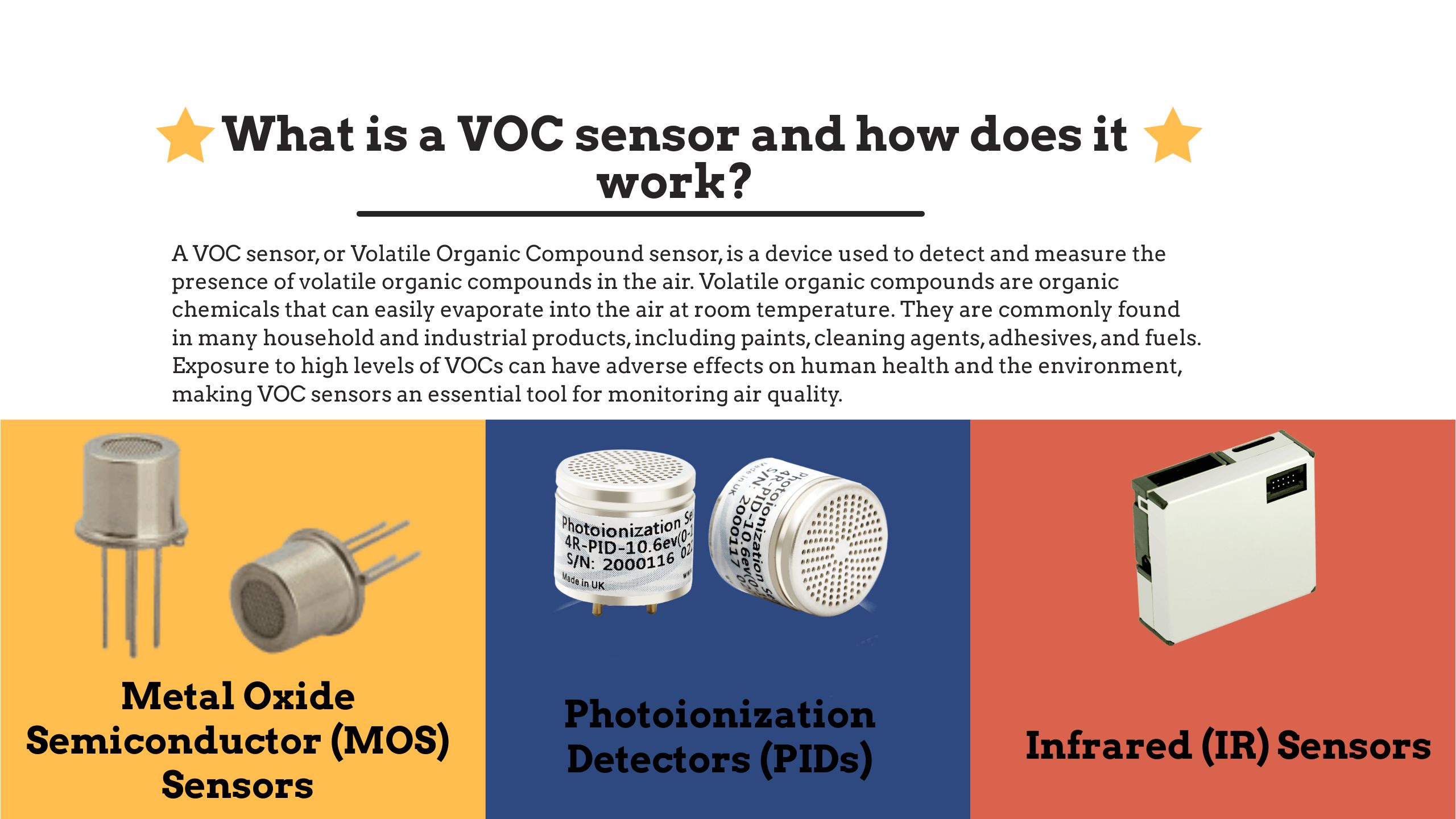
To effectively detect and measure VOCs, various sensor technologies have been developed. In this article, we will explore three common VOC sensor technologies: Metal Oxide Semiconductor (MOS) sensors, Photoionization Detectors (PIDs), and Infrared (IR) sensors. Each technology has its unique principles and advantages, contributing to the accurate monitoring and control of VOCs.
Metal Oxide Semiconductor (MOS) Sensors
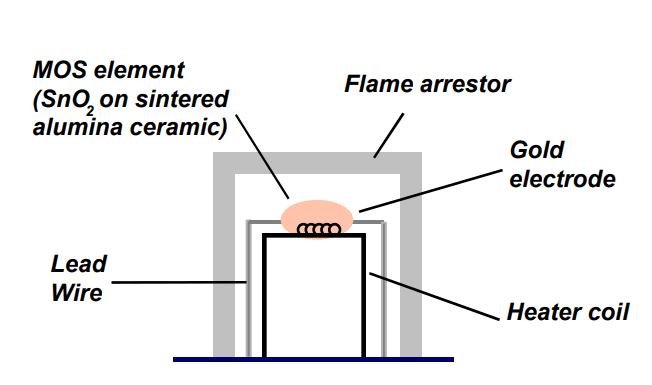
MOS sensors are widely used in VOC detection due to their affordability and versatility. These sensors consist of a metal oxide film deposited on a ceramic substrate. MOS sensors operate based on the principle of the conductivity changes of the metal oxide film when it comes into contact with VOCs. When VOCs are present, they cause a change in the electrical resistance of the film, which is measured and converted into a VOC concentration reading. MOS sensors are sensitive to a wide range of VOCs and offer quick response times, making them suitable for various applications.
Photoionization Detectors (PIDs)
(Source: instrumentationtools.com)
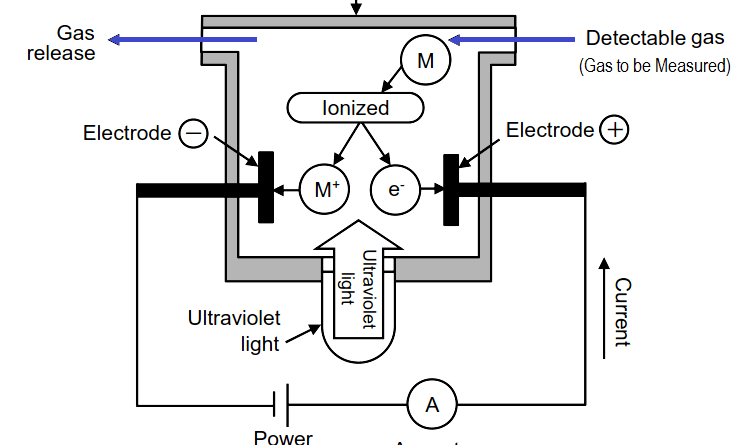
PIDs utilize the principle of ionization to detect VOCs. PIDs emit ultraviolet (UV) light, which ionizes VOC molecules in the air, producing positively charged ions and free electrons. The ionized molecules and electrons generate a current that is measured by the sensor. The magnitude of the current is proportional to the concentration of VOCs present. PIDs are highly sensitive and can detect a broad range of VOCs, including both volatile and semi-volatile compounds. They are commonly used in industrial settings and hazardous material response situations.
Infrared (IR) Sensors

(karfandscoot.com)
IR sensors detect VOCs based on their unique absorption of infrared light. Different VOCs absorb specific wavelengths of infrared light, and by analyzing the absorption patterns, the sensor can identify and quantify the concentration of VOCs in the air. IR sensors are highly selective and can differentiate between different VOCs. They are also less affected by environmental factors such as temperature and humidity. IR sensors are commonly used in environmental monitoring, industrial hygiene, and indoor air quality applications.
How to Choose VOC Sensor: A Comparative Analysis of MOS Sensors, PIDs, and IR Sensors for VOC Detection
Factors Affecting VOC Sensor Performance
- Interference from other gases: VOC sensors can be susceptible to interference from other gases present in the environment. Certain gases, such as carbon dioxide (CO2) or nitrogen dioxide (NO2), can interfere with the accurate detection of VOCs. It is important to account for potential cross-sensitivity and select a sensor that is specifically designed to minimize interference.
- Temperature and humidity: Environmental conditions, particularly temperature and humidity, can impact the performance of VOC sensors. Extreme temperatures can affect the sensitivity and response time of the sensor, while high humidity levels can lead to condensation on the sensor surface, affecting its performance. It is crucial to operate VOC sensors within their specified temperature and humidity ranges to ensure accurate readings.
- Sensor calibration: Regular calibration is essential for maintaining the accuracy of VOC sensors. Over time, sensor drift may occur, leading to inaccurate readings. Calibration involves adjusting the sensor to a known reference concentration of VOCs to ensure reliable measurements. Failure to calibrate the sensor periodically can result in misleading data.
- Sensor aging: VOC sensors can experience degradation over time, leading to reduced sensitivity and accuracy. Factors such as exposure to high VOC concentrations, environmental contaminants, and operating conditions can contribute to sensor aging. Regular maintenance, including cleaning and replacement of sensors if necessary, can help mitigate the effects of sensor aging.
- Sensor selectivity: Different VOC sensors have varying degrees of selectivity towards specific VOCs. Some sensors may be more sensitive to certain types of VOCs, while others may have a broader range of detectable compounds. Understanding the selectivity of the sensor is important to ensure that it is suitable for the targeted VOCs in a given application.
- Sampling methods: The method used to collect air samples for VOC analysis can also impact sensor performance. Factors such as sampling flow rate, duration, and the type of sampling media can influence the accuracy and reliability of the sensor readings. It is important to follow recommended sampling protocols to ensure representative and consistent measurements.
Main VOCs Detected by VOC Sensors
Benzene
Benzene is a VOC commonly found in gasoline, tobacco smoke, and industrial emissions. It is a known carcinogen and prolonged exposure to high levels of benzene can lead to serious health issues, including leukemia and other cancers.
Formaldehyde
Formaldehyde is a VOC released from building materials, furniture, and household products. It can cause eye, nose, and throat irritation, as well as respiratory problems. Prolonged exposure to formaldehyde may have long-term health effects.
Toluene
Toluene is present in paints, solvents, adhesives, and gasoline. Exposure to toluene can result in neurological and respiratory problems, such as headaches, dizziness, and irritation of the respiratory system.
Xylene
Xylene is commonly found in paints, varnishes, and cleaning agents. Inhalation or skin contact with xylene can cause headaches, dizziness, and irritation to the respiratory system. Prolonged exposure may have more severe health effects.
Ethanol
Ethanol is a VOC that can be found in alcoholic beverages, as well as in some household products. While it is not considered as harmful as some other VOCs, high concentrations of ethanol can contribute to poor indoor air quality and may cause health effects.
Acetone
Acetone is present in nail polish removers, paints, and cleaning agents. Inhalation or skin contact with acetone can cause irritation to the eyes, nose, and throat. Prolonged exposure may also affect the central nervous system.
Methane
Although not traditionally classified as a VOC, methane is a greenhouse gas that can be detected by certain VOC sensors. Monitoring methane levels is important due to its contribution to climate change.
Applications of VOC Sensors
VOC sensors have a wide range of applications across various industries and settings. These sensors play a crucial role in monitoring and controlling indoor and outdoor air quality by detecting and measuring volatile organic compounds. Here are some common applications of VOC sensors
Indoor Air Quality (IAQ) Monitoring
VOC sensors are extensively used in commercial buildings, offices, schools, and residential settings to monitor indoor air quality. They help identify and measure the presence of harmful VOCs emitted from building materials, cleaning products, furniture, and other indoor sources. By monitoring VOC levels, appropriate ventilation and air purification strategies can be implemented to maintain a healthy indoor environment.
Industrial Hygiene
In industrial environments, VOC sensors are employed to assess worker exposure to hazardous chemicals and ensure compliance with occupational health and safety regulations. These sensors can detect and quantify VOCs emitted from solvents, paints, adhesives, and other chemicals used in manufacturing processes. By monitoring VOC levels, necessary control measures can be implemented to protect workers’ health.
Environmental Monitoring
VOC sensors are used in environmental monitoring to assess air pollution levels, particularly in urban areas and near industrial sites. These sensors help measure VOC emissions from industrial processes, vehicle emissions, and other sources that contribute to air pollution. By monitoring and analyzing VOC levels, necessary steps can be taken to reduce pollution and improve air quality.
Hazardous Materials Response
VOC sensors, particularly photoionization detectors (PIDs), are vital tools for emergency response teams when dealing with hazardous materials incidents. PIDs can quickly detect and identify hazardous VOCs, allowing responders to assess the situation and implement appropriate mitigation measures to protect public safety.
Indoor Air Quality in Vehicles
VOC sensors are also used in automotive applications to monitor and improve the air quality inside vehicles. These sensors can detect VOC emissions from car interiors, such as upholstery, plastics, and cleaning agents. By monitoring VOC levels, measures can be taken to reduce exposure to harmful chemicals and create a healthier environment for passengers.
Laboratory and Research
VOC sensors are utilized in laboratories and research settings to measure and analyze VOC emissions from various samples and materials. These sensors help researchers understand the composition and behavior of volatile organic compounds, contributing to advancements in environmental science, chemistry, and material science.
Conclusion
VOC sensors play a critical role in air quality monitoring by detecting and measuring the presence of volatile organic compounds in the surrounding environment. With their ability to provide real-time data on VOC levels, these sensors enable proactive measures to reduce exposure to harmful compounds and improve overall air quality. Whether in residential, commercial, or industrial settings, VOC sensors are essential tools in safeguarding human health and the environment.