Mold is a common indoor air quality concern that can pose serious health risks, including respiratory problems, allergies, and even chronic illnesses. With the increasing availability of air quality monitors, many wonder if these devices can effectively detect mold in indoor environments. In this article, we explore the capabilities of air quality monitors in detecting mold, how they work, their limitations, and the best practices for managing mold issues in your home or workplace.
What is Mold and Why is it a Concern?
Mold refers to a type of fungus that grows in moist environments. It reproduces by releasing microscopic spores that can spread through the air. When inhaled, these spores can cause a range of health problems, particularly for individuals with allergies, asthma, or weakened immune systems.
Common Types of Indoor Mold
Aspergillus: Found in damp walls and insulation, it can cause allergic reactions.
Cladosporium: Often found on wood and fabrics, it may trigger respiratory issues.
Stachybotrys (Black Mold): Known for producing mycotoxins, it can lead to severe health problems.
Health Impacts of Mold Exposure
Short-Term: Sneezing, coughing, itchy eyes, and skin irritation.
Long-Term: Chronic respiratory issues, sinus infections, and even neurological effects in extreme cases.
Given these risks, detecting mold early is crucial for maintaining a healthy indoor environment.
How Do Air Quality Monitors Work?
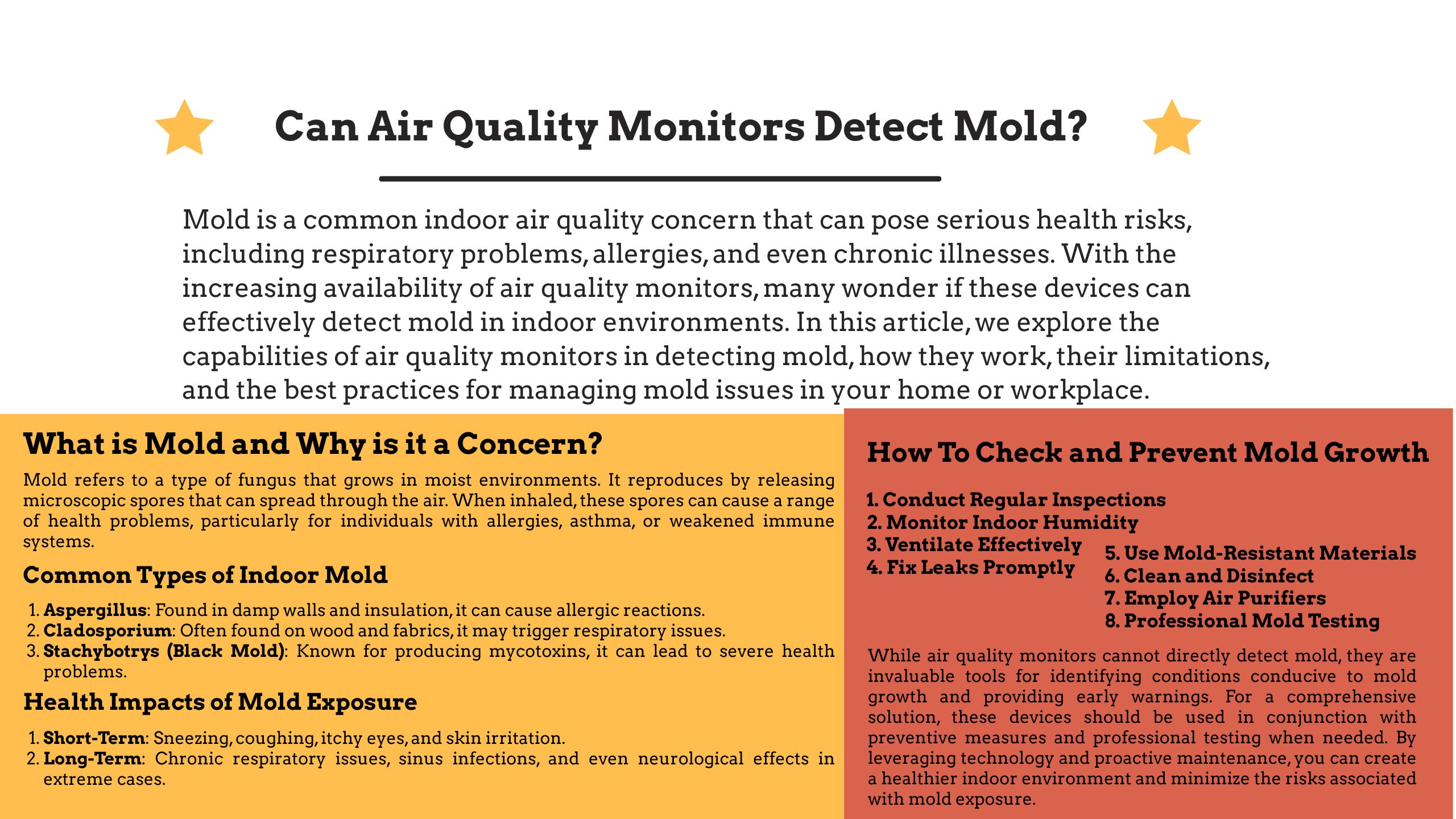
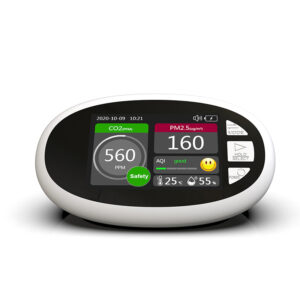
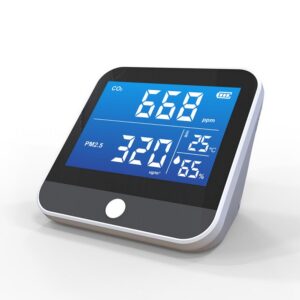
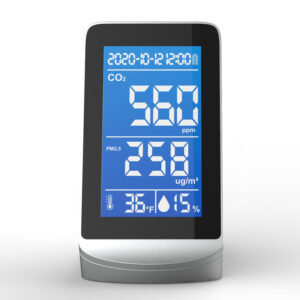
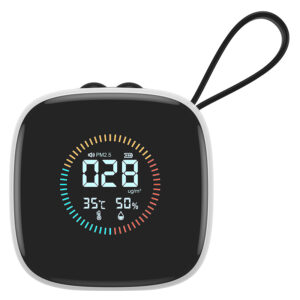
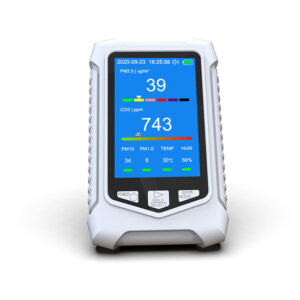
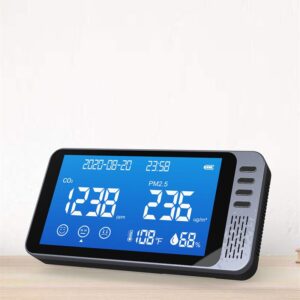
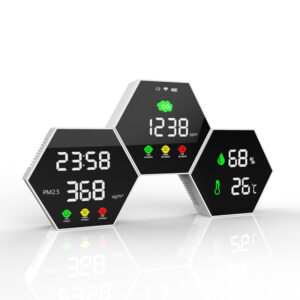
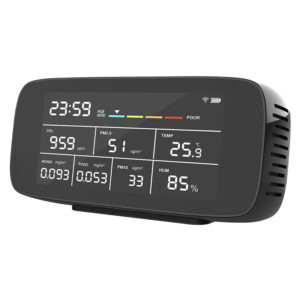
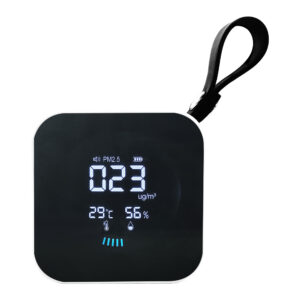
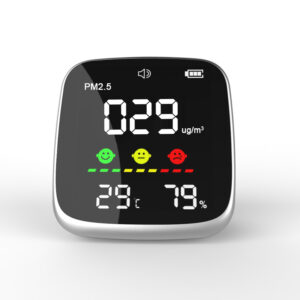
Air quality monitors are devices designed to measure the concentration of various pollutants in the air. They typically track parameters such as:
Modern air quality monitors often feature advanced sensors and connectivity options, enabling users to receive real-time updates on their air quality via smartphone apps or cloud platforms.
While most air quality monitors cannot detect mold spores directly, they can measure conditions that promote mold growth or indicate its presence indirectly.
Key Parameters Monitored
Humidity Levels: High humidity (>60%) creates an ideal environment for mold.
Volatile Organic Compounds (VOCs): Some molds emit VOCs, which can be detected as part of an air quality assessment.
Particulate Matter (PM): Airborne mold spores contribute to particulate matter, which some monitors can detect.
Specialized Air Quality Monitors for Mold Detection
Certain advanced air quality monitors are equipped with features that make them more effective for mold detection:
Mold-Specific Sensors: Devices like the Airthings Wave Plus detect airborne mold risk by combining humidity and temperature data with mold risk algorithms.
Spore Counters: Professional-grade devices, such as spore traps, directly capture and measure mold spores in the air. These are often used by environmental specialists.
VOC Detectors: Monitors that track VOCs can detect chemicals released by active mold colonies.
Popular Air Quality Monitors for Mold:
Airthings Wave Mini: Affordable and user-friendly, it monitors humidity and temperature to predict mold risk.
IQAir AirVisual Pro: Tracks PM2.5 and humidity, helping identify conditions conducive to mold growth.
Foobot: Measures VOCs and particulate matter, offering insights into potential mold activity.
Limitations of Air Quality Monitors in Mold Detection
Despite their capabilities, air quality monitors have limitations when it comes to mold detection:
1. Indirect Measurement
Most air quality monitors do not have the capability to detect mold spores directly. They only measure environmental factors that correlate with mold growth, such as humidity and particulate matter.
2. Inability to Identify Mold Species
Even if mold spores are present, consumer-grade devices cannot distinguish between harmful and harmless mold types. Professional testing is required for species identification.
3. Lack of Sensitivity to Low Spore Levels
Air quality monitors may not detect low concentrations of mold spores, which can still be harmful to sensitive individuals.
4. Confusion with Other Pollutants
Elevated VOC or PM levels might not be due to mold; other indoor pollutants like smoke, cleaning chemicals, or dust can produce similar readings.
5. Limited Coverage
Monitors are typically designed for single-room use. Mold in an unmonitored area might go undetected, even with a high-quality device.
For comprehensive mold detection, professional inspections and lab analysis remain essential.
How To Check and Prevent Mold Growth
1. Conduct Regular Inspections
Where to Look: Check damp areas like basements, bathrooms, kitchens, and attics. Look for discoloration on walls, ceilings, or floors.
Smell Test: A musty odor often indicates mold, even if it isn’t visible.
2. Monitor Indoor Humidity
Use an air quality monitor or standalone hygrometer to keep humidity levels between 30% and 50%.
Install dehumidifiers in areas prone to moisture buildup, such as basements.
3. Ventilate Effectively
Ensure proper ventilation in bathrooms and kitchens by using exhaust fans.
Open windows periodically to allow fresh air circulation.
4. Fix Leaks Promptly
Repair any leaks in roofs, pipes, or windows to prevent water from accumulating.
Dry wet areas immediately, as mold can start growing within 24-48 hours.
5. Use Mold-Resistant Materials
Choose mold-resistant drywall and paint for areas prone to dampness.
Avoid carpeting in basements or bathrooms where moisture is common.
6. Clean and Disinfect
Regularly clean surfaces with mold-inhibiting solutions like vinegar or hydrogen peroxide.
Remove and replace materials that cannot be cleaned, such as moldy drywall or insulation.
7. Employ Air Purifiers
Use HEPA air purifiers to capture mold spores and reduce airborne contamination.
Pair purifiers with air quality monitors for continuous monitoring and improvement.
8. Professional Mold Testing
If you suspect a mold problem but cannot confirm it, hire a professional for detailed testing. They can collect air samples and analyze them in a laboratory to determine the type and concentration of mold present.
When to Seek Professional Mold Testing
If you suspect mold and air quality monitors indicate high humidity or VOCs, it may be time to consult a professional. Environmental specialists use specialized tools, such as spore traps and lab analysis, to accurately identify mold presence and species.
Conclusion
While air quality monitors cannot directly detect mold, they are invaluable tools for identifying conditions conducive to mold growth and providing early warnings. For a comprehensive solution, these devices should be used in conjunction with preventive measures and professional testing when needed. By leveraging technology and proactive maintenance, you can create a healthier indoor environment and minimize the risks associated with mold exposure.