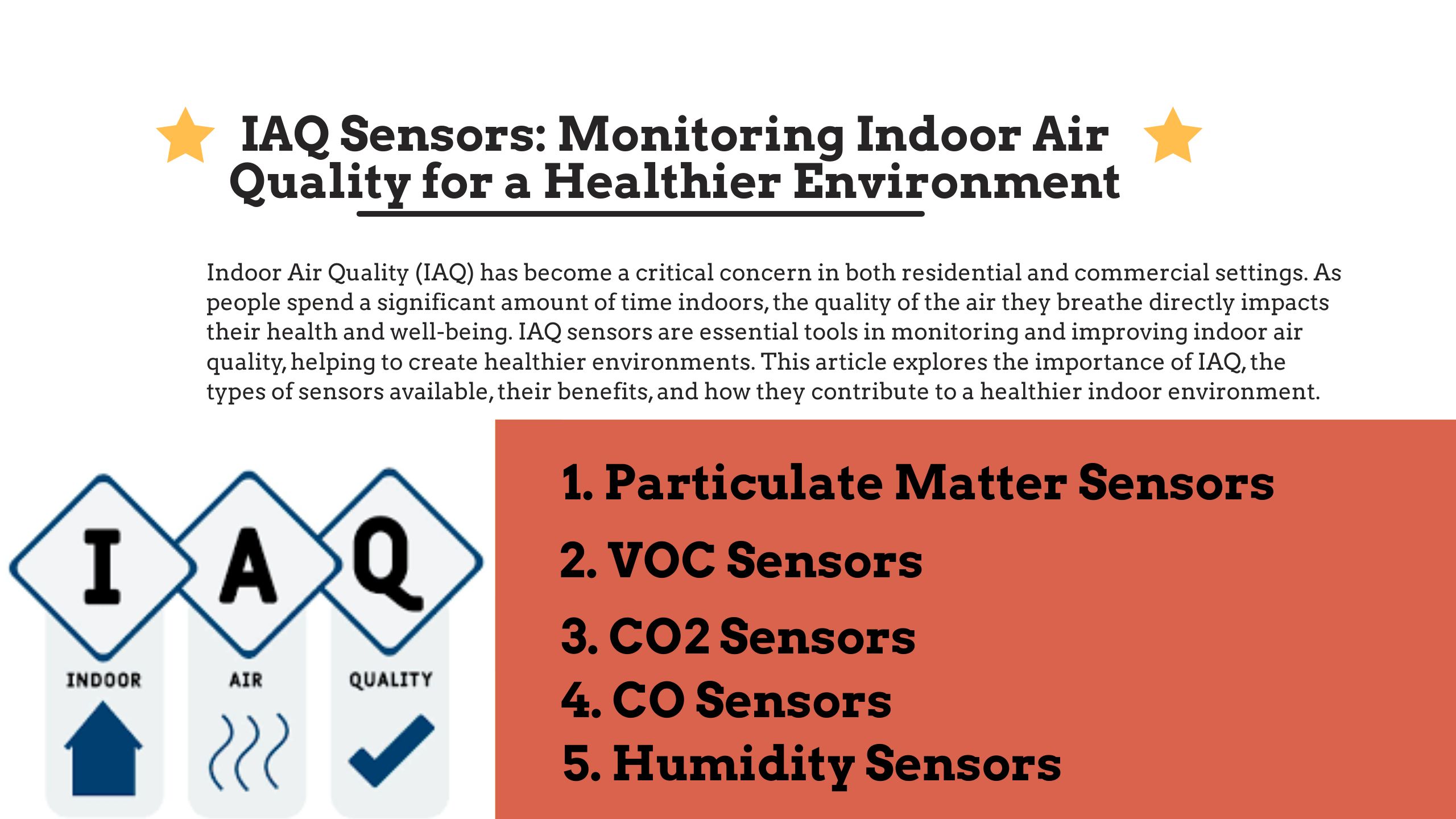
Indoor Air Quality (IAQ) has become a critical concern in both residential and commercial settings. As people spend a significant amount of time indoors, the quality of the air they breathe directly impacts their health and well-being. IAQ sensors are essential tools in monitoring and improving indoor air quality, helping to create healthier environments. This article explores the importance of IAQ, the types of sensors available, their benefits, and how they contribute to a healthier indoor environment.
Understanding Indoor Air Quality
Indoor air quality refers to the condition of the air inside buildings as it relates to the health and comfort of the occupants. Poor IAQ can lead to a range of health issues, including respiratory problems, allergies, and even chronic conditions. Common indoor air pollutants include:
- Particulate Matter (PM2.5 and PM10): Tiny particles that can penetrate deep into the lungs and cause various health problems.
- Volatile Organic Compounds (VOCs): Gases emitted from certain solids or liquids, including paints, cleaning supplies, and pesticides.
- Carbon Dioxide (CO2): Elevated levels can indicate poor ventilation and contribute to discomfort and cognitive impairment.
- Carbon Monoxide (CO): A colorless, odorless gas that can be deadly in high concentrations.
- Humidity: High or low humidity levels can contribute to respiratory problems and discomfort.
More about IAQ: What is IAQ: A Comprehensive Guide to Indoor Air Quality
Types of IAQ Sensors
IAQ sensors come in various types, each designed to detect specific pollutants or environmental conditions. Understanding the different types can help in selecting the right sensors for a particular setting.
Particulate Matter Sensors
These sensors measure the concentration of particulate matter in the air. They are crucial for detecting fine particles like PM2.5, which are particularly harmful to human health. These sensors use laser scattering or other methods to count and size particles, providing real-time data on air quality.
How to choose PM Sensors: A Comparative Analysis of Infrared and Laser PM Sensors
VOC Sensors
Volatile Organic Compound sensors detect a range of gases that can have short- and long-term health effects. These sensors often use metal oxide semiconductor (MOS) technology to identify and measure the concentration of various VOCs in the air.
How to choose VOC Sensors: A Comparative Analysis of MOS Sensors, PIDs, and IR Sensors for VOC Detection
CO2 Sensors
Carbon Dioxide sensors measure the concentration of CO2, which is an indicator of ventilation quality. High levels of CO2 can lead to drowsiness, headaches, and impaired cognitive function. These sensors typically use infrared technology to provide accurate readings.
How to choose CO2 Sensor: A Comparative Analysis of NDIR, Semiconductor, and Thermal Conductor CO2 Sensors
CO Sensors
Carbon Monoxide sensors are vital for detecting this dangerous gas. CO is produced by incomplete combustion of fossil fuels and can accumulate in poorly ventilated spaces. These sensors can detect even low levels of CO, providing early warnings to prevent poisoning.
Humidity Sensors
Humidity sensors measure the moisture content in the air. Maintaining optimal humidity levels is important for comfort and health, as both high and low humidity can cause problems. These sensors help in managing HVAC systems to maintain balanced humidity levels.
Benefits of IAQ Sensors
Implementing IAQ sensors in indoor environments offers numerous benefits, contributing to overall health, productivity, and comfort.
Health Benefits
By monitoring and controlling indoor air quality, IAQ sensors help reduce the risk of respiratory diseases, allergies, and other health issues. They provide early warnings for harmful pollutants, allowing timely interventions to mitigate health risks.
Improved Productivity
Good air quality has been linked to improved cognitive function and productivity. In workplaces, schools, and other indoor environments, maintaining optimal air quality can enhance focus, performance, and overall well-being.
Enhanced Comfort
IAQ sensors help maintain a comfortable indoor environment by monitoring temperature, humidity, and pollutant levels. This ensures that the indoor conditions are conducive to comfort and well-being.
Energy Efficiency
By providing accurate data on indoor air quality, these sensors help optimize HVAC system performance. This can lead to energy savings by ensuring that ventilation and air purification systems operate only when necessary.
Applications of IAQ Sensors
IAQ sensors are used in a variety of settings to monitor and improve indoor air quality. Some common applications include:
Residential Spaces
In homes, IAQ sensors help create a healthier living environment by monitoring pollutants and ensuring good ventilation. They can be integrated with smart home systems to provide real-time data and alerts.
Commercial Buildings
Office buildings, shopping malls, and other commercial spaces use IAQ sensors to maintain a healthy and productive environment. These sensors are often part of Building Management Systems (BMS) to optimize air quality and energy use.
Schools and Educational Institutions
Maintaining good air quality in schools is crucial for the health and cognitive development of students. IAQ sensors help ensure that classrooms and other indoor spaces are safe and conducive to learning.
Healthcare Facilities
In hospitals and clinics, IAQ sensors are essential for preventing the spread of airborne diseases and ensuring a sterile environment. They help maintain high standards of air quality in critical areas.
Industrial Settings
In factories and industrial facilities, IAQ sensors monitor air quality to protect workers from harmful pollutants. They are part of safety systems designed to prevent occupational health hazards.
Challenges and Considerations
While IAQ sensors offer significant benefits, there are challenges and considerations to keep in mind when implementing these systems.
Sensor Accuracy and Calibration
The accuracy of IAQ sensors is crucial for reliable data. Regular calibration and maintenance are necessary to ensure that sensors provide accurate and consistent readings.
Integration with Existing Systems
Integrating IAQ sensors with existing HVAC and Building Management Systems can be complex. It requires careful planning and coordination to ensure seamless operation and data integration.
Cost and Accessibility
The cost of IAQ sensors and monitoring systems can be a barrier for some users. However, the long-term benefits in terms of health and productivity often outweigh the initial investment.
Data Privacy and Security
As IAQ sensors collect and transmit data, ensuring the privacy and security of this information is essential. Implementing robust cybersecurity measures is necessary to protect sensitive data.
The Future of IAQ Monitoring
The field of IAQ monitoring is continuously evolving, with advancements in sensor technology and data analytics. Future trends in IAQ monitoring include:
Smart IAQ Sensors
The development of smart IAQ sensors that integrate with the Internet of Things (IoT) allows for more comprehensive and automated monitoring. These sensors can communicate with other devices and systems to optimize air quality in real-time.
Advanced Data Analytics
Using advanced data analytics and machine learning, IAQ monitoring systems can predict air quality trends and provide actionable insights. This helps in proactive management of indoor air quality.
Portable and Wearable Sensors
Portable and wearable IAQ sensors offer personal air quality monitoring, allowing individuals to monitor their exposure to pollutants in different environments. These devices are particularly useful for people with respiratory conditions or allergies.
Regulatory Developments
As awareness of the importance of indoor air quality grows, regulatory frameworks are likely to become more stringent. This will drive the adoption of IAQ sensors and monitoring systems across various sectors.
Conclusion
IAQ sensors play a vital role in monitoring and improving indoor air quality, contributing to healthier and more comfortable environments. By detecting pollutants and environmental conditions, these sensors provide valuable data that helps in managing air quality effectively. As technology advances and awareness grows, the adoption of IAQ sensors is expected to increase, leading to better health outcomes and enhanced well-being for people worldwide. Investing in IAQ sensors is not just a measure for today, but a step towards a healthier and more sustainable future.